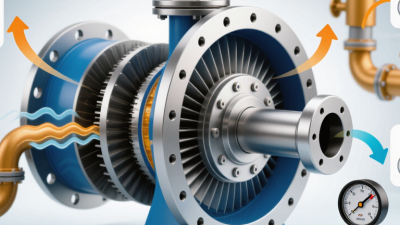
China Top 10 Turbine Meter Manufacturers for Global Buyers
Choosing a Turbine Meter manufacturer is not just a matter of comparing prices. Global buyers must consider flow range, fluid compatibility, pressure rating, accuracy, and service support. A meter installed on a clean water line may not perform the same way with viscous oil or changing temperatures. Small details matter. Even the connection size can affect installation time and maintenance access.
This guide introduces ten Chinese turbine meter manufacturers for buyers evaluating suppliers across international markets. It focuses on practical questions: What industries does each company serve? What product options are available? Can the supplier provide calibration records, clear technical documents, and responsive after-sales assistance? These are useful starting points, not guarantees of performance. A product catalogue cannot show how a meter behaves in every operating condition. Buyers should confirm specifications against their own process requirements and request relevant test documentation before making a decision. That step is easy to overlook. Manufacturer capabilities, certifications, and export experience can also change, so details should be verified directly. The companies below offer different strengths, and no single supplier is right for every project. Use the comparison to build a shortlist, then ask specific questions about your application. A careful review may take longer, but it can prevent costly surprises after installation.
Turbine Flow Meters: Operating Principles and Common Applications
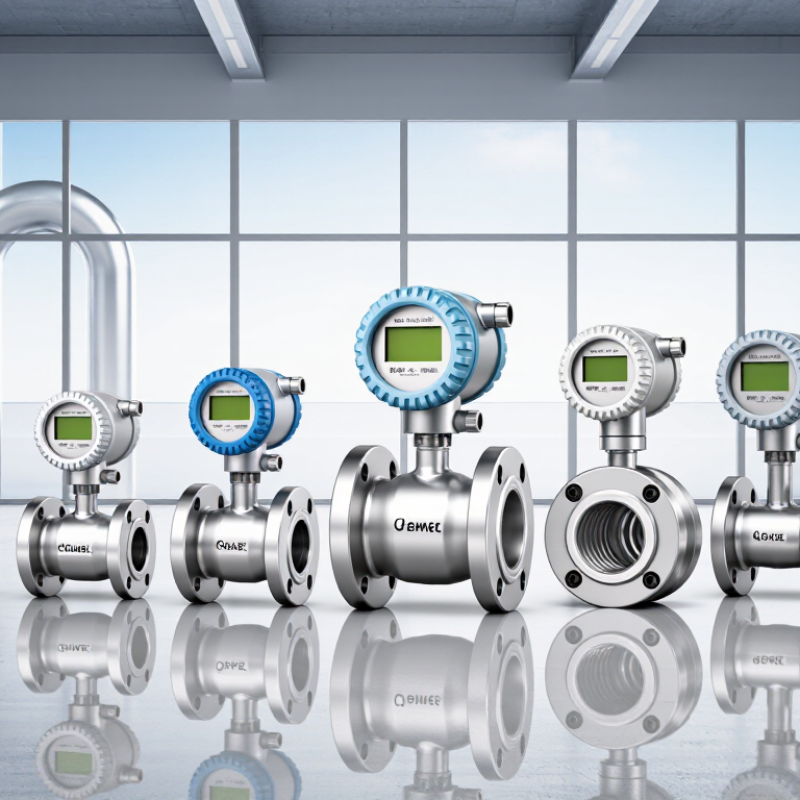
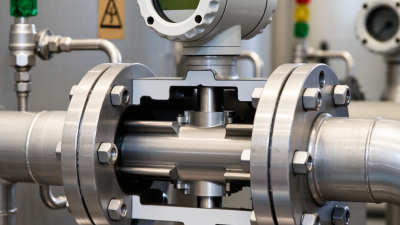
A turbine flow meter measures fluid velocity through a bladed rotor. As fluid passes, the rotor spins; its speed is converted into pulses proportional to flow. A transmitter then converts pulse frequency into a flow-rate reading or total volume. The principle is straightforward. Accuracy is not automatic. Viscosity, contamination, changing flow, and poor alignment can affect rotor response. Straight pipe runs and correct sizing help stabilize measurements.
For natural gas service, ISO 9951 sets requirements for turbine meters in closed conduits, while AGA Report No. 7 provides industry guidance on gas measurement.
The U.S. Energy Information Administration reported average dry-gas production of about 103 billion cubic feet per day in 2023, illustrating the scale of measurement across gathering, processing, and transmission networks.
Turbine meters are also used for refined fuels, water, and industrial process liquids, especially where repeatable, high-throughput readings are needed. They suit clean, steady flows better than dirty or highly pulsating streams.
A small installation mistake can matter. Operators should compare meter readings with calibration records and inspect filters, bearings, and pulse signals regularly. No meter is maintenance-free.
China’s Turbine Meter Industry and Its Global Market Reach
China’s turbine meter industry serves a broad range of flow-measurement needs, from water treatment lines to fuel and process applications. Manufacturers operate within a dense supply network for machining, electronics, and instrument assembly. This can support flexible production and a wide choice of meter sizes. Yet a competitive price alone says little about performance.
Turbine meters rely on a rotating rotor, so fluid conditions matter. Clean, steady flow generally supports consistent readings; particles, bubbles, or abrupt flow changes may affect results. Buyers should review calibration records, accuracy specifications, pressure limits, materials, and the recommended straight-pipe lengths. Ask how the meter was tested, and whether the test conditions match the intended installation. Small details count.
For global buyers, export readiness includes more than shipping. Clear manuals, traceable test documents, spare-part availability, and responsive technical support help reduce commissioning delays. Requirements differ across markets and applications, so verify relevant certifications and local measurement rules directly. Factory audits or sample testing can add useful evidence, though neither guarantees trouble-free service. Supplier claims deserve careful checking. Even a well-made meter may perform poorly when installed outside its operating range.
Profiles of Ten Chinese Turbine Meter Manufacturers
Profiles of ten Chinese turbine meter manufacturers are most useful when they reveal how each company approaches measurement, production, and customer support. A turbine meter uses a rotating rotor to measure flow, so fluid cleanliness, viscosity, and flow stability matter. Buyers should compare stated accuracy, operating range, pressure limits, materials, and available output signals. Small details count. A bearing choice or calibration range can affect performance in a real pipeline.
MarketsandMarkets’ Flow Meter Market report estimated the broader flow-meter market at USD 8.2 billion in 2023, with a projected value of USD 11.1 billion by 2028. That category includes several meter technologies; it is not a turbine-meter market estimate. The figures provide industry context, not proof that any one manufacturer will suit a particular process.
The ten profiles can help buyers examine factory capabilities, calibration procedures, customization, documentation, and after-sales support without treating a catalogue as independent verification. Ask for calibration records and test conditions matching the intended fluid and flow range. Compare like with like. Public product details are sometimes incomplete, and that makes firm comparisons difficult. A careful buyer should confirm specifications directly and check whether stated performance applies to the exact meter configuration being quoted.
China Top 10 Turbine Meter Manufacturers for Global Buyers - Profiles of Ten Chinese Turbine Meter Manufacturers
The entries below are anonymous product-focus profiles, not verified profiles or rankings of specific companies. Turbine meter performance depends on the model and operating conditions; confirm all specifications, certifications, and calibration details with the supplier.
| Profile | Product Focus | Typical Application | Key Buyer Checks |
|---|---|---|---|
| 01 | Liquid turbine meters | Clean, low-viscosity liquids in process or transfer lines | Fluid compatibility, viscosity limits, flow range, accuracy statement, and calibration conditions |
| 02 | Gas turbine meters | Gas measurement in industrial and utility systems | Specified gas, operating pressure and temperature, flow range, and applicable metering standards |
| 03 | Compact inline meters | Equipment skids and installations with limited space | Connection size, face-to-face dimensions, installation orientation, and required upstream/downstream piping |
| 04 | Large-diameter meters | Higher-capacity pipelines and industrial distribution | Maximum flow, pressure loss, flange standard, body material, and calibration capability at the requested size |
| 05 | High-pressure designs | Pressurized process and gas-service installations | Rated working pressure, pressure test documentation, connection rating, and local code requirements |
| 06 | Corrosion-resistant configurations | Services where fluid chemistry requires careful material selection | Wetted-part material grades, seal compatibility, chemical concentration, and operating temperature |
| 07 | Sanitary or hygienic configurations | Food, beverage, and other hygiene-sensitive processes, where the meter is suitable | Surface finish, connection type, cleanability, material certificates, and applicable hygienic approvals |
| 08 | Pulse-output models | Remote totalizing and integration with counters or control systems | Pulse scaling, output type, maximum frequency, cable requirements, and electrical compatibility |
| 09 | Digital-transmitter models | Systems requiring electronic flow indication or process-control integration | Available outputs and protocols, power supply, display options, enclosure rating, and configuration tools |
| 10 | Custom-engineered meter packages | Projects with defined interface, environmental, or documentation requirements | Approved drawings, inspection and test plan, traceable calibration records, export documentation, and delivery scope |
How to Compare Manufacturers by Quality, Certification, and Support
When comparing turbine meter manufacturers, look beyond polished brochures. Ask for calibration certificates, test points across your actual flow range, repeatability data, and stated fluid conditions. A meter tested only near its best operating point may disappoint at low flow. The ISO Survey 2022 recorded more than 1.26 million ISO 9001 certificates worldwide, but certification documents a quality management system; it does not prove a meter’s accuracy. OIML R 117-1 defines accuracy classes, including 0.3 and 0.5 for liquid measuring systems. Check which class applies to your installation, and ask how the factory verifies it.
Support is measurable too. Request typical response times, spare-part lead times, commissioning guidance, and sample calibration records. Can the supplier explain how viscosity, Reynolds number, and upstream pipe disturbances affect readings? Ask for references using a similar fluid and operating range. ISO/IEC 17025 accreditation can strengthen confidence in calibration competence, but confirm the accredited scope covers the relevant measurement. Small details matter: a rotor replacement, for example, may require recalibration. A short warranty sounds reassuring. What happens after it expires? One comparison can still feel incomplete; suppliers do not always report test conditions in the same way. Make them explicit before ranking offers.
How Global Buyers Can Evaluate Suppliers and Plan Procurement
Global buyers comparing turbine meter manufacturers should begin with the operating conditions, not a catalogue ranking. Record the fluid, viscosity, flow range, pressure, temperature, pipe size, and required accuracy. Then request calibration certificates, uncertainty data, material specifications, and documented performance at low flow. A polished datasheet is useful, but it cannot replace test evidence. Ask how the meter behaves when flow fluctuates or the liquid contains small amounts of gas.
Procurement planning also means checking delivery, commissioning, and support. Confirm lead times, spare-part availability, installation requirements, and whether the supplier can provide clear troubleshooting guidance across time zones. The IEA’s World Energy Investment 2024 report estimated global energy investment would exceed USD 3 trillion in 2024, with about USD 2 trillion directed to clean energy. This is not a turbine-meter market forecast, but it reflects the scale of infrastructure projects where dependable measurement matters. One caution: buyers can overvalue a low quoted price and underestimate calibration or downtime costs.
Tips: Share a real process datasheet before requesting quotations. Compare suppliers against the same test conditions, and ask for a sample calibration record. Keep a little room for doubt: published accuracy may not match performance in your actual installation.
Related Posts
-
How to Choose the Right Turbine Meter in 2026?
-
How to Choose the Right Turbine Meter in 2026?
-
What Is the Best Type of Turbine Flow Meter in 2026?
-
7 Turbine Flow Meter Buying Tips for Global Buyers
-
Top China Turbine Flow Meter Manufacturers for Global Buyers
-
Understanding the Mechanisms Behind Turbine Flow Meters