Top Mag Meter Suppliers for Global Buyers
Choosing among the top Mag Meter suppliers requires more than comparing prices and product pages. Global buyers need evidence from real installations, verified test procedures, and responsive technical support. A dependable supplier should explain electrode materials, liner selection, grounding, accuracy, pressure ratings, and communication protocols clearly. These details matter when measuring wastewater, chemicals, pulp, food liquids, or conductive process fluids.
R. W. Miller, a respected flow-measurement author, wrote, “The magnetic flowmeter has no obstruction in the flow stream.” That simple point remains important. It explains why Mag Meter systems often perform well with dirty liquids and suspended solids. Still, the technology is not magic. The liquid must have sufficient conductivity, and poor grounding can damage measurement stability. Installation mistakes happen.
This guide reviews suppliers serving international buyers through practical criteria. It considers manufacturing experience, calibration capability, certifications, customization, delivery consistency, and after-sales service. It also examines whether suppliers support remote diagnostics, spare electrodes, software updates, and local commissioning. A strong catalog is useful. Field evidence is better.
Readers should also question broad claims such as “highest accuracy” or “best global service.” Those statements need test reports, reference projects, and clear warranty terms. Regional support can vary sharply. A supplier may be excellent for municipal water, yet less suitable for abrasive slurry or hygienic processing.
The final choice should match the application, not merely the brand reputation. That sounds obvious. It is often overlooked.
Magnetic Flow Meter Basics and Core Measurement Principles
Top Mag Meter Suppliers for Global Buyers
Magnetic Flow Meter Basics and Core Measurement Principles
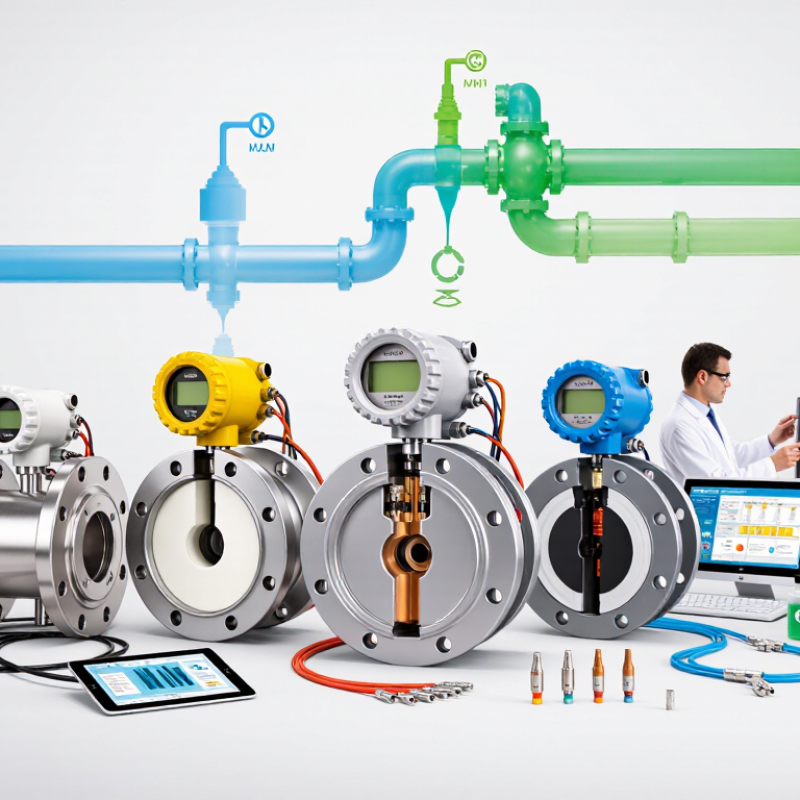
Magnetic flow meters measure conductive liquids without moving parts inside the pipe. They use Faraday’s law of electromagnetic induction. When liquid passes through a magnetic field, it creates a voltage. The electrodes detect this voltage, and the meter converts it into flow velocity and volume.
The liquid must have enough electrical conductivity. Clean water, wastewater, slurries, and many process liquids usually work well. Oil and dry gases do not. In field installations, pipe lining, electrode material, grounding, and full-pipe conditions strongly affect reliability. A half-filled pipe can create unstable readings. That detail is often missed during purchasing.
Tips: Check conductivity data before selecting a meter. Confirm the liner suits the liquid temperature and chemistry. Install grounding rings when the pipe material or fluid requires them. Keep electrodes properly positioned, especially on horizontal lines. Ask suppliers for calibration records, accuracy limits, and installation guidance. Real installations are rarely perfect.
Experienced technicians also inspect air pockets, nearby pumps, and cable routing. Electrical noise can disturb a weak signal. Good suppliers should explain these risks clearly, not only quote a low price. I have found that commissioning data is more useful than impressive brochures. Still, even careful specifications cannot replace checking the actual site. That is where many “accurate” systems begin to struggle.
Key Criteria for Evaluating Global Mag Meter Suppliers
Top Mag Meter Suppliers for Global Buyers
Global buyers should judge suppliers beyond price and catalog width. The 2024 UN World Water Development Report states that agriculture uses about 70% of global freshwater withdrawals. This makes stable flow measurement important in irrigation, treatment, and industrial reuse. Ask suppliers for accuracy data under low, normal, and peak flow conditions. A polished brochure is not enough.
Check calibration traceability, material compatibility, and service coverage. ISO/IEC 17025 accreditation supports confidence in testing laboratories. ISO 6817 provides technical guidance for measuring conductive liquids in closed conduits. Suppliers should explain electrode materials, liner selection, grounding, and empty-pipe detection in plain language. Request actual calibration certificates, not only compliance claims. Look for uncertainty values and test conditions.
Cybersecurity and documentation also deserve attention. The 2023 Verizon Data Breach Investigations Report recorded more than 16,000 security incidents across industries, although not all involved measurement equipment. Remote access therefore needs clear controls, role-based permissions, and update procedures. This area is often overlooked. I would also compare spare-part availability, response times, and training records across regions. A supplier may offer impressive accuracy, yet weak local support can turn a simple sensor fault into weeks of downtime. Country-specific approvals should be verified before purchase, because requirements can differ between water, food, and process applications.
International Standards, Certifications, and Market Compliance
Top Mag Meter Suppliers for Global Buyers
International Standards, Certifications, and Market Compliance
Global buyers should evaluate magnetic flow meter suppliers through documented compliance, not attractive specifications alone. A credible supplier can provide traceable calibration records, factory quality procedures, and clear technical files. ISO 9001 supports consistent manufacturing processes, while ISO/IEC 17025 strengthens confidence in laboratory calibration results. Ask for current certificates, issuing bodies, and product scope.
Performance claims should match recognized measurement standards, such as ISO 6817 for electromagnetic flow measurement. Electrical safety and electromagnetic compatibility may require IEC 61010-1 and IEC 61326-1 compliance, depending on the installation. For potable water projects, material approvals may include NSF/ANSI/CAN 61 or equivalent national requirements. Certification scope matters. A certificate covering one transmitter may not cover the complete meter assembly.
Market entry also depends on regional rules, labeling, language, and installation conditions. Check whether the supplier supports CE, UKCA, or other applicable conformity requirements. Review enclosure ratings, electrode materials, liner selection, grounding arrangements, and pressure limits. These details affect reliability in wet plants, wastewater channels, and buried pipelines. Request sample test reports and serial-number traceability.
Small gaps can become costly. A supplier may meet factory standards but lack local service capability. That weakness deserves honest attention. Confirm spare-part access, technical response times, software documentation, and calibration support before ordering. Independent inspection can expose missing records or unsuitable materials. It adds cost, but it may prevent a larger failure.
This chart maps major international standards and regulatory references to their primary procurement relevance for electromagnetic flow meters. A value of 1 means the reference directly applies to that compliance area; 0 means it is not the primary scope. Actual certification requirements depend on the meter design, application, installation environment, and destination market.
Sourcing, Comparing, and Selecting the Right Mag Meter Supplier
Selecting a mag meter supplier starts with the process, not the catalog. Define pipe size, fluid conductivity, temperature, pressure, and expected flow range. A supplier should explain these choices in practical terms. Vague recommendations deserve caution.
Request calibration certificates with traceable references, material data, wiring diagrams, and installation instructions. Compare stated accuracy under real operating conditions, not only laboratory conditions. Check electrode and liner materials against chemicals, abrasion, and cleaning methods. Details matter. Ask for proof.
Supplier performance also depends on delivery control and technical support. Confirm lead times, factory testing, spare-part availability, and commissioning assistance before issuing a purchase order. Reliable suppliers discuss grounding, empty-pipe detection, and signal stability without hiding behind jargon. A low quote may exclude essential accessories or site support. That mistake becomes expensive after installation. I would also compare warranty terms carefully, because broad promises can conceal narrow exclusions. Even experienced buyers can overlook sensor placement or conductivity limits. Rechecking the specification with an independent engineer is sensible, especially for critical water, process, or utility applications. A useful supplier remains clear when the project details become inconvenient.