How to Choose the Right Mag Meter?

Choosing the right Mag Meter is less about selecting the most expensive model. It is about matching the instrument to the process, pipe, liquid, and measurement objective. A unit that performs accurately in clean water may struggle with abrasive slurry, unstable conductivity, or heavy air entrainment. The details matter.

David W. Spitzer, a respected flow-measurement consultant and author, has emphasized, “The meter is only one part of the measurement system.” That principle should guide every specification review. Before comparing brands, confirm the liquid’s conductivity, temperature, pressure, viscosity, solids content, and expected flow range. Check the pipe diameter and lining requirements, too. A poorly grounded installation can create unstable readings, even when the transmitter appears sophisticated.

Installation conditions deserve equal attention. Straight-pipe requirements, electrode orientation, grounding rings, and empty-pipe detection can influence long-term reliability. Picture a wastewater line carrying air pockets after a pump starts. The display may jump, not because the Mag Meter is defective, but because the process is unstable. That distinction saves time and unnecessary replacement costs.

A practical choice also considers calibration support, communication protocols, enclosure ratings, maintenance access, and total ownership cost. Cheaper is not always wiser. Neither is excessive specification.

There is room for caution.

Some selection guides simplify the decision too much. Real facilities rarely behave perfectly. Reviewing historical flow data, testing representative liquid samples, and consulting an experienced instrumentation engineer can expose risks early. The right Mag Meter should deliver dependable data under actual operating conditions, not merely impressive performance on a datasheet.
How to Choose the Right Mag Meter?

What a Magnetic Flow Meter Measures and How It Works

How to Choose the Right Mag Meter?

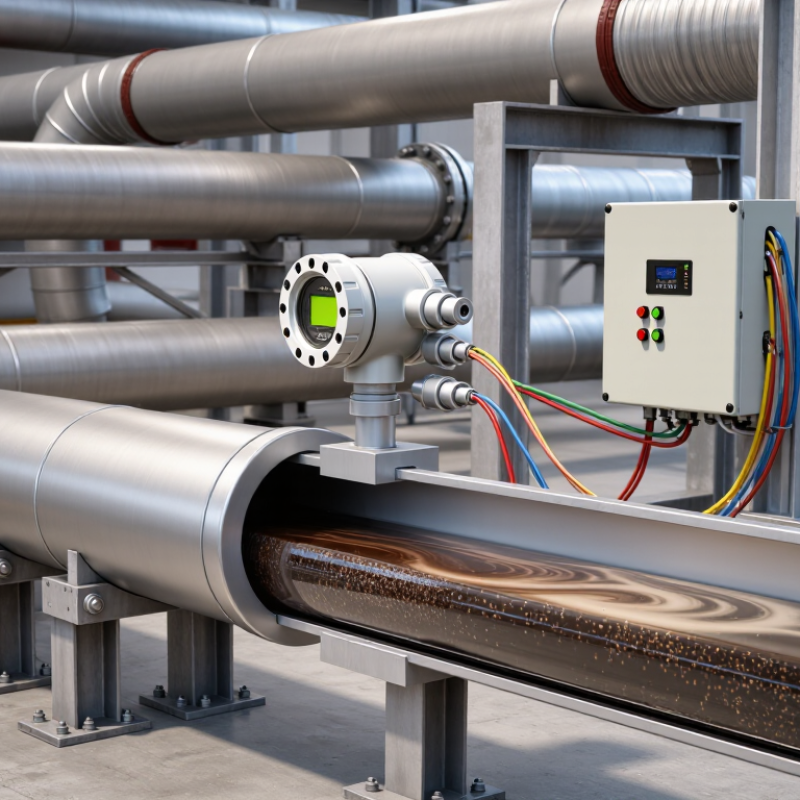
A magnetic flow meter, or mag meter, measures the volumetric flow rate of electrically conductive liquids. It does not directly weigh the fluid or measure its mass. Inside the meter, coils create a magnetic field across the pipe. As liquid moves through that field, it generates a small voltage. Electrodes on opposite sides of the pipe detect this signal, and the meter uses it to calculate flow.

The principle is straightforward. The installation deserves care. For example, a meter reading a full pipe of process water may behave differently from one installed where air pockets collect near the electrodes. Conductivity matters, too: very low-conductivity liquids may produce an unreliable signal, while nonconductive fluids cannot be measured this way. Pipe size, lining, grounding, and the liquid’s temperature and composition can all affect performance. Check the meter’s conductivity limits against the actual fluid, not just a product description. That detail is easy to overlook. Mag meters have no moving parts in the flow path, which can reduce wear, but they are not a universal answer. Their readings also depend on sound installation and a consistently full pipe. In practice, that last assumption can be less tidy than it sounds.

Key Application Conditions for Selecting a Mag Meter

How to Choose the Right Mag Meter?

Key Application Conditions for Selecting a Mag Meter

Selecting a magnetic flow meter starts with the liquid, not the pipe size. The liquid must conduct electricity, typically above 5 μS/cm. Confirm this value across seasonal temperature changes. Water, wastewater, slurry, and many chemical solutions usually qualify. Hydrocarbon-based liquids do not. ISO 6817:2023 emphasizes correct installation, grounding, and a completely filled measuring tube.

Process pressure and temperature define the liner and electrode materials. Abrasive sludge may need hardened electrodes and a wear-resistant liner. Fibers and suspended solids rarely damage the measurement path because no impeller rotates. However, deposits can distort readings. Keep the sensor away from air pockets, pump suction turbulence, and partially filled pipes. Vertical, upward flow often keeps the tube full.

Application data matters, too. UNESCO’s 2024 World Water Development Report states that agriculture accounts for about 70% of global freshwater withdrawals. Irrigation meters therefore face variable flow, sand, and changing conductivity. The World Bank has reported that approximately 32 billion cubic meters of water are physically lost through leakage each year. Accurate district metering can reveal abnormal night flow, but only with controlled installation and calibration. Verify grounding, straight-run requirements, empty-pipe detection, and low-flow uncertainty. Diameter alone is a weak selection method. I still question that shortcut.

How to Choose the Correct Mag Meter Size and Flow Range

How to Choose the Right Mag Meter?

Selecting a mag meter starts with pipe size, but sizing it by pipe diameter alone is a common mistake. Measure the normal, minimum, and peak flow rates first. Then convert them into actual pipe velocity. ISO 6817:2023 identifies flow velocity, liquid conductivity, grounding, and installation conditions as key performance factors. For many water applications, a practical design range is about 0.5 to 10 m/s.

Stay near the middle.

A meter that is too large may operate below its stable measuring range. A smaller meter can improve low-flow resolution, but it may create excessive pressure loss or restrict peak flow. For example, a 100 mm line carrying 20 m³/h produces roughly 0.7 m/s. That may be workable, while a 150 mm meter would measure the same flow more slowly. Check the manufacturer’s certified accuracy curve, not only the advertised range. Consider conductivity too; ISO 6817 requires the liquid to have adequate electrical conductivity for reliable measurement.

Field conditions often change the calculation. A 2023 report from the International Water Association emphasizes that apparent water losses can distort network data and operational decisions. Poorly selected meters add another layer of uncertainty. Keep straight pipe sections where possible, avoid installation directly after partially closed valves, and confirm the sensor remains full. I have seen design sheets use peak flow perfectly, then ignore night-time flow. That oversight can hide small leaks. Recheck seasonal demand, future expansion, and actual pump performance before fixing the meter size.

Selecting Liner and Electrode Materials for Fluid Compatibility

How to Choose the Right Mag Meter?

Selecting Liner and Electrode Materials for Fluid Compatibility

A magnetic flow meter measures conductive liquids without blocking the pipe. Its liner and electrodes still face constant chemical stress. Check the chemistry.

Start with the liquid’s pH, temperature, concentration, and abrasive content. A fluoropolymer liner often handles aggressive chemicals and higher temperatures. Rubber liners may suit water, sludge, and mildly abrasive mixtures. Ceramic liners can resist wear, but they may need careful installation.

Electrode selection requires equal attention. Stainless steel can work with many clean, neutral liquids. More resistant alloys may perform better in acidic or salty process fluids. Tantalum and platinum offer strong chemical resistance, yet their cost can change the project decision. Do not choose by fluid name alone. Concentration and temperature can completely alter compatibility.

I once treated “wastewater” as one material category. That was too simple. Cleaning chemicals, suspended solids, and seasonal temperature changes can create a harsher service. Request a complete chemical profile, including occasional flushing agents. Confirm the wetted parts, gasket material, grounding method, and pressure rating with the manufacturer’s technical data. Small details matter.

Test samples when the fluid is unusual or highly concentrated. A short compatibility review can prevent liner swelling, electrode corrosion, unstable readings, and early replacement. The best selection reflects real operating conditions, not only the normal flow rate.

Essential Installation, Calibration, and Maintenance Considerations

How to Choose the Right Mag Meter?

Installation conditions often determine whether a mag meter performs accurately. During site checks, confirm that the pipe stays completely full during operation. A partially filled pipe can create unstable readings. Keep the sensor away from pumps, valves, and sharp elbows when possible. Straight pipe runs improve flow stability. Follow the indicated flow direction. Grounding also matters, especially with lined pipes or plastic sections. Small details matter.

Calibration should match the process, not just the instrument range. Verify the expected minimum, normal, and maximum flow rates before selecting settings. Use a traceable reference when calibrating critical applications. Record the date, test conditions, flow rate, and adjustment results. A certificate without operating details is less useful. It is tempting to accept factory settings as permanent. That assumption can fail after installation changes. Recheck performance after commissioning.

Maintenance should include visual inspections, signal checks, and review of unusual readings. Inspect electrodes when deposits, coating, or chemical buildup may occur. Clean them carefully, using methods suitable for the process material. Check grounding connections for looseness or corrosion. Compare meter output with a trusted process indication at regular intervals. I would not wait for a complete failure. However, inspection intervals should reflect actual service conditions, not guesswork. A simple maintenance log can reveal gradual drift before it affects production.