
China Top Mag Meter Manufacturers and Suppliers
Choosing a Mag Meter supplier in China requires more than comparing prices and catalog accuracy. The right instrument must match the liquid, pipe, process conditions, and installation environment. A meter handling clean water may not suit abrasive slurry or a chemically aggressive process. Details matter.
Electromagnetic-flow pioneer Alexander Kolin’s work offers a useful technical reminder. The following is an editorial paraphrase, not a verbatim quotation: “Reliable flow measurement begins with understanding the fluid and the installation.” That principle helps frame this guide to China’s leading Mag Meter manufacturers and suppliers. It also encourages buyers to ask specific questions. What is the minimum conductivity? Which liner and electrode materials are available? Can the supplier provide calibration records, wiring diagrams, and installation guidance?
A polished brochure is not proof of dependable performance. Ask about factory testing, quality controls, spare parts, and response times. Request clear documentation. Check the proposed meter against the actual pipe diameter, flow range, and operating temperature. Small oversights can become costly. Even experienced teams sometimes miss them.
The companies profiled in this overview should be assessed on technical fit, manufacturing capability, communication, and after-sales support. Product claims deserve verification, not assumption. This guide is a starting point, not a substitute for application review. A well-chosen Mag Meter can provide stable readings for years, but only when the specification matches the job.
What Is a Magnetic Flow Meter?
China Top Mag Meter Manufacturers and Suppliers
What Is a Magnetic Flow Meter?
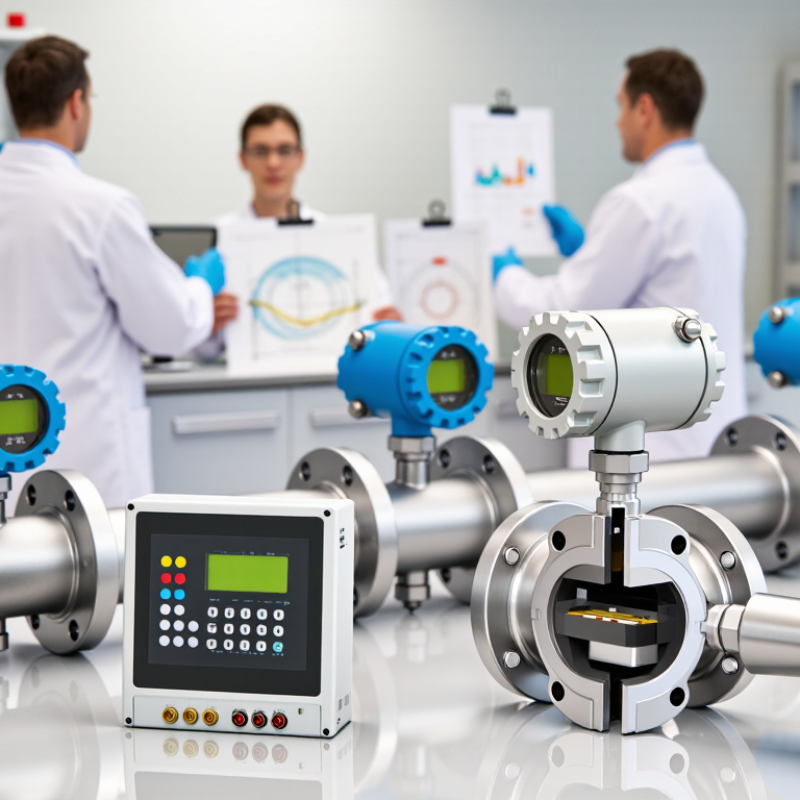
A magnetic flow meter measures the flow rate of electrically conductive liquids in a pipe. It uses Faraday’s law: moving liquid passing through a magnetic field generates a small voltage. Electrodes inside the meter detect that signal, and the instrument converts it into a flow reading. No moving parts. This design can reduce wear and pressure loss in suitable applications.
These meters are commonly used for water, wastewater, and some chemical or slurry flows. They generally cannot measure nonconductive liquids, such as oils, and very low-conductivity water may also fall outside a meter’s operating range. The pipe must stay full for reliable readings. That matters. In practice, installation details can be less straightforward than the basic principle suggests; grounding, electrode condition, and nearby pipe fittings may affect performance. Check the instrument’s conductivity limits and installation guidance for the actual process.
Tips: Confirm the liquid’s conductivity and keep the pipe full. Follow the specified grounding method, and allow suitable straight pipe runs where required. If readings drift, inspect the installation before assuming the meter itself has failed.
China Top Mag Meter Manufacturers and Suppliers - What Is a Magnetic Flow Meter?
A magnetic flow meter (mag meter) measures the flow of an electrically conductive liquid using electromagnetic induction. The table below summarizes key operating principles, typical application considerations, and practical checks when evaluating suppliers in China. It does not rank or identify individual companies.
| Data Dimension | Technical Information | Practical Selection or Supplier Check |
|---|---|---|
| Measurement principle | As a conductive liquid passes through a magnetic field, it generates a voltage related to its velocity. Electrodes detect this voltage, and the meter uses it to calculate volumetric flow. | Confirm that the proposed meter is intended for the liquid, flow range, and installation conditions in the application. |
| Suitable fluids | Suitable for electrically conductive liquids, including many types of water, wastewater, slurries, and chemical solutions. It does not directly measure gases or most nonconductive liquids such as oils. | Provide the supplier with the fluid composition, conductivity, temperature, and presence of suspended solids. |
| Minimum conductivity | Many general-purpose models specify a minimum liquid conductivity around 5 µS/cm, but the actual limit depends on the meter design. Very low-conductivity or demineralized water may be unsuitable for some models. | Request the model-specific minimum conductivity specification rather than relying on a general value. |
| Pipe condition | The measuring tube normally needs to remain full during measurement. A partially filled pipe can cause inaccurate readings unless the instrument is specifically designed for that condition. | Check whether the installation can maintain a full pipe and whether empty-pipe detection is available if needed. |
| Pressure loss | Because the sensor has no obstruction projecting into the flow path, a correctly sized full-bore mag meter typically adds very little pressure loss. | Confirm the sensor’s internal diameter and ensure the selected meter does not introduce an unwanted restriction. |
| Typical accuracy | Published accuracy varies by model, size, operating conditions, and calibration. General-purpose specifications commonly include values such as ±0.5% of reading; some models specify tighter performance. | Compare the full accuracy statement, including its range, reference conditions, and whether it is expressed as a percentage of reading or span. |
| Straight pipe requirements | Installation guidance varies. A commonly used starting recommendation is about 5 pipe diameters upstream and 2 downstream, while disturbances such as pumps, valves, or elbows may require more distance. | Follow the selected model’s installation manual and ask the supplier to review nearby fittings and flow disturbances. |
| Electrode and liner materials | Electrode and liner choices depend on fluid chemistry, temperature, abrasion, and cleaning requirements. Common options include stainless steel, titanium, or tantalum electrodes and rubber, PTFE, or other polymer liners. | Obtain written material compatibility confirmation for the actual process fluid and operating temperature. |
| Grounding and installation | Reliable measurement depends on correct electrical grounding and installation in accordance with the meter’s instructions. Grounding rings or other arrangements may be needed for some pipe materials or installations. | Confirm grounding requirements, cable and converter arrangements, and whether installation accessories are included. |
| Supplier documentation | Performance claims and available options should be supported by model-specific technical documentation and test records. | Request datasheets, calibration documentation, material details, wiring diagrams, communication protocol information, warranty terms, and after-sales support arrangements. |
Note: Values described as typical are general guidance, not universal specifications. Always verify the selected model’s datasheet and installation manual for the intended process conditions.
Related Posts
-
How to Choose the Right Mag Meter for Your Industrial Applications
-
How to Choose the Right Non Contact Flow Meter for Accurate Measurement in Industrial Applications
-

The Future of Flow Meters Technology Trends and Their Impact on Industrial Efficiency
-

Top 10 Flow Meters: Industry Trends & Efficiency Data You Need to Know
-

Top 10 Flow Rate Meters for Accurate Measurement and Performance Evaluation
-
2026 Best Non Contact Flow Meter Features and Benefits?