How to Choose a Paddle Wheel Flow Meter?
Choosing a Paddle Wheel Flow Meter begins with the process, not the product catalog. Pipe diameter, fluid cleanliness, conductivity, flow range, and available straight-run length all affect performance. A meter that fits the pipe may still give unstable readings. Tiny bubbles matter.
The scale of the broader market shows why careful selection matters. Grand View Research estimated the global flow meter market at about USD 8.5 billion in 2023, with growth projected through 2030. That figure covers multiple meter technologies, not paddle-wheel meters alone. It signals expanding measurement demand, but does not prove one design suits every application. For a Paddle Wheel Flow Meter, check the manufacturer’s stated minimum conductivity, pressure and temperature limits, insertion depth, and calibration conditions. Compare those specifications with the actual fluid and installation—not an idealized process diagram.
Flow Research founder Jesse Yoder is an established flow-measurement analyst. A practical paraphrase of his technology-selection guidance is: “Choose the meter around the application’s requirements, rather than forcing the process to suit the meter.” This is a paraphrase, not a verified verbatim quotation. That distinction matters. Paddle-wheel meters can offer a practical, economical option for compatible liquids, yet suspended solids, changing viscosity, or poor installation can undermine readings. The uncomfortable truth is that a low purchase price may conceal higher maintenance costs. Before choosing, ask what the meter must measure, how accurately it must do so, and what happens when conditions change. A little uncertainty deserves investigation.
Understand How a Paddle Wheel Flow Meter Works
How to Choose a Paddle Wheel Flow Meter?
Understand How a Paddle Wheel Flow Meter Works
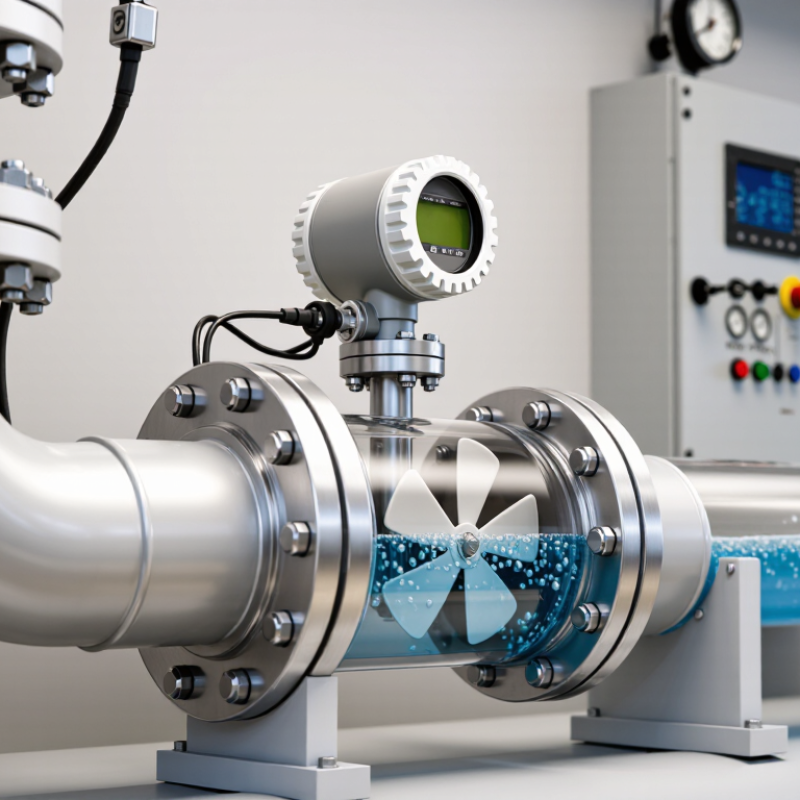
A paddle wheel flow meter measures how quickly liquid moves through a pipe. Flowing liquid pushes a small rotor with angled blades. As it spins, a sensor detects each passing blade and produces electrical pulses. The meter converts pulse frequency into a flow rate; accumulated pulses can also indicate total volume. Faster flow usually means faster rotation, within the meter’s specified operating range. Simple, but not foolproof. A partly filled pipe, trapped air, or turbulence can distort the reading.
Tips: Check the meter’s required flow range, pipe size, and installation instructions. Keep the pipe full, and provide the recommended straight lengths before and after the meter. Look closely at the wetted materials, too. They must suit the liquid’s chemistry and temperature. Suspended particles may interfere with the rotor.
Before choosing, consider how stable the flow is and how precise the measurement needs to be. A paddle wheel meter is often practical for clean, low-viscosity liquids, but it may perform poorly with thick or debris-filled fluids. Compare its pressure and temperature limits with actual operating conditions, not just typical ones. Installation details matter more than a neat specification sheet suggests. Even a suitable meter can give disappointing results if the pipe layout creates swirling flow.
Identify the Fluid and Operating Conditions
How to Choose a Paddle Wheel Flow Meter?
Identify the Fluid and Operating Conditions
Start with the fluid itself, not the meter’s pipe connection. Record its temperature, viscosity, density, conductivity, and chemical compatibility needs. These properties affect rotor movement, sensor response, and wetted-part life. For reference, the IAPWS 2008 water-viscosity formulation gives about 1.002 mPa·s for water at 20°C. A syrup or oil can behave very differently. Small details matter.
Check for suspended solids, fibers, bubbles, or deposits. Solids may jam or wear the rotor; entrained air can make readings unstable. Also note whether flow is steady, pulsing, or interrupted, and capture the expected minimum and maximum rates. A meter sized only for the normal rate may struggle during startup or low-flow periods. Not always obvious. I would avoid assuming that a clean-water test predicts performance in a process fluid.
Next, document operating pressure, temperature range, pipe material, inside diameter, and available straight pipe before and after the installation point. Elbows, pumps, and partially closed valves can distort the flow profile. Confirm the sensor’s required straight-run conditions in its technical documentation; they vary by design. Finally, check whether the sensing method suits the fluid’s conductivity and cleanliness. This step is easy to miss, especially when replacing an existing meter. Recheck the actual fluid, not just the process name.
How to Choose a Paddle Wheel Flow Meter: Identify the Fluid and Operating Conditions
Typical dynamic viscosity of selected liquids at approximately 20°C. Paddle wheel meters are generally best suited to clean, low-viscosity liquids; suspended solids and higher viscosity can affect performance.
Use viscosity as an initial screening factor, not a universal pass/fail limit. Actual suitability depends on the meter design, flow range, temperature, fluid compatibility, and the amount of suspended material. Confirm operating limits for the specific application.
Match the Meter Size to the Pipe and Flow Range
A paddle wheel flow meter should match the pipe’s actual inside diameter and the flow you expect to measure. Nominal pipe size can be misleading; wall thickness changes the usable opening. Check the pipe specification or measure the bore before choosing a meter. Then compare the meter’s stated operating range with the lowest, normal, and highest flow rates in your process. A meter that is too large may not spin reliably at low flow. Too small, and it may exceed its recommended range during peaks. Both can lead to readings you cannot trust.
Tips: Write down minimum, typical, and peak flow rates. Confirm the required insertion depth and straight-pipe distances in the meter’s installation guidance. Keep the pipe full, and avoid placing the sensor near elbows, pumps, or valves when possible.
Sizing is not just matching two numbers. Flow disturbances, changing fluid conditions, and limited installation space can complicate the choice. A datasheet helps, but it cannot correct a poor measurement location. I would double-check the expected low-flow performance, especially if the process varies by season or shift. Small details matter. If the actual flow range is uncertain, measure it or ask a qualified flow specialist to review the operating conditions before selecting the meter.
Compare Materials, Outputs, and Installation Requirements
Choosing a paddle wheel flow meter starts with the fluid and pipe conditions. Check the meter’s wetted materials against the fluid’s chemistry and operating temperature. PVC or polypropylene may suit many mild applications, while stainless steel or PVDF may be better for demanding conditions. Compatibility charts are useful, but verify them against actual concentrations and cleaning cycles. A material that seems suitable can still wear or swell over time.
Next, match the output to the control system. A pulse or frequency signal can support totalizing and basic flow monitoring; some installations need an analog signal, such as 4–20 mA. Confirm power, wiring, and signal compatibility before ordering. Installation matters just as much. Keep the pipe full, limit air bubbles, and allow straight pipe upstream and downstream where the meter instructions require it. Nearby elbows, pumps, or partially closed valves can disturb the flow. Site layouts are rarely perfect, so note any compromises before commissioning.
Tips: Measure the pipe’s inside diameter, not just its nominal size. Check the expected flow range and sensor orientation. Keep it full. Record a baseline reading after installation; it may reveal a setup issue you missed.
Check Accuracy, Maintenance, and Ownership Costs
Choosing a paddle wheel flow meter starts with checking whether its accuracy fits the process. The meter needs a full pipe and a stable flow profile. Follow the manufacturer’s straight-run requirements; elbows and valves close to the sensor can distort readings. Compare its output with a calibrated reference or a measured-volume test under normal operating conditions. Repeat the check at low and typical flow rates. One passing test is not enough.
Look at the fluid, too. Coatings, suspended particles, or changing viscosity can affect rotor movement and measurement repeatability. Inspect the wheel, shaft, and sensor for buildup or wear on a practical schedule. Keep a spare rotor if downtime would interrupt production. Small details matter. A wheel that turns freely during inspection may still behave differently when the line is running.
Ownership costs include more than the initial meter price. Account for installation fittings, wiring, signal integration, calibration, cleaning, and replacement parts. A low-cost unit can become expensive if access is awkward or service requires stopping the line. That is easy to overlook. Compare maintenance time and expected service intervals across the meter’s intended operating conditions. If the fluid or flow rate varies more than expected, revisit the selection rather than assuming the original accuracy will hold.
| Selection Factor | Paddle Wheel Meter | What to Check Before Buying | Effect on Ownership Cost |
|---|---|---|---|
| Typical accuracy | Often around ±1% to ±2% of reading under suitable, calibrated conditions; actual performance varies by model and installation. | Confirm the accuracy specification, calibration conditions, minimum flow rate, and whether the figure is stated as a percentage of reading or full scale. | Lower accuracy may be acceptable for monitoring, but can create costly errors in dosing, batching, or billing applications. |
| Suitable liquid | Best suited to clean, conductive or non-conductive liquids compatible with the wetted materials, with limited suspended solids. | Check viscosity, temperature, chemical compatibility, solids content, and the risk of fibers or debris catching the rotor. | Unsuitable fluid conditions can increase cleaning, repair, and replacement frequency. |
| Flow range | Measures flow as the rotor turns; usable range depends on pipe size, rotor design, fluid properties, and the meter’s specified minimum and maximum flow. | Match the meter to the normal operating flow—not just the pipe diameter—and verify that expected low and peak flows fall within its rated range. | Correct sizing helps avoid poor readings and the expense of replacing an incorrectly selected meter. |
| Installation conditions | Usually installed in a compatible pipe section or fitting. Flow disturbances can affect measurement performance. | Follow the manufacturer’s required straight-pipe lengths and orientation; avoid locations with air pockets, partially filled pipes, or strong upstream turbulence. | Good installation reduces commissioning time, troubleshooting, and the likelihood of inaccurate readings. |
| Pressure loss | The rotor sits in the flow path and creates some obstruction, so pressure loss may be relevant, particularly at higher velocities. | Review pressure-loss data at the actual operating flow and confirm the meter will not compromise the process. | Excess pressure loss can raise pumping energy use over the meter’s service life. |
| Maintenance needs | Moving parts can wear, foul, or become obstructed. Inspection and cleaning frequency depends on fluid cleanliness and operating conditions. | Ask how the rotor and sensor are accessed, whether the meter can be serviced without removing the pipe section, and what spare parts are required. | Accessible designs and readily available replacement parts can reduce service labor and downtime. |
| Calibration and verification | May require periodic verification or recalibration, especially where measurement accuracy is critical or operating conditions change. | Check the calibration method, recommended verification interval, and whether field checks are practical for the application. | Include calibration labor, test equipment, and any process interruption in the lifecycle budget. |
| Electrical output and integration | Common output options include pulse or frequency signals; availability depends on the model. | Confirm signal type, power requirements, cable length, enclosure rating, and compatibility with the control or data-logging system. | Compatible outputs help avoid extra converters, wiring work, or control-system changes. |
| Total cost of ownership | Purchase price is only one part of the cost; installation, fittings, calibration, cleaning, repairs, and downtime also matter. | Compare the full expected service-life cost under the actual fluid, flow, and maintenance conditions—not purchase price alone. | A low initial price may not be economical if the meter needs frequent cleaning, has limited service access, or causes costly process interruptions. |
| Best-fit applications | Often a practical option for compatible liquids where moderate accuracy is sufficient and routine inspection is manageable. | Consider another measurement technology if the liquid is highly viscous, heavily contaminated, abrasive, or if very high accuracy is essential. | Selecting a meter suited to the process can improve reliability and reduce unplanned maintenance. |
Note: Accuracy ranges are indicative, not guaranteed values. Always verify the selected meter’s technical specifications, installation requirements, and calibration conditions for the intended application.
Related Posts
-
2025 Guide: How to Choose the Best Paddle Wheel Flow Meter for Your Needs
-
China Best Paddle Wheel Flow Meter for Your Business Needs?
-
How to Choose a Paddle Wheel Flow Meter in 2026?
-
2026 Top Paddle Wheel Flow Meter Types for Buyers
-
What Is the Best Water Flow Meter from China?
-
2026 Best Chemical Flow Meter Options for Accurate Measurement?