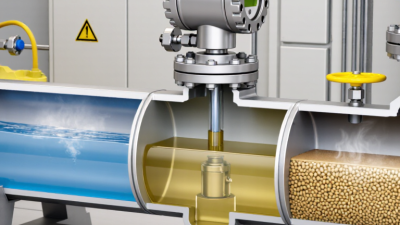
2026 Top Paddle Wheel Flow Meter Types for Buyers
Choosing a Paddle Wheel Flow Meter is less about picking a popular model and more about matching its design to the pipe, fluid, and operating conditions. This guide compares common types by installation style, measurement range, materials, and available outputs. Inline meters sit directly in the pipe and can suit compact systems where a fixed installation is practical. Insertion models extend into larger pipes, which can simplify installation and maintenance in some setups. Compact models may work well on smaller lines, but their usable flow range still needs careful checking. Small details matter.
A meter’s performance depends on more than its label. The pipe should generally remain full, and the fluid must be compatible with the sensor and wetted materials. Bubbles, suspended particles, changing flow conditions, or poor straight-pipe runs can affect readings. That distinction is easy to overlook, even when a product specification looks convincing. Compare connection sizes, pressure and temperature limits, signal options, and calibration requirements before deciding. Also check how the meter will be installed and serviced in the real system, not just on a datasheet. The sections ahead help buyers weigh these trade-offs and identify questions worth asking suppliers. No single type is best for every application; a careful match is usually more valuable than a feature list.
What Is a Paddle Wheel Flow Meter?
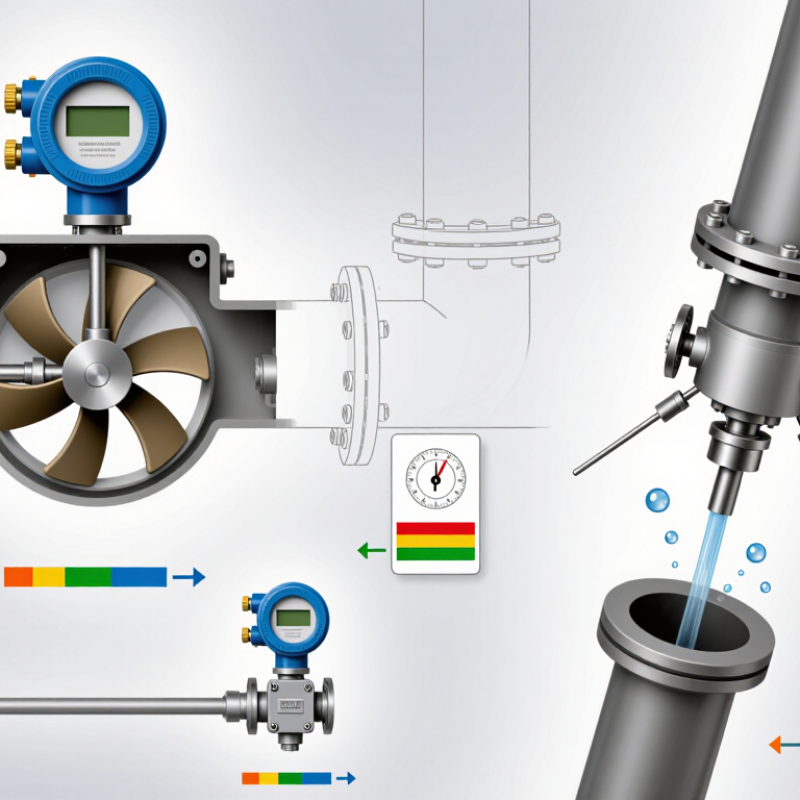
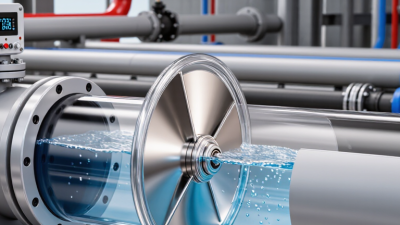
A paddle wheel flow meter measures liquid flow using a small rotating wheel inside a pipe. Moving liquid pushes its blades, and a sensor counts each rotation. The meter converts that signal into flow rate or total volume. It works best with clean, full pipes and a steady flow. Suspended solids or air bubbles can disrupt the reading. Small rotor. Clear signal. But installation still matters.
The MarketsandMarkets 2023 industry report estimated the broader flow-meter market at USD 7.9 billion in 2023, projecting USD 9.1 billion by 2028. That forecast covers many meter technologies, not paddle-wheel devices alone. Buyers should compare each model’s stated accuracy, flow range, pipe size, and liquid compatibility. A single accuracy figure can mislead when flow varies or the pipe is poorly installed. I would verify performance under actual operating conditions.
TipsKeep the pipe full and allow straight pipe runs before and after the meter, following its installation guidance. Check for buildup on the wheel during maintenance. A clean-looking pipe can still hide deposits.
How Paddle Wheel Flow Meters Measure Flow
A paddle wheel flow meter converts liquid movement into electrical pulses. Flow pushes angled blades around a rotor, while a magnetic or optical pickup detects each turn. The pulse frequency rises as fluid velocity increases. A calibrated K-factor then relates pulses to volume. Simple in principle. Not foolproof.
The USGS National Field Manual, Discharge Measurements at Gaging Stations (Turnipseed and Sauer, 2010), uses the velocity-area relationship: discharge equals cross-sectional area multiplied by mean velocity. Applied as an illustration, a 100-millimeter pipe carrying water at 1 meter per second transports about 28.3 cubic meters per hour. That is a calculated example, not a meter’s guaranteed reading. ISO 5168:2005 provides procedures for evaluating flow-measurement uncertainty, a useful reminder that installation and calibration matter. Pipe bends, partially filled pipes, air bubbles, or debris can disturb the rotor’s response. Check the meter’s required straight-run distance and stated liquid limits; these vary by design. A neat pulse signal can still hide a poor installation.
Major Paddle Wheel Flow Meter Types in 2026
Inline paddle wheel meters place the rotor directly inside a pipe, making them a practical choice for clean water and steady process lines. Insertion models use a probe through a fitting, so technicians can inspect or replace the sensor without removing a pipe section. Compact, small-bore versions suit tighter lines, but their narrow passages can clog more easily. A useful selection check is velocity: many paddle wheel installations work best around 0.3–10 m/s, though the sensor’s own operating limits must decide the final range.
The meter measures liquid speed as its blades rotate, so bubbles, suspended solids, and uneven flow can distort readings. Allow straight pipe upstream and downstream where possible; elbows and valves can leave a visibly unstable signal. For independent verification, ISO 4185:1980 describes gravimetric flow measurement, in which collected liquid is weighed over a measured period. That reference method can help confirm readings at several operating points. It does not mean every site needs laboratory testing. In practice, a clean-water meter may perform well on day one, then drift after debris catches at the rotor. That detail is easy to overlook.
2026 Top Paddle Wheel Flow Meter Types for Buyers
Representative nominal pipe-size ranges for common paddle wheel meter configurations
Low-flow inline meters suit smaller pipes, while inline meters are commonly used in smaller process lines and insertion meters can serve larger pipes. Ranges shown are representative, not standardized; confirm the compatible pipe sizes and installation requirements for the specific meter.
How Paddle Wheel Sensor Designs Differ
Paddle wheel flow meters share a simple principle: moving liquid turns a small rotor, and a sensor reads its rotation. Their designs differ in how the rotor meets the flow. Insertion-style sensors project into a pipe through a fitting, making them practical for larger lines and retrofit work. Their reading depends on insertion depth and placement; a sensor too close to an elbow may see uneven flow.
Inline designs place the rotor inside a short flow body, keeping the sensing point fixed. They can suit compact pipe runs, but the body must match the line and process conditions. Rotor size, blade shape, bearing arrangement, and sensor position all affect response, pressure loss, and resistance to debris. Small details matter. A narrow rotor may respond to lower flows, while a sturdier assembly may better tolerate suspended particles, though neither choice solves every problem.
When comparing types, check the minimum flow, pipe diameter, liquid cleanliness, temperature range, and available installation space. Confirm whether the output is a pulse signal or another compatible format before ordering. A useful field check is to compare the meter’s reading with a known operating condition after installation. I would not treat one successful test as proof of accuracy across the full range. Flow profiles change, and real piping is rarely ideal.
How to Choose the Right Paddle Wheel Flow Meter
Start with the liquid and the pipe, not the meter’s price. Paddle wheel meters suit many clean, low-viscosity liquids, but suspended solids can foul the rotor. Check the fluid’s temperature, pressure, chemical compatibility, and expected flow range against the sensor’s specifications. The pipe should remain full; trapped air can make readings unstable. Keep the required straight pipe run clear of elbows, valves, and pumps. Small details matter. A sensor that fits the pipe may still produce poor readings if flow is turbulent.
Match the meter’s output to your control system, and ask how it will be calibrated and maintained. USGS’s 2015 water-use assessment, published in 2018, estimated freshwater withdrawals at about 322 billion gallons per day in the United States. That scale underscores why dependable measurement matters in water systems, though it does not determine which meter fits a specific installation. For a practical selection, compare the sensor’s flow range with measured operating conditions, then confirm installation limits in its technical documentation. A common mistake is choosing by nominal pipe size alone. No chart can replace checking the actual pipe, liquid, and operating flow before purchase.
| Type or Configuration | How It Is Installed | Typical Applications | Key Advantages | Limitations to Check | Best Choice When |
|---|---|---|---|---|---|
| Insertion paddle wheel | A rotor and sensor are inserted through a fitting into the pipe; the sensor measures fluid velocity at its position in the pipe. | Water lines, irrigation, cooling-water systems, and larger pipes carrying relatively clean liquids. | Can be practical for larger pipe sizes and may be installed without removing a full section of pipe, depending on the fitting and installation conditions. | Measures velocity at a point rather than across the full pipe. Flow profile, insertion depth, pipe layout, and adequate straight runs can affect results. | You need a point-velocity installation in a larger pipe and can provide suitable access and flow conditioning. |
| Inline full-bore paddle wheel | A meter body with an internal rotor is installed directly in the pipeline. | Clean water and compatible, low-viscosity liquids in process, utility, or equipment lines. | Provides a defined, repeatable installation geometry and is available in a range of pipe connections and body materials. | The rotor and body create an obstruction and some pressure loss. Check the fluid’s cleanliness, pipe size, pressure rating, and wetted-material compatibility. | You want a compact, direct pipe-mounted meter for a compatible liquid and a suitable line size. |
| Small-bore inline paddle wheel | A compact inline body is installed in a smaller-diameter pipe or equipment connection. | Water monitoring in skids, appliances, laboratory equipment, and compact process systems. | Fits space-constrained layouts and can provide pulse output for totalizing or monitoring when paired with compatible electronics. | Confirm that the expected flow falls within the specific meter’s operating range. Small passages and moving parts may be unsuitable for dirty or particle-laden fluids. | Space is limited and the liquid is clean enough for the selected rotor and passage size. |
| Sanitary inline paddle wheel | An inline meter body uses hygienic connections and materials intended for the specified sanitary process. | Selected food, beverage, or other hygienic liquid processes where the meter’s certification and cleanability meet site requirements. | Can be integrated into sanitary piping when the connection design and wetted materials are appropriate for the process. | Not every paddle wheel meter is sanitary-rated. Verify applicable approvals, surface finish, cleaning method, temperature limits, and whether the rotor design suits the process. | Hygienic installation is required and the exact meter is documented for the relevant cleaning and process conditions. |
| Insertion meter with hot-tap or retractable fitting | An insertion sensor is mounted through a valve or retractable assembly; live insertion or removal is possible only when the assembly is designed and rated for it. | Some larger water or utility lines where access for maintenance is important. | May allow sensor access without draining the line when the fitting, isolation valve, and procedure are suitable. | Requires careful pressure, temperature, and safety checks. Live service is not an inherent feature of every insertion meter or fitting. | Maintenance access is a priority and a qualified fitting is available for the actual operating conditions. |
| Pulse-output paddle wheel | Available as an inline or insertion arrangement; a pickup generates pulses as the rotor turns. | Flow totalizing, batch monitoring, irrigation control, and connection to counters or compatible control systems. | Pulse signals are straightforward to count and can be used by compatible displays, PLCs, or data loggers. | Pulse frequency depends on flow and meter calibration. Check signal type, supply requirements, cable distance, and the receiving device’s input compatibility. | Your system needs a pulse signal and can correctly interpret the meter’s output and calibration data. |
| 4–20 mA or digital-output paddle wheel system | A paddle wheel sensor is paired with a transmitter or flow display that provides the required output. | Process monitoring and control systems that require a scaled analog signal or a supported digital communication method. | Can provide a flow-rate signal for remote indication or control when the sensor and electronics are configured together. | Output capability is model-dependent and may require a separate transmitter. Confirm configuration, calibration, wiring, and environmental ratings. | You need a specific control-system signal rather than a raw pulse output. |
Buyer note: Paddle wheel meters are generally suited to liquid flow measurement, especially relatively clean, low-viscosity liquids. They are usually not the first choice for gases, highly viscous fluids, or liquids with significant solids that could interfere with the rotor. Flow range, accuracy, pressure loss, straight-run requirements, and material compatibility vary by model; confirm them against the meter’s technical documentation and actual operating conditions.
Related Posts
-
How to Choose the Right In Line Flow Meter
-

Top 10 Flow Rate Meters for Accurate Measurement and Performance Evaluation
-
What Are the Top Flow Meter Types for Global Buyers?
-
Essential Tips for Choosing the Right Flow Rate Meter?
-
How to Choose a Paddle Wheel Flow Meter in 2026?
-
2026 Top Types of 2 Inch Flow Meter You Need to Know?