How to Choose a Paddle Wheel Flow Meter in 2026?

Choosing a Paddle Wheel Flow Meter in 2026 requires more than comparing prices and pipe sizes. The right decision depends on fluid quality, velocity range, installation space, maintenance access, and the accuracy your process truly needs. A clean-water line behaves differently from a chemical dosing skid or a cooling loop filled with suspended particles. Small details matter.

Recent findings from Flow Research’s World Flowmeter Market reports show continuing demand for reliable, application-specific flow measurement across water, energy, chemical, and manufacturing industries. Grand View Research also identifies industrial automation and process monitoring as major forces supporting flowmeter adoption. These reports provide useful market direction, but they cannot replace a site survey. Market data is broad. Your pipe is not.

Flow Research president Jesse Yoder has stated, “There is no one flowmeter that is best for all applications.” That principle remains practical in 2026. A Paddle Wheel Flow Meter can offer economical measurement, simple installation, and useful digital outputs. However, it may perform poorly with dirty liquids, very low velocities, air bubbles, or sudden flow changes. That is easy to overlook.

Check the actual pipe diameter. Confirm the minimum and maximum flow. Review the liquid’s conductivity, temperature, viscosity, and solids content. Also inspect the manufacturer’s straight-run requirements. A compact display beside a vibrating pump may look convenient, yet produce unstable readings. The choice is rarely perfect. It should be defensible, measurable, and easy to maintain. This guide explains how to evaluate those trade-offs before purchasing.
How to Choose a Paddle Wheel Flow Meter in 2026?

What Is a Paddle Wheel Flow Meter?

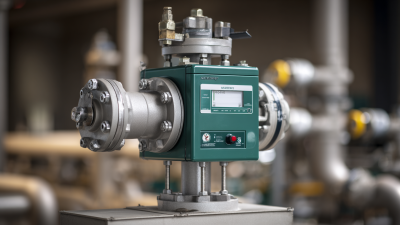
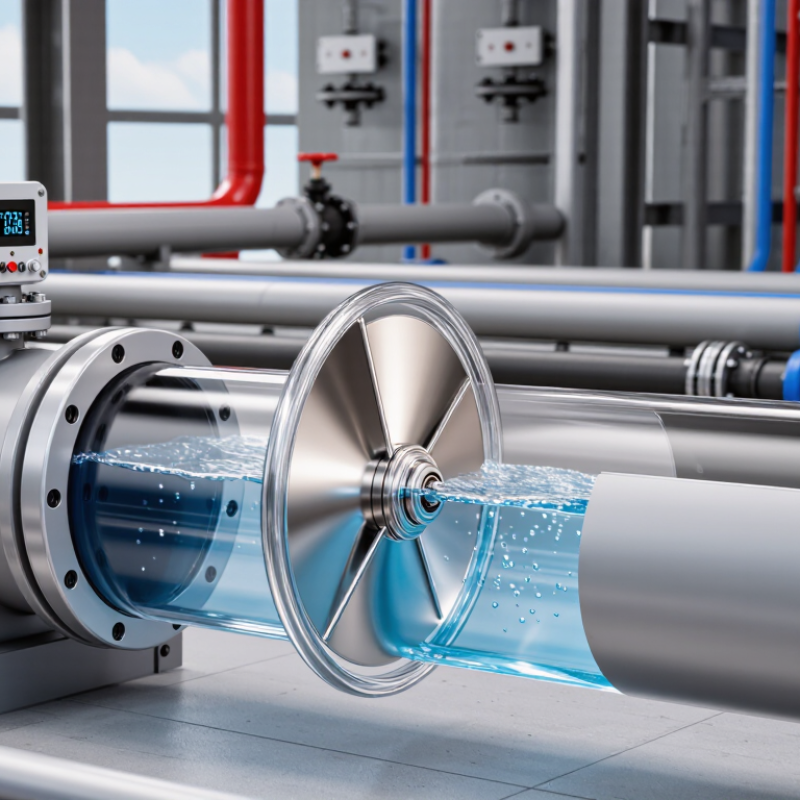
A paddle wheel flow meter measures liquid flow through a pipe using a small, rotating wheel. As fluid moves, the wheel spins. A sensor detects each rotation and converts the signal into flow rate. The faster the wheel turns, the higher the calculated flow.

It is a practical choice for clean or lightly filtered water, irrigation lines, cooling circuits, and process piping. Installation is usually simple. The meter needs a suitable pipe diameter, steady velocity, and enough straight pipe. Turbulence can distort the reading. So can dirt, bubbles, or a damaged bearing. It is not a perfect instrument.

Grand View Research valued the global flow meter market at about USD 8.1 billion in 2023. Its 2024 report also projected continued growth through 2030, driven partly by water management and industrial automation. That growth does not make every paddle wheel meter suitable. Selection still depends on flow range, fluid temperature, pressure, pipe material, and output signal.

In field testing, I would compare the meter’s stated accuracy with the actual operating range. A device rated for 1–100 L/min may perform poorly near 1 L/min. That detail is often overlooked. Check the sensor material, calibration method, insertion depth, and maintenance access. For dirty fluids, another meter type may be wiser. A paddle wheel meter works best when the fluid is predictable and the installation is carefully controlled.

How Paddle Wheel Flow Meters Measure Flow

How to Choose a Paddle Wheel Flow Meter in 2026?

How Paddle Wheel Flow Meters Measure Flow

A paddle wheel flow meter measures liquid movement through a pipe with a small rotating wheel. As water passes the blades, it creates rotational speed. A sensor detects each blade or magnetic pulse. The instrument converts pulse frequency into flow velocity. That velocity combines with the pipe’s internal area to calculate flow rate. Simple principle. In field testing, clean, stable liquid produces the most trustworthy readings.

Installation quality matters as much as electronics. The wheel must sit in a full pipe, with enough straight pipe nearby to reduce turbulence. Air pockets, partly open valves, or heavy swirl can make the reading jump. I have seen a meter appear accurate during steady testing, then drift after a pump changed speed. That result was not a sensor failure alone. The piping had changed.

When choosing a meter, check the minimum and maximum flow range carefully. A narrow operating range may hide low-flow errors. Liquid viscosity, suspended solids, temperature, and pressure also affect selection. Calibration against a known container or reference meter can expose installation errors. Do not trust a perfect number automatically. Review pulse output, response time, wetted materials, and maintenance access before purchase. A thin coating on the wheel can add friction and reduce pulse accuracy. Datasheets may not show that.

Key Specifications to Compare in 2026

How to Choose a Paddle Wheel Flow Meter in 2026?

Key Specifications to Compare in 2026

Choosing a paddle wheel flow meter starts with the real operating conditions, not the catalog headline. Compare the minimum, normal, and maximum flow rates. A meter that reads 2–20 liters per minute may struggle at 1 liter per minute. Check accuracy across the entire range, because advertised accuracy often applies only to selected conditions. Pipe diameter, connection type, and required straight-run distance also affect installation results.

Fluid compatibility deserves careful attention. Confirm the wetted materials against water, chemicals, suspended particles, and cleaning agents. Review pressure and temperature limits, especially near pumps or heated lines. Output options matter too. Pulse, frequency, analog, and digital signals suit different control systems. In practical testing, poor grounding and air bubbles can create unstable readings. Recheck the installation environment, including moisture, vibration, and cable length.

Tips: Compare repeatability, not accuracy alone. Ask for calibration information and test conditions. Keep a simple maintenance record. It can reveal drift before production suffers. Choose a sensor with accessible parts, but do not assume “easy service” means zero maintenance. I would also leave some flow-range margin; systems change, sometimes sooner than expected. A careful comparison now can prevent frequent alarms, weak data, and unnecessary replacement costs.

How to Match the Meter to Your Piping System

A paddle wheel flow meter must fit the piping system, not just the project specification. Start with the pipe’s internal diameter, material, pressure rating, and normal flow range. A meter sized only by nominal pipe size may read poorly at low flow. That mistake is common.

The installation needs a stable velocity profile. Straight pipe is usually required before and after the sensor, but the exact distance depends on elbows, valves, pumps, and reducers. Keep the paddle fully wetted, and avoid mounting it directly after a throttling valve. In horizontal lines, a side-mounted position often reduces air and sediment problems. Check the manufacturer’s insertion depth against the actual pipe wall thickness.

The U.S. Department of Energy reports that pumping systems can represent 25% to 50% of industrial electricity use.

Poor flow measurement can hide oversized pumps, unnecessary throttling, or clogged filters.

The U.S. Environmental Protection Agency estimates that household leaks waste nearly one trillion gallons of water annually.

Accurate measurement helps expose smaller losses before they become expensive.

A practical selection should compare minimum, normal, and maximum flow, not one ideal number. Paddle meters can be economical, but they are not perfect for dirty fluids, pulsating flow, or heavy solids. I would also question the straight-run assumption on older pipework. Real systems rarely match drawings. Verify the field conditions before ordering.

Installation, Calibration, and Maintenance Considerations

Choosing a Paddle Wheel Flow Meter in 2026

Start with the pipe. Confirm fluid compatibility, minimum and maximum flow, pressure, temperature, and pipe material. A meter should operate near its middle range, where the rotor responds steadily. For dirty water, inspect the fluid for sand, fibers, or scale. These particles can slow the paddle. A compact body may fit crowded piping, but servicing becomes awkward. That trade-off matters in real plants.

Install the sensor in a full pipe with a stable flow profile. Follow the required straight-run distance, and keep it away from elbows, pumps, valves, and partially open control devices. The arrow must match the flow direction. Tightening the fitting too aggressively can distort the sensor body. It happens more often than manuals suggest. After installation, compare the reading with a calibrated reference, timed container, or verified inline meter. Record pipe size, fluid temperature, test volume, and observed error. Calibration should cover at least two flow points, not one convenient reading. If the system changes, the old calibration may become unreliable.

Maintenance is simple only when scheduled. Check the rotor for hair, grit, and mineral deposits during planned shutdowns. Spin it by hand, if safe, and look for drag or uneven movement. Inspect wiring, seals, grounding, and display connections. Check the zero reading. Replace damaged seals before moisture enters the electronics. Keep a service log with dates and readings. I would question sudden “improvements”; a clean rotor may reveal a calibration problem instead. Air bubbles and vibration deserve attention too. Both can create believable, but wrong, numbers.