Top Flow Meter Manufacturers in China for Buyers

Choosing a Flow Meter manufacturer in China involves more than comparing catalog prices. Buyers need to match the instrument to the fluid, pipe size, flow range, pressure, temperature, and installation conditions. A meter that performs well on a clean-water test bench may behave differently with viscous oil, air bubbles, or suspended solids. Details matter.

Flow measurement analyst Jesse Yoder, founder of Flow Research, has long highlighted how diverse flow applications are. A useful paraphrase of his perspective is: “No single meter fits every process.” That idea is practical for buyers evaluating Chinese manufacturers. Ask how the supplier verifies accuracy, calibrates each unit, and documents test results. Request specifications for the exact model, not just a general product brochure. Where possible, compare factory records with an independent calibration report.

The manufacturers in this guide are assessed through buyer-focused criteria, including product range, application experience, technical support, customization, and quality-control practices. A polished website is not proof of consistent production. Price is only one factor. Ask who will answer technical questions after delivery, how replacement parts are handled, and whether the stated accuracy applies across your expected operating range. These checks can take time, and supplier claims may be difficult to compare directly. That is worth acknowledging. The goal is not to name one universal winner, but to help buyers shortlist manufacturers whose capabilities fit their process and service expectations. Before placing an order, confirm the model, materials, communication protocol, and test documentation in writing.
Top Flow Meter Manufacturers in China for Buyers

Flow Meter Fundamentals: Five Measurement Principles Used by Chinese Manufacturers

Chinese flow-meter makers commonly use five principles: differential pressure, electromagnetic induction, ultrasonic transit time, vortex shedding, and Coriolis force. Differential-pressure meters infer flow from pressure loss across a restriction. Electromagnetic meters suit conductive liquids, while ultrasonic units measure sound-time differences without cutting into the pipe. Vortex meters count swirls behind a bluff body. Coriolis meters measure mass flow through vibrating tubes. Each behaves differently.

The World Bank’s 2006 report, The Challenge of Reducing Non-Revenue Water, estimates that about 32 billion cubic meters of treated water are lost annually worldwide. Reliable metering helps operators find unusual flows, but a meter cannot fix poor installation or neglected maintenance. In practice, pipe vibration, bubbles, and changing fluid properties can distort readings. That caveat matters. Datasheets rarely capture every site condition.

Tips: Match the principle to the fluid and pipe. Check conductivity, pressure, temperature, straight-run requirements, and cleaning needs. Ask for calibration records and stated uncertainty; compare them with your actual operating range. A low purchase price may still mean higher upkeep.

China’s Major Flow Meter Makers: Product Ranges and Buyer Due Diligence

China’s flow meter makers cover a broad range of measurement needs, from water treatment to process production. Common options include electromagnetic meters for conductive liquids, turbine meters for clean fluids, and vortex meters for steam or gases. Ultrasonic models can suit larger pipes where cutting into the line is difficult. Coriolis meters measure mass flow and can also report density, but their cost and installation requirements may not fit every project.

Range matters. So does the actual operating point. A meter selected only by pipe diameter may perform poorly when flow varies widely. Ask suppliers for sizing calculations based on minimum, normal, and maximum flow, plus fluid temperature, pressure, and composition. Request details on wetted materials, lining, output signals, and any limits on installation. A neat catalog is not proof of a good match.

Buyer due diligence should include more than comparing quotations. Review calibration records, test procedures, and the scope of any stated certifications. Check whether the offered model—not merely the factory—matches the documents. Ask for a sample inspection report and confirm how spare parts and technical support are handled. If possible, inspect a unit or arrange a video review of the test bench. Small warning signs matter. I would question unclear tolerances or reports with no serial numbers. Even careful checks cannot remove every risk, and that deserves honest attention.

Flow Meter Technology: Typical Primary Output

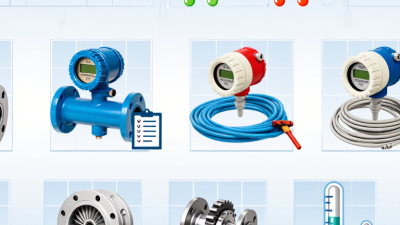
This technology map summarizes common product families, not manufacturer market shares or performance rankings. Coriolis and thermal mass meters typically provide mass-flow output; the other listed technologies typically provide volumetric flow or velocity-based output. Before buying, verify fluid compatibility, accuracy, turndown, materials, calibration, and required approvals for the specific meter and application.

Coriolis Meter Selection: Some Models Specify Accuracy Within ±0.1% of Rate

When comparing Coriolis meters from Chinese manufacturers, a specification of ±0.1% of rate can look impressive. It describes error relative to the measured flow, not the meter’s full-scale capacity. At a steady 10 kg/h, that allowance equals about ±0.01 kg/h, if the stated conditions apply. A small number. Check the fine print.

Ask which fluids, flow ranges, temperatures, and pressure conditions support the quoted accuracy. Some models achieve ±0.1% of rate only across a defined operating range, with suitable calibration and stable zero conditions. Near the bottom of the range, zero stability and repeatability deserve close attention. So does the installation. Strong pipe vibration, trapped gas, or an unsuitable meter size can undermine results, even when the datasheet looks excellent.

Request the model’s calibration documentation and its stated accuracy limits before comparing prices. Confirm whether the figure applies to mass flow, and whether it includes uncertainty from the transmitter and measurement setup. For a procurement review, compare performance at your actual minimum, normal, and peak flow rates. I would not choose a meter from one headline number alone. Specifications can be easy to misread. A clear test record is more useful than a confident sales claim.

Electromagnetic Meter Fit: Typical Minimum Liquid Conductivity Is 5 μS/cm

Top Flow Meter Manufacturers in China for Buyers

When comparing flow meter manufacturers in China, check whether their electromagnetic meters suit your actual liquid. A typical minimum conductivity is 5 μS/cm. Treat this as a common reference, not a universal guarantee. Some models need higher conductivity. Ask for the meter’s specified limit and test the process liquid where possible. Conductivity can shift with temperature or concentration.

Installation matters, too. The pipe should stay full, and the electrodes need sound contact with the liquid. Poor grounding or trapped air can cause unstable readings. Check the required liner and electrode materials against the fluid’s chemistry. A sample tested in a workshop may not match the line on a cold morning. That detail is easy to miss.

Tips: Request a datasheet, calibration details, and written conductivity limits before ordering. Share the pipe size, flow range, fluid temperature, and expected solids content. Compare the supplier’s answers, not just the quoted price. Real installations are rarely perfect, so leave room to verify the meter after commissioning.

Top Flow Meter Manufacturers in China for Buyers - Electromagnetic Meter Fit: Typical Minimum Liquid Conductivity Is 5 μS/cm

Use this specification checklist when comparing suppliers. Values below are common selection ranges or examples, not specifications for any particular manufacturer; confirm each item against the exact model and process conditions.

Buyer check Typical data or options What to verify
Liquid conductivity A commonly stated minimum is 5 μS/cm; the actual limit depends on the meter design and application. Confirm the model’s specified minimum and check conductivity at operating temperature. Very low-conductivity liquids may be unsuitable.
Measuring principle Electromagnetic meters measure conductive liquids using Faraday’s law of electromagnetic induction. Check that the liquid is electrically conductive and that the pipe can remain full during measurement.
Accuracy Common catalog claims include ±0.5% of reading; some models or operating conditions may have wider limits. Request the accuracy statement, reference conditions, calibration method, and any applicable low-flow limitations.
Electrode material Common choices include 316L stainless steel, Hastelloy, titanium, and tantalum, depending on the fluid. Match the electrode material to the fluid’s chemistry, concentration, temperature, and corrosion risk.
Liner material Options commonly include PTFE, PFA, and hard rubber; selection depends on temperature, pressure, and chemical compatibility. Confirm compatibility with the process fluid and verify the liner’s pressure and temperature limits.
Nominal size Industrial models are available in a range of nominal pipe sizes, commonly from small-bore sizes to large pipelines. Specify pipe diameter, flow range, connection standard, and expected velocity; do not select by pipe size alone.
Outputs and communication Common configurations include 4–20 mA, pulse or frequency output, and digital communication options. Confirm the required signal, protocol, power supply, wiring, and compatibility with the control system.
Installation conditions Electromagnetic meters have no moving parts in the flow tube and generally require a full pipe for reliable measurement. Review grounding, straight-run guidance, orientation, empty-pipe detection, and access for maintenance.
Enclosure and environment Remote and compact transmitter arrangements are commonly available; enclosure ratings vary by configuration. Check the stated IP rating, ambient-temperature range, cable entries, and whether the installation is indoors or outdoors.
Documentation and acceptance Useful purchasing documents include a datasheet, wiring diagram, calibration report, and material information. Agree on required certificates, inspection records, test conditions, and delivery documentation before placing an order.

Standards and Calibration: ISO 5167 and ISO/IEC 17025 Lab Competence

Top Flow Meter Manufacturers in China for Buyers

For buyers comparing flow meter manufacturers in China, standards and calibration records offer useful evidence beyond product specifications. ISO 5167-2:2022 covers orifice-plate measurement in full, circular pipes with diameters from 50 to 1,000 mm, within its stated installation and flow conditions. That range is not a blanket guarantee of accuracy. Upstream piping, pressure taps, fluid properties, and installation quality still matter. A neat datasheet cannot fix a poor setup.

ISO/IEC 17025:2017 sets requirements for laboratory competence, impartiality, and consistent operation. Ask whether the calibration laboratory’s accredited scope covers the meter type, flow range, and test medium you need. Review the certificate for reference standards, test conditions, measurement uncertainty, and traceability. In practice, these details help buyers compare results fairly. They also expose gaps. A certificate alone does not prove that the test conditions match your application.

Tips: Check the lab’s current accreditation scope, not only its logo. Ask for actual calibration data at several flow points. Small details matter—sometimes a little too much.

Sources: ISO 5167-2:2022; ISO/IEC 17025:2017.