
10 Best Liquid Flow Meters for Global Buyers
Choosing the right Liquid Flow Meter is rarely a simple product comparison. A meter that performs well in a clean-water plant may struggle with oil, syrup, slurry, or corrosive chemicals. Pipe size, fluid viscosity, temperature, pressure, conductivity, and flow range all influence the decision.
Jesse Yoder, Ph.D., a respected flow-measurement analyst, puts the challenge plainly: “There is no single flow meter for every application.” That principle guides this review of the 10 Best Liquid Flow Meters for Global Buyers. Each option is considered through practical criteria, including measurement accuracy, repeatability, turndown ratio, installation demands, maintenance, signal output, and total ownership cost.
Real conditions matter.
A magnetic meter may suit conductive water, but it cannot measure insulating hydrocarbons. Ultrasonic technology can simplify installation, yet poor pipe alignment or air bubbles may weaken its readings. Coriolis meters deliver strong mass-flow performance, although their price and weight can challenge smaller facilities. Vortex, turbine, positive displacement, and variable-area meters each solve different problems.
This guide also considers global purchasing realities. Buyers may need local technical support, calibration records, replacement parts, and clear documentation. Certification requirements can vary by industry and region. Those details are easy to overlook.
No ranking is perfect.
A laboratory result may not reflect a dusty factory floor. Supplier specifications also deserve independent checking. The final choice should match the fluid, piping system, operating environment, and maintenance skills available at the site.
Liquid Flow Meter Basics: Principles, Types, and Measurement Methods
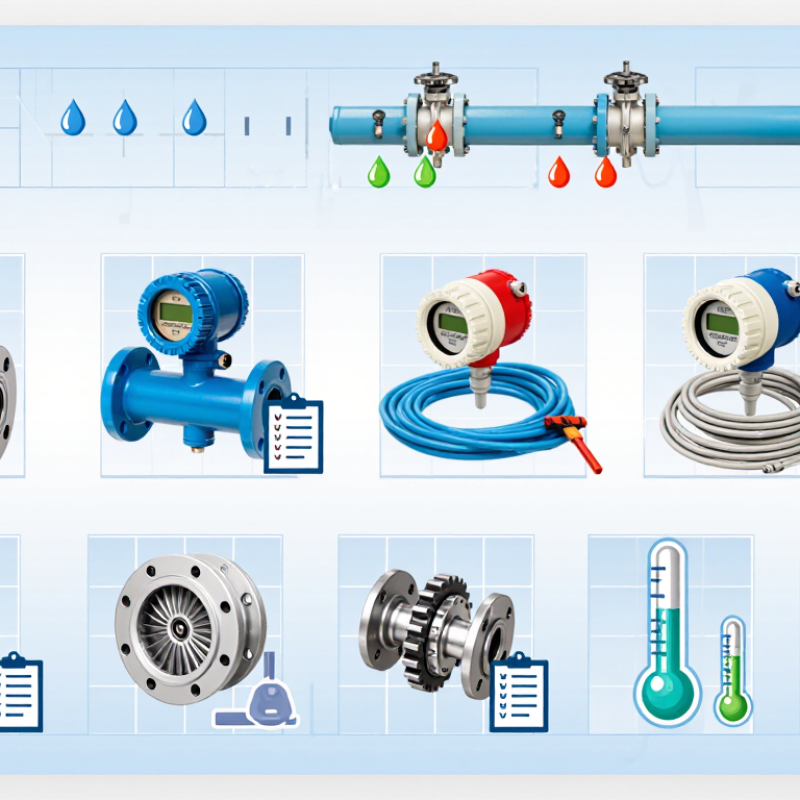
Liquid flow meters measure how much fluid moves through a pipe over time. The basic unit is usually liters per minute or cubic meters per hour. Accuracy depends on velocity, density, temperature, pressure, and pipe condition. Grand View Research’s 2024 analysis estimated the global flow meter market at about USD 8.7 billion in 2023, reflecting continued demand for reliable process measurement.
Different principles suit different liquids. Electromagnetic meters measure conductive fluids without obstructing the flow. Ultrasonic meters calculate velocity from sound transmission, often without cutting the pipe. Coriolis meters measure mass flow and can also estimate density. Vortex meters detect swirling patterns behind a bluff body. Positive displacement meters trap fixed fluid volumes and count them mechanically. Each method has limits. Conductivity, bubbles, suspended solids, and pulsation can change the result.
Measurement quality begins with installation. Keep the pipe full, provide suitable straight-run lengths, and remove nearby turbulence where possible. Check the meter against a traceable reference during commissioning and maintenance. ISO 17025 supports competent calibration laboratories, while the International Organization of Legal Metrology publishes guidance for measuring instruments. MarketsandMarkets projected the flow meter market to grow from roughly USD 8.5 billion in 2024 to USD 10.6 billion by 2029. Market forecasts differ, though. That uncertainty matters. A cheaper meter may become expensive when cleaning, recalibration, or poor data integration interrupts operations.
10 Best Liquid Flow Meters for Global Buyers - Liquid Flow Meter Basics: Principles, Types, and Measurement Methods
| Rank | Meter Type | Measurement Principle | Best-Suited Liquids | Typical Accuracy* | Main Advantages | Key Limitations | Common Applications | Installation Notes |
|---|---|---|---|---|---|---|---|---|
| 1 | Electromagnetic Flow Meter | Faraday’s law of electromagnetic induction measures the voltage generated when a conductive liquid moves through a magnetic field. | Water, wastewater, acids, alkalis, slurries, and other conductive liquids. | Typically ±0.2% to ±0.5% of reading, depending on design and calibration. | No moving parts, low pressure loss, handles dirty liquids and suspended solids, bidirectional measurement. | Requires minimum liquid conductivity; the pipe must remain full; unsuitable for most oils and gases. | Water treatment, chemical processing, irrigation, mining, and food production. | Provide a full pipe and follow recommended straight-run requirements; grounding is important for stable signals. |
| 2 | Coriolis Mass Flow Meter | Measures the twisting force caused by fluid motion in vibrating tubes to determine mass flow directly. | Liquids with changing density, hydrocarbons, chemicals, solvents, and high-value process fluids. | Typically ±0.1% to ±0.2% of mass flow for suitable process conditions. | Very high accuracy, direct mass-flow measurement, density and temperature data from many configurations. | Higher purchase cost, heavier construction, and possible sensitivity to excessive vibration or two-phase flow. | Batching, custody transfer, blending, dosing, chemical production, and fuel management. | Select tube size carefully for pressure drop and ensure the meter remains filled during operation. |
| 3 | Inline Ultrasonic Flow Meter | Transit-time measurement compares the travel time of ultrasonic signals moving with and against the liquid flow. | Clean water, treated water, low-solid-content liquids, and compatible industrial fluids. | Typically ±0.5% to ±1.0% of reading under suitable conditions. | No moving parts, low pressure loss, broad pipe-size availability, and good digital connectivity. | Performance can decline with bubbles, heavy solids, poor acoustic coupling, or highly aerated liquids. | Utility water, district energy, HVAC systems, process water, and industrial monitoring. | Install where the pipe stays full and flow is developed; observe specified upstream and downstream straight lengths. |
| 4 | Clamp-On Ultrasonic Flow Meter | External transducers send ultrasonic signals through the pipe wall and calculate flow from transit-time differences. | Clean or moderately clean liquids in metal, plastic, or lined pipes. | Typically ±1% to ±2% of reading when properly installed and calibrated. | Non-invasive, no process shutdown, minimal pressure loss, and convenient for temporary surveys. | Accuracy depends on pipe-wall condition, lining, transducer placement, fluid properties, and air bubbles. | Energy audits, retrofit projects, leak investigations, temporary verification, and large pipelines. | Measure pipe diameter and wall thickness accurately; prepare the surface and use suitable coupling material. |
| 5 | Positive Displacement Flow Meter | Captures fixed volumes of liquid in chambers and counts the number of displacement cycles. | Oils, fuels, lubricants, viscous liquids, and clean chemical or food liquids. | Typically ±0.1% to ±0.5% of reading after appropriate calibration. | Excellent repeatability, strong low-flow performance, and direct volumetric measurement. | Moving parts wear, pressure loss may be significant, and suspended solids can cause damage or blockage. | Fuel dispensing, batching, lubricant transfer, chemical dosing, and liquid inventory control. | Install a strainer when appropriate and avoid flow conditions that exceed the meter’s pressure or viscosity limits. |
| 6 | Turbine Flow Meter | A rotor spins in proportion to liquid velocity, and a pickup converts rotor speed into a flow signal. | Clean, low-viscosity liquids such as water, fuels, solvents, and process liquids. | Typically ±0.5% to ±1.0% of reading in the calibrated range. | Compact design, relatively low cost, fast response, and good repeatability for clean liquids. | Moving parts wear; viscosity changes, pulsation, and solids can affect accuracy and service life. | Fuel systems, water skids, laboratory equipment, chemical transfer, and flow testing. | Use flow conditioning and filtration where necessary; maintain the recommended straight pipe lengths. |
| 7 | Vortex Flow Meter | Measures the frequency of vortices shed by a bluff body placed in the flow stream. | Clean liquids with adequate velocity and stable process conditions. | Typically ±0.75% to ±1.5% of reading, depending on liquid and installation. | Few moving parts, broad temperature capability, and suitability for both liquid and other process services. | Needs sufficient flow velocity; affected by vibration, pulsating flow, and two-phase conditions. | Utility services, cooling water, process lines, and general industrial monitoring. | Install away from strong vibration and flow disturbances; ensure the meter operates above its minimum velocity. |
| 8 | Variable Area Flow Meter | A float rises in a tapered tube until upward flow force balances gravity and buoyancy; float position indicates flow. | Clean water, air-free liquids, solvents, chemicals, and low-to-moderate flow services. | Typically ±1% to ±2.5% of full scale, depending on tube and float design. | Simple, economical, easy to read locally, and requires no external power in basic versions. | Limited pressure and temperature capability in some designs; local reading may be difficult to automate without accessories. | Purge systems, laboratory lines, sampling panels, cooling circuits, and equipment protection. | Mount vertically with upward flow unless the design specifically allows another orientation. |
| 9 | Paddlewheel Flow Meter | A paddle or impeller rotates as liquid passes, with rotational speed correlated to flow velocity. | Clean or lightly filtered water and low-viscosity process liquids. | Typically ±1% to ±2.5% of reading after proper installation and calibration. | Cost-effective, compact, simple to replace, and suitable for many utility-water systems. | Requires moving parts, can be affected by debris and viscosity, and needs adequate flow profile. | Irrigation, cooling-water loops, swimming-pool systems, filtration equipment, and general water monitoring. | Install in a full pipe with the sensor correctly aligned to flow and provide upstream filtration where needed. |
| 10 | Differential-Pressure Flow Meter | A restriction, such as an orifice plate or venturi tube, creates a pressure difference that is related to flow rate. | Water, hydrocarbons, chemicals, and liquids compatible with the primary element and pressure connections. | Typically ±1% to ±2.5% of reading for a well-designed and calibrated system. | Mature technology, broad process-temperature capability, and extensive engineering standards and practices. | Permanent pressure loss, square-root signal processing, impulse-line maintenance, and reduced accuracy at low flow. | Process plants, utility systems, pipeline measurement, chemical service, and high-temperature applications. | Correct impulse-line routing, pressure-tap placement, air removal, and suitable transmitter range are essential. |
*Accuracy figures are representative industry ranges rather than guaranteed specifications. Actual performance depends on meter design, pipe size, fluid properties, flow profile, installation, calibration, temperature, pressure, and operating range.
Related Posts
-
10 Best Liquid Flow Meters for Accurate Measurement in 2026?
-
Top 10 Flow Meters: Industry Trends & Efficiency Data You Need to Know
-

The Ultimate Guide to Understanding Flow Meters and Their Impact on Industrial Efficiency
-
How to Choose the Best Liquid Flow Meter for Your Needs?
-
9 Proven Reasons Why Mechanical Flow Meters Are the Best Choice for Accurate Measurements
-
What is a Flow Meter and How Does it Work?