China Top 10 Flow Sensor Manufacturers for Global Buyers
Choosing a Flow Sensor supplier is not simply a matter of comparing prices or browsing product photographs. Global buyers must match the instrument to the process: water, oil, gas, or a chemically aggressive liquid. Pipe diameter, flow range, pressure, temperature, and required accuracy all matter. A sensor that performs well in a clean test line may behave differently in a plant with vibration, bubbles, or changing temperatures.
Measurement pioneer Lord Kelvin offered a useful reminder: “When you can measure what you are speaking about... you know something about it.” His words are not specific to flow sensors, but they capture a central buying principle: ask how performance is tested, stated, and verified. Review calibration practices, installation requirements, material compatibility, documentation, and after-sales support. Small details count. A probe’s wetted material can matter as much as its measurement range.
This guide introduces ten manufacturers for global buyers to evaluate, not as a universal ranking. Product lines, service coverage, and suitability vary by application and region. Compare published specifications with your operating conditions, and request evidence for any performance claim that affects safety or production. A practical shortlist should also consider lead times, replacement parts, and technical support. No list can replace application review. Even a well-known supplier may not fit every process, and that is worth checking before purchase.
Understanding Flow Sensors and Their Industrial Applications
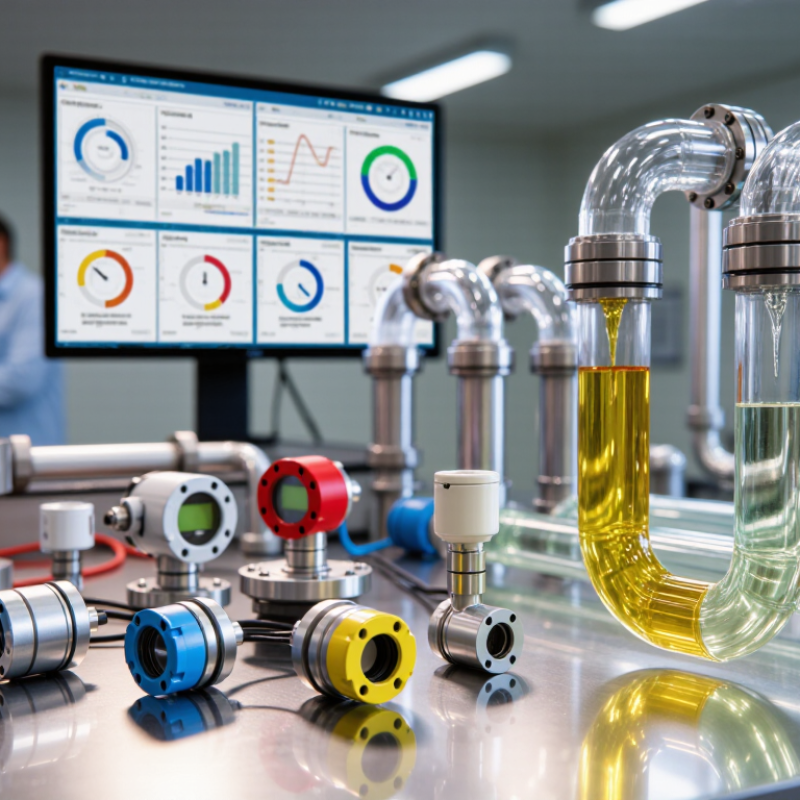
Flow sensors measure how much liquid or gas moves through a pipe over time. Common designs use electromagnetic, ultrasonic, turbine, or differential-pressure methods. Each works differently, so the medium matters. A sensor suited to clean water may not perform well with thick oil or air bubbles. Small details matter.
Factories use flow sensors to monitor cooling water, chemical dosing, compressed air, and fuel delivery. Readings can help operators spot leaks, keep batch processes consistent, and check whether pumps are working as expected. Accuracy depends on more than the sensor itself. Pipe diameter, flow speed, temperature, vibration, and installation position can all affect results. A tidy datasheet cannot capture every condition on a busy production line.
Tips: Confirm the fluid, operating range, and pipe size before choosing a sensor. Check whether the pipe must remain full, and leave enough straight pipe near the measuring point. Record readings during normal operation, not just during a quick test. Test it onsite. Occasional drift is easy to overlook, so compare measurements with maintenance records and inspect the sensor when readings change unexpectedly.
주요 Types of Flow Sensors Made in China
Chinese-made flow sensors commonly include electromagnetic, ultrasonic, vortex, turbine, differential-pressure, thermal-mass, and Coriolis designs. Each measures flow differently, so the right choice depends on the fluid and installation. Electromagnetic meters suit conductive liquids in full pipes; clamp-on ultrasonic units can measure from outside a pipe. Turbine meters respond well to clean, steady liquids, while vortex meters often serve steam and gas lines. No sensor wins everywhere.
The global market offers useful context, but not a China-specific production count. MarketsandMarkets’ Flow Meter Market report estimated the market at about US$8.4 billion in 2023, with a projected rise to US$11.3 billion by 2028. Its categories include magnetic, ultrasonic, vortex, turbine, and differential-pressure meters.
For buyers, details matter: check pipe diameter, fluid conductivity, temperature, pressure, and required accuracy. A data sheet alone can mislead. Sediment may wear a turbine meter; bubbles can disturb some ultrasonic readings. Coriolis meters measure mass flow directly, but cost and installation space may be limiting. It is easy to overlook calibration. Ask for test conditions and calibration records, then compare them with the actual process.
How to Evaluate Chinese Flow Sensor Manufacturers
Choosing among China’s flow sensor manufacturers starts with the application, not the catalogue.
A sensor handling clean water may fail in slurry, steam, or pulsating flow. Record fluid composition, pipe diameter, temperature, pressure, expected flow range, and required output before requesting quotations. Numbers need context. Grand View Research estimated the global flow meter market at USD 8.1 billion in 2023 and projected a 6.2% compound annual growth rate from 2024 to 2030 in its 2024 Flow Meter Market Size, Share & Trends Analysis report. That growth signals broad demand, not proof that any supplier suits a specific process.
Compare stated accuracy across the full operating range, not just at one test point. Request calibration certificates, test conditions, uncertainty figures, and evidence that calibration equipment is traceable to recognized standards. Ask whether the calibration laboratory’s accredited scope covers the relevant flow range and medium. Ask for evidence. Review sample reports, material specifications, response time, output compatibility, and spare-parts availability. A short factory video cannot verify production consistency; a site audit or independent inspection can add useful evidence. A polished datasheet can still leave gaps, especially around low-flow performance and installation effects. These checks take time, but they make supplier comparisons more reliable.
China’s Top 10 Flow Sensor Manufacturers for Global Buyers
For global buyers, China’s top 10 flow sensor manufacturers are best treated as a shortlist, not a guaranteed ranking. The right supplier depends on the fluid, pipe size, operating pressure, and required accuracy. A sensor designed for clean water may not suit a line carrying viscous oil or small air bubbles. Ask for the measurement range, repeatability data, and installation requirements. Small details matter.
Compare manufacturers by evidence, not polished claims. Request current calibration records, product specifications, and test conditions for the exact model under review. Check whether the sensing method fits your process, such as electromagnetic measurement for conductive liquids or thermal measurement for gas. Confirm connection sizes, output signals, enclosure ratings, and lead times in writing. A sample test can reveal unstable readings or awkward wiring before a larger order. Factory visits or live technical calls may help clarify production controls, though they cannot replace independent verification. Even a detailed datasheet can leave gaps; buyers should record unanswered questions and resolve them before approving a purchase.
China Top 10 Flow Sensor Manufacturers for Global Buyers - China’s Top 10 Flow Sensor Manufacturers for Global Buyers
Technology-based comparison for evaluating flow-meter suppliers. The entries describe established measurement principles and are not a ranked list of individual manufacturers.
| No. | Flow Sensor Technology | Measurement Principle | Typical Applications | Key Advantages | Important Selection Considerations |
|---|---|---|---|---|---|
| 1 | Electromagnetic | Measures the voltage induced as a conductive liquid flows through a magnetic field. | Water, wastewater, slurries, and other electrically conductive liquids. | No moving parts in the flow path; suitable for many dirty or abrasive liquids. | The liquid must be electrically conductive. Check liner and electrode material compatibility, grounding, and pipe-full requirements. |
| 2 | Ultrasonic — Transit-Time | Compares ultrasonic travel times in and against the direction of flow. | Clean liquids in industrial, building-services, and water-management systems. | Clamp-on versions can measure flow without cutting the pipe or contacting the liquid. | Performance depends on fluid condition, pipe material, wall thickness, installation, and the availability of suitable straight pipe runs. |
| 3 | Ultrasonic — Doppler | Uses the frequency shift of sound reflected by particles or bubbles moving with the fluid. | Liquids containing suspended solids or entrained gas, including some wastewater streams. | Can be installed externally in clamp-on configurations and does not require a moving flow-path component. | Requires suitable reflectors in the liquid; it is generally not intended for clean, particle-free liquids. |
| 4 | Coriolis Mass | Detects forces in vibrating tubes to determine mass flow; many instruments also measure density. | Liquids and gases in applications where direct mass-flow measurement is useful. | Measures mass flow directly and can provide density information without relying on a separate volumetric-flow calculation. | Consider instrument size, pressure drop, vibration, process connections, and the effects of gas entrainment or two-phase flow. |
| 5 | Thermal Mass | Determines gas mass flow from heat transfer between a heated sensor and the moving gas. | Gas utilities, compressed-air monitoring, and selected process-gas measurements. | Provides a direct mass-flow measurement for gas applications and can be useful for low-flow monitoring. | Gas composition, temperature, pressure, contamination, and calibration conditions can affect measurement performance. |
| 6 | Turbine | Relates the rotational speed of a rotor in the flow to the flow rate. | Relatively clean liquids or gases in applications compatible with the selected meter design. | Can offer a compact design and a pulse output suitable for electronic totalizing. | Moving parts are subject to wear. Check fluid cleanliness, viscosity, bearings, filtration, and the required maintenance schedule. |
| 7 | Vortex | Measures the frequency of vortices shed by a bluff body placed in the flow. | Steam, gases, and liquids in suitable industrial process conditions. | A common option for several process-fluid services, with no rotor in the flow path. | Check minimum flow, pipe vibration, fluid condition, straight-run requirements, and whether the application is within the instrument’s operating limits. |
| 8 | Positive Displacement | Measures flow by repeatedly trapping and moving known volumes of fluid. | Many liquid-metering and transfer applications, including some higher-viscosity fluids. | Measures volume directly and can perform well in suitable low-flow liquid applications. | Moving parts require attention to wear and fluid cleanliness. Verify viscosity range, pressure drop, and materials of construction. |
| 9 | Variable Area (Rotameter) | A float moves in a tapered tube until the upward fluid force balances the float’s weight. | Local indication of liquid or gas flow in process lines and utility systems. | Provides a simple visual indication and typically does not require external power for basic indication. | Installation orientation, fluid properties, scale calibration, pressure, temperature, and optional alarm or transmitter requirements matter. |
| 10 | Differential Pressure | Infers flow from the pressure difference created by a primary element, such as an orifice plate or Venturi tube. | Liquids, gases, and steam when paired with a suitable primary element and pressure measurement system. | A widely established measurement approach with multiple primary-element designs for different process needs. | Requires suitable installation and pressure measurement. Assess permanent pressure loss, fluid properties, piping, and calibration requirements. |
What Global Buyers Should Check Before Choosing a Supplier
A supplier’s catalogue is only a starting point. Check whether the sensor suits your actual fluid, pipe size, operating pressure, temperature, and flow range. A meter tested on clean water may perform differently with viscous liquid or entrained air. Ask for calibration certificates, stated uncertainty, and the conditions used during testing. Confirm that calibration is traceable to recognized standards, and request sample test records—not just a brochure. Small details matter.
The IEA’s Energy Efficiency 2023 report estimates that industry accounted for about 37% of global final energy demand in 2022, making reliable process data important for efficient operations. MarketsandMarkets’ 2024 flow-meter market report estimated the sector at about US$9.6 billion that year, with further growth forecast. These figures describe a broad market, not proof that any individual supplier is dependable. Ask how each model handles signal drift, installation effects, and maintenance intervals. A polished datasheet can still leave gaps. Check spare-part lead times, technical support across time zones, and whether the supplier can provide references from comparable applications. The lowest quote may omit essential testing or after-sales support; compare the full service scope before deciding.
Flow Meter Accuracy: Indicative Ranges by Technology
Typical accuracy ranges commonly specified for industrial flow meters, shown as a percentage of reading. Actual performance depends on the model, installation, fluid, and operating conditions; confirm the figures in the supplier’s datasheet.
Lower percentages indicate tighter stated accuracy. Use this comparison as an initial screening guide, not as a substitute for model-specific specifications or application testing.
Related Posts
-
7 Best Flow Rate Meters for Accurate Measurement?
-
How to Choose the Right Flow Sensor in 2026?
-

Top 10 Flow Rate Meters for Accurate Measurement and Performance Evaluation
-
10 Best Liquid Flow Meters for Accurate Measurement in 2026?
-
The Ultimate Guide to Understanding Flow Meters and Their Impact on Industrial Efficiency
-
Understanding the Importance of Water Flow Meters in Efficient Resource Management