How to Choose the Right Flow Sensor in 2026?
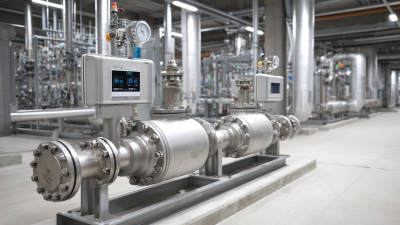
Choosing the right Flow Sensor in 2026 requires more than comparing prices or product photos. The sensor must match the fluid, pipe size, pressure, temperature, and expected flow range. A device that performs well with clean water may fail with oil, slurry, steam, or corrosive chemicals. Small details matter. A 25-millimeter pipe, a pulsing pump, or trapped air can change the measurement.
Real-world experience shows that installation conditions often matter as much as sensor technology. Electromagnetic sensors suit conductive liquids, while ultrasonic models can support non-invasive measurement. Coriolis sensors can provide highly accurate mass-flow data, but their cost and installation demands may be unsuitable for simple systems. Thermal sensors are useful for gases, yet humidity and changing gas composition can affect results. Review technical datasheets, calibration certificates, ingress ratings, and recognized industry standards before making a decision. Ask how the sensor behaves during cleaning, vibration, pressure surges, and signal loss.
There is no perfect choice.
A reliable selection process begins with measurable requirements. Record the minimum, normal, and maximum flow rates. Check the fluid’s conductivity, viscosity, density, and chemical compatibility. Confirm whether the output must connect with a PLC, SCADA system, or wireless network. Independent testing and supplier support can reduce risk, but neither replaces proper commissioning. Even experienced engineers can overlook straight-pipe requirements or maintenance access. That is why a small pilot installation, followed by comparison against a calibrated reference, may reveal weaknesses before they become expensive failures.
Understanding Flow Sensor Types and Measurement Principles
How to Choose the Right Flow Sensor in 2026?
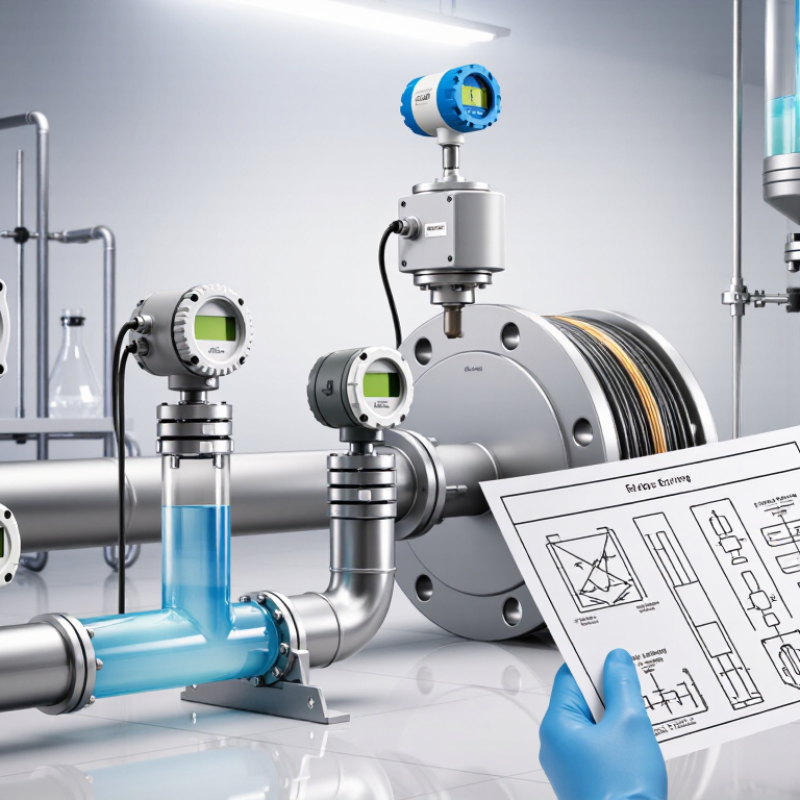
Choosing a flow sensor starts with its measurement principle, not its price. Differential-pressure sensors estimate flow from pressure loss across a restriction. They suit many industrial lines, but accuracy can suffer when density changes. Turbine sensors use a rotating element, so clean liquids and stable flow are important. Vortex sensors detect vortices behind a bluff body and work well with steam, gases, and liquids. Magnetic sensors measure conductive liquids without moving parts. Ultrasonic sensors calculate flow from sound travel time, while thermal mass sensors respond to heat transfer in gases.
The fluid decides much of the answer. Check conductivity, viscosity, temperature, pressure, suspended solids, and expected flow range. A sensor may look accurate on paper yet fail when bubbles enter the pipe. Installation matters too. Allow adequate straight pipe, avoid vibration, and confirm the sensor remains full. A practical lesson from field inspections is simple: poor placement often creates larger errors than the instrument itself. No sensor is perfect. I still question any selection based on one specification alone.
Tips: Compare accuracy across the full operating range, not only the maximum value. Request calibration records with traceable references. Check response time for pulsing systems. Consider maintenance access before installation. For uncertain applications, test a sample under real temperature and pressure conditions. Small details matter.
Defining Your Flow Measurement Requirements
Choosing the right flow sensor in 2026 starts with defining your measurement requirements, not browsing product catalogs. Identify the fluid, flow range, pressure, temperature, pipe size, and installation position. A clean water line behaves differently from a slurry carrying abrasive particles. Record minimum, normal, and peak flow values from operating data whenever possible. Estimates can mislead.
Clarify the purpose of the measurement. Billing may require higher accuracy than basic equipment monitoring. Process control may prioritize response time and repeatability. Check fluid viscosity, conductivity, suspended solids, bubbles, and pulsation. Some sensors need a completely filled pipe and stable straight-run conditions. Others handle changing profiles more effectively. Do not assume the installation is ideal. Inspect it.
Consider maintenance before approving the specification. Ask whether the sensor can be inspected without shutting down production. Review wetted materials, cleaning methods, cable routing, signal output, and environmental protection. Calibration should be traceable to recognized references, with verification intervals based on risk and operating history. Keep records of zero checks, drift, and unusual readings. Small errors may reveal larger process problems.
A practical requirement sheet should include accuracy, repeatability, response time, allowable pressure loss, and expected service life. Include acceptance criteria for commissioning. Field experience often exposes gaps that technical drawings hide. One overlooked air pocket can distort a carefully selected measurement. That possibility deserves attention.
Matching Sensor Technology to Fluid and Pipeline Conditions
How to Choose the Right Flow Sensor in 2026?
Matching sensor technology to fluid and pipeline conditions should come before comparing specifications. I have seen installations fail because teams selected sensors by pipe size alone. Conductive liquids often suit electromagnetic measurement, especially in wastewater or slurry lines. Coriolis sensors can measure mass flow and density, but their cost and pressure drop may challenge smaller systems. Ultrasonic clamp-on sensors reduce shutdowns and avoid cutting the pipe. However, bubbles, heavy scaling, and poor acoustic contact can weaken their readings.
Pipeline conditions matter just as much. Steam and clean gases may work well with vortex or differential-pressure measurement. Differential-pressure devices remain practical in harsh environments, but they create permanent pressure loss. The International Energy Agency reported that industry used about 37% of global final energy in 2022. Accurate flow data can expose inefficient pumping and compressed-air losses. The U.S. Department of Energy estimates pumping systems account for roughly 25% of industrial motor energy use. These figures make sensor selection an operating decision, not a purchasing detail.
Tips: Check conductivity, viscosity, temperature, pressure, solids, and expected flow range. Confirm straight-run requirements before installation. Ask for calibration records and uncertainty data. A clamp-on trial can reveal installation problems early. I would also test the sensor during startup and peak demand. That step is often skipped, and it should not be. No sensor is perfect; field conditions can expose assumptions that looked reasonable on paper.
How to Choose the Right Flow Sensor in 2026? – Matching Sensor Technology to Fluid and Pipeline Conditions
| Sensor Technology | Best-Suited Fluids | Electrical Conductivity Requirement | Typical Pipeline Conditions | Typical Accuracy | Pressure Loss | Key Advantages | Main Limitations and Selection Checks |
|---|---|---|---|---|---|---|---|
| Magnetic-Inductive | Water, wastewater, slurries, acids, alkalis, and other conductive liquids | Usually at least approximately 5 µS/cm; the required minimum depends on the instrument design | Commonly used from small process lines to large water pipelines; full pipe is required; electrode-compatible lining and materials must be selected | About ±0.2% to ±1.0% of reading | Very low; no obstruction in the flow path | No moving parts; suitable for dirty liquids and suspended solids; bidirectional measurement is possible | Cannot measure hydrocarbons, most oils, gases, steam, or deionized water; grounding, electrode contact, and empty-pipe detection are important |
| Ultrasonic Transit-Time | Clean liquids such as water, treated water, chemicals, and low-solids process fluids | No conductivity requirement | Works in full pipes; clamp-on versions can be installed without cutting the pipe; requires adequate acoustic coupling and a suitable straight-run arrangement | About ±0.5% to ±2.0% of reading, depending on installation and fluid conditions | Very low; clamp-on and spool-piece designs do not significantly obstruct flow | Non-invasive installation is available; handles large pipe diameters; no wetted moving parts | Performance can decline with entrained air, excessive bubbles, high solids, heavy scale, poor pipe-wall condition, or unsuitable flow profile |
| Ultrasonic Doppler | Liquids containing suspended particles or gas bubbles, including wastewater and some slurries | No conductivity requirement | Requires reflectors such as suspended solids or bubbles; suitable pipe condition and sufficient concentration are necessary | About ±1.0% to ±5.0% of reading | Very low | Can measure fluids that are unsuitable for transit-time ultrasonic measurement; clamp-on installation is available | Not suitable for very clean liquids; accuracy depends strongly on particle or bubble concentration and distribution |
| Coriolis Mass Flow | Liquids, gases, and dense-phase fluids; especially useful when direct mass flow and density are required | No conductivity requirement | Best for full pipes and stable operating conditions; line size is often smaller than the connected process line; pressure rating and temperature range must be checked | About ±0.1% to ±0.5% of mass flow for many liquid applications | Low to moderate, depending on tube design, size, viscosity, and flow rate | Direct mass-flow measurement; can also provide density and temperature data; good for dosing and high-value fluids | Higher purchase cost and weight; pressure drop can be significant on small or viscous-service meters; vibration and two-phase flow may affect performance |
| Vortex | Clean liquids, gases, and steam with relatively stable flow conditions | No conductivity requirement | Requires a full pipe, adequate velocity, and suitable upstream and downstream straight lengths; commonly used in utility and process lines | About ±0.7% to ±2.0% of reading for liquids; varies by application | Moderate, due to the bluff body in the flow path | One sensor can measure liquids, gases, or steam; no moving parts; useful for saturated or superheated steam with appropriate compensation | Needs minimum Reynolds number and stable flow; sensitive to vibration, pulsation, swirl, low flow, and wet steam; unsuitable for heavily contaminated fluids |
| Differential-Pressure with Primary Element | Liquids, gases, and steam across a broad range of industrial services | No conductivity requirement | Orifice plates, nozzles, or venturi tubes require a full pipe and controlled installation geometry; impulse lines must suit the fluid and temperature | About ±0.5% to ±2.0% of reading after proper calibration and installation | Moderate to high, especially with orifice plates | Well-established method; broad pressure and temperature capability; suitable for many high-pressure and high-temperature services | Permanent pressure loss can be substantial; square-root extraction is required; accuracy is affected by density, impulse-line condition, wear, plugging, and flow profile |
| Variable-Area | Clean, low-to-moderate viscosity liquids and gases; suitable for local indication and simple flow control | No conductivity requirement | Normally installed vertically with upward flow; requires a full measuring tube and a stable operating range | About ±1.0% to ±5.0% of full scale | Low to moderate | Simple construction; easy visual indication; does not require external power for basic local indication | Reading depends on fluid density and viscosity; limited for pulsating flow, dirty fluids, very high pressure, or remote digital integration unless equipped with transmitters |
| Thermal Mass | Clean, dry gases and air; low-flow gas measurement | No conductivity requirement | Requires a single-phase gas stream, stable thermal properties, and proper insertion depth or flow-conditioning; often used in smaller lines and compressed-air systems | About ±1.0% to ±3.0% of reading, depending on gas calibration and installation | Very low | Direct mass-flow output for gases; good sensitivity at low flow; minimal obstruction in many insertion designs | Gas composition, humidity, pressure, temperature, contamination, and condensation can affect accuracy; generally unsuitable for liquids and wet or dirty gas without appropriate design |
| Positive Displacement | Clean or moderately clean, viscous liquids such as oils, fuels, and syrups | No conductivity requirement | Requires a full pipe and adequate lubrication; pressure rating, viscosity range, filtration, and pulsation should be evaluated | About ±0.1% to ±1.0% of reading | Low to high, depending on viscosity, speed, and meter design | Good accuracy at low flow; direct volumetric measurement; suitable for viscous liquids and batching | Moving parts can wear; debris may cause damage or blockage; pressure loss increases with viscosity and flow rate; not suitable for gases or abrasive slurries |
| Turbine | Clean, low-viscosity liquids and gases with stable, reasonably high flow rates | No conductivity requirement | Requires a full pipe, adequate straight run, and filtration where contamination is possible; bearing and rotor materials must match the fluid | About ±0.5% to ±1.5% of reading | Low to moderate | Good repeatability; fast response; compact design; suitable for clean-fluid batching and monitoring | Moving parts are sensitive to solids, viscosity changes, pulsation, and excessive flow; calibration can shift as bearings or rotor components wear |
| Open-Channel Flow | Wastewater, stormwater, irrigation water, and other free-surface flows | No conductivity requirement for area-velocity or ultrasonic level-based systems | Used in partially filled channels, flumes, weirs, and conduits; requires a known cross-section and suitable hydraulic conditions | About ±2.0% to ±5.0% of reading, depending on site and hydraulic calibration | Not applicable in the same way as closed-pipe meters | Measures flow without requiring a pressurized full pipe; suitable for channels and partially filled conduits | Site geometry, sediment, turbulence, changing water level, debris, and upstream hydraulic conditions strongly influence accuracy |
Note: Accuracy ranges are representative application ranges rather than universal guarantees. Final selection should verify fluid composition, viscosity, density, conductivity, solids or gas content, pressure, temperature, pipe size, flow range, straight-run requirements, installation orientation, and calibration conditions.
Comparing Accuracy, Range, Installation, and Maintenance Needs
How to Choose the Right Flow Sensor in 2026?
Accuracy is meaningful only when measured across the actual operating range. A sensor rated at ±1% may perform differently near its minimum flow. Check the turndown ratio, process temperature, pressure, and fluid properties before comparing specifications. In field checks, compare readings with a traceable reference device under steady conditions. Small errors matter. Select a measuring range that covers normal flow, not just the maximum possible value. Oversizing can reduce resolution, while undersizing may create pressure loss or early failure. That assumption can fail.
Installation often decides whether laboratory accuracy survives daily operation. Leave enough straight pipe before and after the sensor, as swirling flow can distort readings. Confirm connection size, mounting direction, grounding, and access for inspection. Wet or dusty locations may require suitable enclosure protection. I once saw a well-specified sensor produce unstable readings because a nearby valve caused turbulence. The sensor was not the real problem.
Maintenance needs should match the site’s staff, tools, and shutdown schedule. Choose designs with removable sensing parts when cleaning is frequent. Record calibration dates, zero checks, unusual vibration, and changes in pressure drop. Inspect seals and electrical connections during planned service. A clear maintenance log improves reliability and supports professional troubleshooting. Do not assume “maintenance-free” means risk-free; buildup, air bubbles, and aging cables still affect performance. Keep it accessible.
Evaluating Costs, Compatibility, and Long-Term Performance
How to Choose the Right Flow Sensor in 2026?
Price is only the first line on the quotation. A sensor costing 20% less can demand expensive adapters, rewiring, or frequent cleaning. Check the fluid, viscosity, temperature, pressure, pipe diameter, and required accuracy before comparing models. Compatibility comes first. Confirm the output protocol, enclosure rating, wetted materials, and calibration method with your control system. A perfect sensor on paper may fail when bubbles, sediment, or pulsating flow enters the pipe.
Market data supports careful planning. MarketsandMarkets estimated the flow sensors market at about USD 8.2 billion in 2023, with projected growth to roughly USD 12.0 billion by 2028. This expansion reflects wider industrial monitoring, not automatic savings. The U.S. Department of Energy reports that pumping systems can represent significant industrial electricity use, so unstable flow readings may hide wasted energy. Small errors become costly over time.
Calculate total ownership cost across five years. Include installation labor, calibration, replacement parts, software access, energy use, and production downtime. Ask for documented accuracy across the actual operating range, not only laboratory conditions. In my experience, maintenance teams value removable sensors more than impressive specifications. That choice is not always right. A clean process may justify a lower-maintenance design, while abrasive service needs stronger materials and planned inspections. Grand View Research also identifies expanding process automation as a major market driver, but automation cannot correct poor installation. Review the assumptions before approval.
Related Posts
-
Understanding Flow Transmitters: The Key to Accurate Fluid Measurement in Industrial Applications
-
7 Best Flow Rate Meters for Accurate Measurement?
-
How to Choose the Best Water Flow Sensor for Your Project?
-

Top Flow Transmitter Solutions for Global Procurement Needs?
-

Top 10 Flow Rate Meters for Accurate Measurement and Performance Evaluation
-
How to Select the Best Turbine Meter for Your Industrial Needs