China Top 10 Clamp On Water Flow Meter Manufacturers?
Choosing a reliable Clamp On Water Flow Meter manufacturer in China requires more than comparing product prices. Buyers must examine measurement accuracy, sensor design, installation guidance, calibration records, and after-sales support. This article introduces ten notable Chinese manufacturers serving water treatment, HVAC, irrigation, municipal, and industrial applications.
The selection considers practical experience, engineering capability, production quality, and customer communication. It also reviews whether suppliers provide clear specifications, compatible pipe-size ranges, technical documents, and field support. Some manufacturers focus on portable instruments, while others develop fixed systems for long-term monitoring. Different needs matter.
A well-designed meter should work steadily on real pipelines, not only in a showroom. Pipe material, wall thickness, lining, flow profile, and suspended solids can affect readings. Experienced suppliers explain these limits before recommending a model. That transparency is important.
No ranking can fit every project. A factory with strong export experience may not be ideal for a small local installation. Another supplier may offer excellent hardware but weaker documentation. These differences deserve careful review. Buyers should request sample reports, testing details, warranty terms, and references from comparable applications.
The following overview is a practical starting point, not a final verdict. Product information can change, and supplier performance may vary by project team. Independent verification remains necessary before purchase. When technical advice is specific and measurable, the shortlist becomes more useful, more reliable, and easier to defend.
What Is a Clamp-On Water Flow Meter?
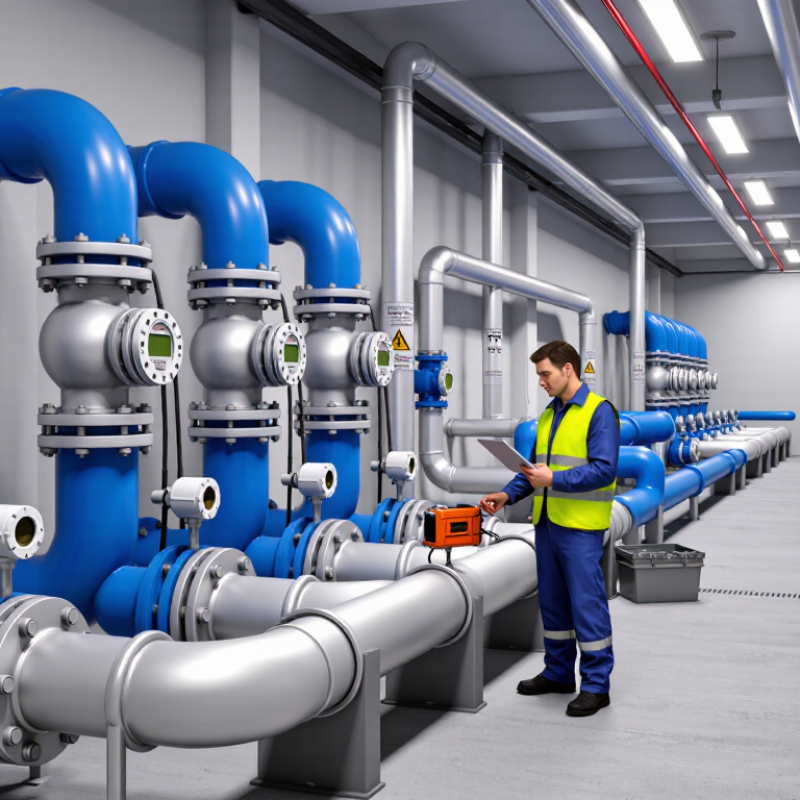
A clamp-on water flow meter measures water movement without entering or cutting the pipe. It uses sensors fixed to the outside wall, usually with straps and acoustic coupling gel. Ultrasonic signals travel through the pipe and water. The instrument compares their travel times to calculate flow velocity and volume.
No pipe cutting. That is the main advantage.
Technicians can install these meters on steel, copper, plastic, and lined pipes, provided the pipe wall and internal condition are suitable. The display usually shows flow rate, total volume, and sometimes temperature. Transit-time models work well with clean water, while Doppler models may need suspended particles or air bubbles. Pipe diameter, wall thickness, lining, and water quality all affect accuracy.
In field use, I would inspect the pipe surface first and remove loose rust or paint. The sensor position also matters. Valves, elbows, pumps, and partially filled sections can disturb the reading. A straight pipe section is safer. Some installations produce unstable values, even when the meter appears correctly mounted. That result should trigger another inspection, not blind acceptance.
Clamp-on meters are useful for temporary testing, leak investigations, energy checks, and permanent monitoring. They reduce downtime and avoid contact with the water. However, they do not automatically solve every measurement problem. Proper sensor spacing, calibration, and verification against a known flow condition remain essential.
How to Evaluate Chinese Clamp-On Flow Meter Manufacturers
China Top 10 Clamp On Water Flow Meter Manufacturers?
How to Evaluate Chinese Clamp-On Flow Meter Manufacturers
A “top 10” list should begin with evidence, not search rankings. MarketsandMarkets’ 2024 assessment values the global ultrasonic flow meter market at roughly USD 2.5 billion, with mid-single-digit growth expected through 2029. This growth attracts capable factories and weaker assemblers. Ask for traceable test records, not attractive brochures. Confirm sensor accuracy across pipe diameters, fluid temperatures, and flow speeds. A manufacturer should explain its uncertainty range clearly.
Request a sample unit for a real pipe trial. Check readings against a calibrated reference meter during low, medium, and high flow. Inspect the sensor mounting straps, cable shielding, enclosure seals, and display response. For water projects, verify IP protection, material certificates, and temperature limits. ISO 17025 calibration evidence is more useful than a generic “factory calibrated” statement. Still, certificates need verification. I have seen documents with unclear serial numbers and incomplete test conditions.
Study production consistency, not only laboratory performance. Ask for batch records, software revision control, spare-part availability, and response times for technical support. UN-Water reports that most wastewater globally remains untreated, increasing pressure for reliable measurement in treatment facilities. However, a manufacturer serving every industry may understand none deeply. Review three recent installations with similar pipe sizes and water quality. Price matters. It should not decide alone. A lower quotation can conceal weak calibration, unstable electronics, or expensive replacement sensors. Even experienced buyers can overvalue polished audits and overlook field evidence.
China’s Top 10 Clamp-On Water Flow Meter Manufacturers
China’s Top 10 Clamp-On Water Flow Meter Manufacturers
China’s clamp-on water flow meter sector serves municipal water, industrial cooling, irrigation, and building services. Grand View Research valued the global flow meter market at about USD 8 billion in 2023. It also projects steady growth through 2030, supported by digital monitoring and water-loss control. These figures explain the growing interest in Chinese suppliers.
A practical top-ten review should examine more than export volume. Manufacturers need stable ultrasonic signal processing, clear installation guides, and traceable calibration records. ISO 17025-based laboratory practices strengthen measurement credibility. IP65 or higher protection also matters in wet pump rooms. MarketsandMarkets identifies ultrasonic technology as a strong growth area because it measures flow without cutting pipes. That saves downtime.
Field experience reveals small details. A good meter should handle rusty pipes, changing water temperatures, and weak signal conditions. Battery life must match the stated operating period. Sometimes, it does not. That deserves careful checking. Buyers should request repeatability data, error curves, and test results for different pipe materials. Factory support is equally important, especially when technicians install sensors on crowded pipelines. The ranking remains imperfect because public performance data is uneven. Still, transparent specifications and independent verification provide a more reliable basis than sales claims alone.
China Top 10 Clamp-On Water Flow Meter Manufacturers? - China’s Top 10 Clamp-On Water Flow Meter Manufacturers
| Rank |
Anonymous Manufacturer Profile |
Primary Technology |
Typical Application |
Pipe Size Range |
Typical Accuracy |
Flow Velocity Range |
Temperature Range |
Output Options |
Ingress Protection |
| 1 |
Profile 01 |
Transit-time ultrasonic |
Municipal water and clean-water pipelines |
DN25–DN6000 |
±1.0% of reading |
0.01–12 m/s |
−20 to 160°C |
Pulse, 4–20 mA, RS485 |
IP65/IP66 |
| 2 |
Profile 02 |
Transit-time ultrasonic |
Industrial process-water monitoring |
DN15–DN3000 |
±1.5% of reading |
0.03–10 m/s |
−20 to 130°C |
4–20 mA, RS485, Relay |
IP65 |
| 3 |
Profile 03 |
Transit-time ultrasonic |
HVAC chilled-water systems |
DN20–DN1200 |
±1.0–2.0% of reading |
0.01–8 m/s |
−20 to 100°C |
Pulse, 4–20 mA, Modbus |
IP65/IP67 |
| 4 |
Profile 04 |
Transit-time ultrasonic |
Large-diameter water transmission lines |
DN100–DN6000 |
±1.5% of reading |
0.02–12 m/s |
−20 to 160°C |
4–20 mA, RS485, Data Logger |
IP65 |
| 5 |
Profile 05 |
Transit-time ultrasonic |
Portable flow surveys and commissioning |
DN15–DN6000 |
±1.5% of reading |
0.01–12 m/s |
−20 to 130°C |
USB, RS485, Battery Display |
IP65 |
| 6 |
Profile 06 |
Transit-time ultrasonic |
Water and wastewater facilities |
DN25–DN4000 |
±1.0–2.0% of reading |
0.03–10 m/s |
−20 to 100°C |
Pulse, 4–20 mA, Modbus |
IP66/IP67 |
| 7 |
Profile 07 |
Transit-time ultrasonic |
Agricultural irrigation networks |
DN40–DN2000 |
±1.5–2.0% of reading |
0.02–10 m/s |
−20 to 80°C |
Pulse, 4–20 mA, RS485 |
IP65/IP66 |
| 8 |
Profile 08 |
Transit-time ultrasonic |
Energy management and sub-metering |
DN20–DN1000 |
±1.0–1.5% of reading |
0.01–8 m/s |
−20 to 100°C |
Pulse, M-Bus, Modbus |
IP65 |
| 9 |
Profile 09 |
Transit-time ultrasonic |
High-temperature industrial water circuits |
DN25–DN2000 |
±1.5% of reading |
0.03–12 m/s |
−20 to 160°C |
4–20 mA, RS485, Relay |
IP66 |
| 10 |
Profile 10 |
Transit-time ultrasonic |
General-purpose water-flow measurement |
DN15–DN3000 |
±1.5–2.0% of reading |
0.01–10 m/s |
−20 to 130°C |
Pulse, 4–20 mA, RS485 |
IP65/IP66 |
Note: Manufacturer identities are intentionally omitted. Technical figures represent commonly published specifications and typical operating ranges for clamp-on ultrasonic water-flow meters; actual performance depends on pipe material, lining, fluid conditions, installation quality, and calibration.
Key Products, Technologies, and Industry Applications
China’s top ten clamp-on water flow meter manufacturers compete through practical product design, stable measurement, and application support. Their common product lines include portable meters, fixed wall-mounted units, and compact battery-powered instruments. Most use ultrasonic transit-time technology for clean water. Doppler models serve water containing suspended particles or air bubbles. That distinction matters.
Modern units often provide dual-channel measurement, temperature compensation, data logging, and flow-total displays. Industrial versions may support 4–20 mA, pulse output, RS485, or Modbus communication. Strong manufacturers also offer IP-rated enclosures for pump rooms, treatment plants, and outdoor pipelines. However, a long feature list does not guarantee reliable readings. Pipe material, lining, scale, air pockets, and poor sensor spacing can affect results badly.
Industry applications include municipal distribution networks, HVAC balancing, irrigation, cooling-water systems, and wastewater monitoring. Maintenance teams value clamp-on installation because it avoids cutting pipes and stopping production. Portable kits help technicians compare flows between pumps and branches. Fixed systems support continuous energy and leakage analysis. In field testing, experienced engineers confirm pipe dimensions and signal quality before accepting data. This step is often rushed. That is a weakness. Wet calibration, traceable test records, and responsive technical service provide stronger evidence than marketing claims. Even experienced users should recheck performance when water quality or pipeline conditions change.
China Top 10 Clamp-On Water Flow Meter Manufacturers
Key Products, Technologies, and Industry Applications
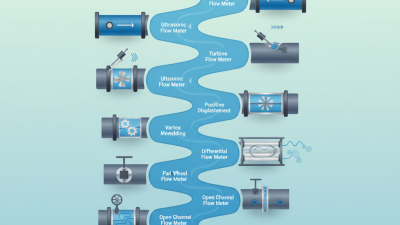
Chart interpretation: The chart presents representative pipe-diameter ranges commonly served by clamp-on ultrasonic water flow meters in different application sectors. Actual operating limits depend on transducer design, pipe material, lining, wall thickness, water quality, and the selected measurement mode.
Technology overview: Transit-time ultrasonic meters are generally preferred for clean or moderately clean water, while Doppler meters are more suitable when suspended solids or air bubbles provide signal reflection. Portable clamp-on systems support commissioning, audits, and temporary verification; fixed systems are used for continuous monitoring.
How to Choose the Right Chinese Manufacturer for Your Needs
Choosing a Chinese clamp-on water flow meter manufacturer requires more than comparing unit prices. The World Bank estimates that 25–30% of supplied water is lost through leakage, poor metering, or operational failures. Accurate measurement therefore protects revenue and reduces wasted treatment energy. Ask for pipe-size ranges, ultrasonic frequency, IP rating, temperature limits, and measurement accuracy under low-flow conditions.
Request traceable calibration records, not only a factory test sheet. Calibration should connect to an ISO/IEC 17025-accredited laboratory whenever possible. Review the manufacturer’s quality system, production records, sensor matching process, and firmware controls. A serious supplier should provide wet-flow test data using pipe materials similar to yours. Ask for a sample unit before signing a large contract.
The cheapest quotation can become expensive. I have seen specifications overlook air bubbles, lined pipes, weak signal strength, and poor sensor placement. That mistake is easy to make. UN-Water’s 2024 World Water Development Report states that billions still lack safely managed water services, increasing pressure on utilities to measure every cubic metre. Check installation drawings, spare-part availability, export packaging, response times, and remote commissioning support. Require clear acceptance criteria for accuracy, repeatability, data logging, and communication protocols. Do not rely on polished brochures alone; inspect evidence, test the meter, and question gaps in the documentation.