7 Best Air Flow Meters for Industrial Applications
Choosing an Air Flow Meter for industrial use is rarely just a matter of comparing prices. A food-processing plant, a paint booth, and a ventilation system may all need airflow measurements, but their operating conditions differ. Temperature, pressure, humidity, dust, and duct shape can affect readings. A meter that performs well in a clean, straight pipe may struggle in a cramped duct with turbulence. Small details matter.
This guide examines seven Air Flow Meter options for industrial applications, including technologies suited to different flow ranges and installation conditions. We consider measurement accuracy, response time, pressure loss, durability, and the practical effort required for setup and maintenance. These factors help narrow the choices, but product specifications should be checked against the actual process. No meter is perfect. A highly accurate instrument may need careful installation, while a simpler model may be easier to maintain but less suitable for changing flow conditions. That trade-off deserves attention.
The examples are intended to support informed comparison, not replace engineering review. Check whether the stated measurement range covers both normal operation and expected fluctuations. Confirm the required pipe or duct dimensions, output signals, and calibration expectations before purchasing. A sensor placed too close to an elbow may give misleading results, even when its datasheet looks impressive. It happens. The best choice is the one that fits the application, can be installed correctly, and provides dependable readings over time.
How Industrial Air Flow Meters Measure Gas Movement
7 Best Air Flow Meters for Industrial Applications
How Industrial Air Flow Meters Measure Gas Movement
Industrial air flow meters estimate how much gas passes through a pipe over time. Some measure velocity and multiply it by the pipe’s cross-sectional area. Differential-pressure meters infer flow from a pressure drop across an element. Thermal mass meters track how moving gas carries heat away from a sensor, while ultrasonic meters use sound waves to estimate its speed. Each method responds differently to pressure, temperature, gas composition, and installation conditions.
The U.S. Department of Energy’s Improving Compressed Air System Performance: A Sourcebook for Industry reports that compressed air accounts for about 10% of industrial electricity use in the United States. That makes reliable flow readings useful for finding leaks, comparing equipment demand, and spotting changes in operating conditions. A meter reading is not automatically trustworthy, though. Poor placement, vibration, or an incorrect gas setting can distort the result.
Tips: Check the meter’s specified pipe diameter and gas range before installation. Leave adequate straight pipe upstream when required. Record pressure and temperature alongside flow; the numbers need context. Field readings can be messier than the manual suggests.
Key Factors in Selecting an Industrial Air Flow Meter
7 Best Air Flow Meters for Industrial Applications
Key Factors in Selecting an Industrial Air Flow Meter
Selecting an industrial air flow meter starts with the process, not the instrument label. Define the gas, expected flow range, pressure, temperature, and required accuracy. Check whether readings must remain stable during frequent starts and stops. Dust, moisture, and oil can affect sensor performance. A tidy datasheet may not reflect a messy pipe.
Match the meter’s range to actual operating conditions. A device sized for peak flow may read poorly when demand is low. Thermal meters can suit clean, steady air, while differential-pressure designs may handle changing conditions but add pressure loss. For compressed-air systems, compare the meter’s pressure rating with the line’s working pressure. Confirm output compatibility with existing controls. In practice, installation details are easy to rush. Straight pipe length, vibration, and nearby bends can all influence readings. Small details matter.
Tips: Check the manufacturer’s installation guidance and plan for calibration access. Record baseline readings after installation. If measurements seem inconsistent, inspect the setup before assuming the meter is faulty.
Seven Air Flow Meter Types for Industrial Applications
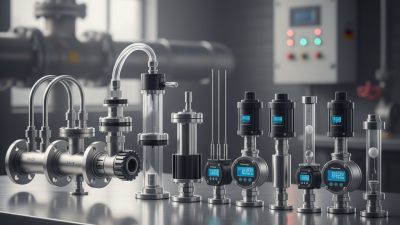
Industrial plants use several air flow meter types, and each responds differently to changing pressure, temperature, or flow rate. Differential-pressure meters infer flow from a restriction, such as an orifice plate. Thermal mass meters measure heat carried away by moving air. Vortex meters detect alternating swirls behind a bluff body. Ultrasonic meters estimate flow from sound traveling with or against the stream. Turbine meters use a rotating blade; positive-displacement meters trap and count fixed air volumes. Laminar flow meters measure pressure drop through narrow passages.
The best fit depends on the pipe, air quality, and required accuracy. A turbine meter can suit clean, steady air, but dust may wear its moving parts. Thermal meters can measure mass flow directly, though oil film or moisture may affect readings. Differential-pressure designs are rugged, yet their pressure loss may matter in a low-pressure system. Ultrasonic meters avoid moving parts, but installation geometry and flow disturbances need attention. These trade-offs are easy to underestimate; field conditions rarely match a neat specification sheet.
Tips: Check the meter’s range, pressure rating, and calibration needs. Keep straight pipe runs where specified. Record actual operating conditions, not just the compressor’s rated output. A quick site check helps.
Comparing Meter Accuracy, Pressure Loss, and Operating Range
Accuracy figures are meaningful only when tied to a stated flow range, gas conditions, and calibration method. A meter rated to ±1% of reading may perform differently near its lower limit. ISO 5167-1:2022 sets conditions for differential-pressure measurement, including installation and pipe geometry; a catalogue figure alone cannot capture every site effect. Ask for the calibration basis and uncertainty across the intended operating range.
Pressure loss matters too. Orifice and other differential-pressure meters require a pressure difference to measure flow, while other designs may impose less restriction. Compare permanent pressure drop at your normal and peak flow, not just the meter’s connection size. Small losses add up. The U.S. Department of Energy’s Improving Compressed Air System Performance sourcebook estimates that compressed air uses about 10% of electricity in U.S. manufacturing. That figure is not a meter-performance rating, but it shows why avoidable system losses deserve attention. Check the supplier’s pressure-drop data against your actual line pressure, temperature, and flow profile. A wide turndown claim can also mislead if accuracy falls sharply at low flow. Real operating records help; ideal conditions rarely tell the whole story.
7 Air Flow Meter Technologies for Industrial Applications
Typical accuracy, pressure-loss tendency, and turndown ratio for common industrial air-flow meter technologies. Specifications vary with meter size, installation, calibration, and operating conditions.
| Meter technology |
Typical accuracy |
Typical turndown |
Pressure-loss tendency |
| Coriolis | ±0.2% of reading | Up to 100:1 | Moderate to high |
| Turbine | ±0.5% of reading | About 10:1 | Moderate |
| Thermal mass | ±1.0% of reading | Up to 100:1 | Low |
| Transit-time ultrasonic | ±1.0% of reading | Up to 100:1 | Very low |
| Vortex | ±1.0% of reading | About 20:1 | Moderate |
| Positive displacement | ±1.0% of reading | About 10:1 | Moderate to high |
| Orifice plate (differential pressure) | ±1.5% of reading | About 4:1 | High |
Chart values are representative typical figures, not guaranteed specifications. Confirm performance for the selected meter, gas composition, pressure, flow range, and installation conditions.
Installation and Maintenance for Reliable Air Flow Measurement
Reliable air flow measurement begins with matching the meter to the pipe and process conditions. Before installation, confirm the expected flow range, air temperature, pressure, and moisture level. Check the manufacturer’s required straight pipe lengths; nearby elbows, valves, or reducers can disturb the flow profile. If space is limited, a flow conditioner may help, but it cannot fix every poor location. Install the sensor in the specified orientation, and keep its probe clear of pipe walls. Small details matter. A sensor mounted backward can produce plausible readings that are still wrong.
During commissioning, compare the meter reading with a trusted reference under steady operating conditions. Record the flow, pressure, temperature, and sensor position. These notes make later changes easier to spot. For thermal meters, inspect for oil or dust buildup, which can affect heat transfer. Differential-pressure meters need clean impulse lines and periodic checks for leaks or blockages. Compressed air often carries condensate, especially after a dryer or during temperature swings. Drain low points and inspect filters, but follow the equipment’s service instructions. A clean reading is not always a correct one; changing process conditions can shift the baseline. Review trends, investigate sudden jumps, and recalibrate at an interval suited to the application rather than relying on a fixed calendar alone.