
Top Thermoforming Mold Assembly Suppliers Worldwide
Selecting a reliable Thermoforming Mold Assembly supplier can shape product quality, production speed, and long-term operating costs. A polished mold may look impressive, yet small issues often appear during repeated heating, cooling, and trimming cycles. Uneven wall thickness, weak venting, or poor alignment can create costly defects.
This guide examines leading suppliers worldwide through practical manufacturing criteria. It considers engineering experience, material knowledge, machining accuracy, testing procedures, and after-sales support. Factory capabilities matter. So does communication. A supplier should explain mold steel selection, cooling-channel design, surface finishing, and expected maintenance intervals in clear technical language. Sample inspections, dimensional reports, and trial-production records can reveal more than attractive brochures. Those details count.
Real-world needs differ.
Some manufacturers need short-run tooling for packaging prototypes. Others require durable assemblies for continuous production and tight cycle times. Regional service coverage, shipping reliability, and spare-part availability also influence the final decision. Certifications may support trust, but they do not replace direct evidence from production trials or customer references. This point is easy to overlook.
The supplier landscape is not perfectly uniform. Public information can be incomplete, and performance may vary between facilities or projects. Therefore, the rankings and comparisons should be treated as informed guidance, not absolute judgment. Buyers should confirm tolerances, lead times, warranty terms, and testing responsibilities before signing an agreement. A careful review can reduce surprises and help match each Thermoforming Mold Assembly partner with the application, budget, and production environment it must serve.
Thermoforming Mold Assemblies: Functions, Materials, and Process Scope
Thermoforming Mold Assemblies: Functions, Materials, and Process Scope
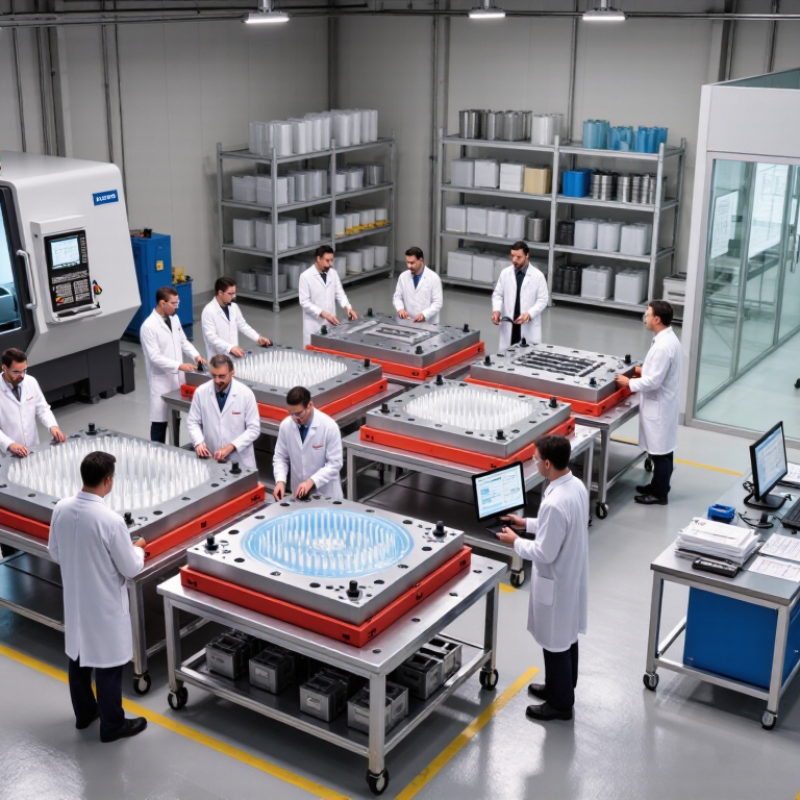
Thermoforming mold assemblies shape heated plastic sheets through vacuum, pressure, or both. A working assembly usually includes the mold, vacuum channels, cooling passages, trim references, and mounting hardware. These parts control wall thickness, release behavior, cycle time, and dimensional repeatability. According to Grand View Research, the global thermoforming market reached about USD 15.8 billion in 2023. Packaging remains a major demand driver, especially for trays, lids, and medical containers.
Aluminum molds offer fast heat transfer and shorter cooling cycles. Epoxy and composite molds reduce tooling cost during prototypes or limited production. Steel provides durability for demanding, repeated cycles, but it increases machining time and weight. Materials must match the polymer, draw depth, surface finish, and expected output. A rough vent can leave marks. Poor cooling can warp corners. Small errors become expensive at scale.
The process scope extends from thin-gauge packaging to thick-gauge vehicle and equipment panels. MarketsandMarkets projects the thermoforming market to grow from approximately USD 15.7 billion in 2023 to USD 20.5 billion by 2028. That growth increases pressure on suppliers to improve airflow, cooling balance, and trim accuracy. Practical inspection should include leak testing, dimensional checks, surface review, and trial forming. Perfect assemblies are uncommon. Even experienced teams may overlook uneven cooling near deep pockets. Configuration drawings should therefore record revisions, test results, and unresolved risks.
Top Thermoforming Mold Assembly Suppliers Worldwide - Thermoforming Mold Assemblies: Functions, Materials, and Process Scope
Global supplier landscape organized by manufacturing region, mold construction, thermoforming process capability, and typical application scope. Company and brand names are intentionally excluded.
| Supplier Region | Typical Supplier Profile | Primary Mold Materials | Assembly Functions | Supported Processes | Common Industries | Typical Lead Time | Production Suitability |
|---|---|---|---|---|---|---|---|
| North America | Custom mold manufacturers serving short-run, replacement, and high-mix programs | Cast aluminum, billet aluminum, pre-hardened steel, epoxy tooling board | Vacuum channels, water cooling, guide pins, trim references, mounting plates | Vacuum forming, pressure forming, plug-assist forming, twin-sheet forming | Automotive, medical packaging, industrial equipment, transportation | 3–8 weeks | Prototype to medium volume |
| Western Europe | Precision toolmakers focused on dimensional control, surface quality, and automated production | Aluminum alloys, P20 tool steel, stainless steel, nickel-based tooling | Conformal cooling, integrated trimming, replaceable inserts, robotic interfaces | High-speed vacuum forming, pressure forming, twin-sheet forming, in-mold trimming | Automotive interiors, appliance components, food packaging, aerospace interiors | 5–12 weeks | Medium to high volume |
| Central and Eastern Europe | Engineering-led mold shops supplying contract manufacturers and regional production plants | Aluminum, P20 steel, tool steel, polyurethane and epoxy composites | Basic cooling circuits, vacuum drilling, modular bases, replaceable wear components | Vacuum forming, pressure forming, plug-assist forming, sheet thermoforming | Automotive, construction products, consumer goods, protective packaging | 4–10 weeks | Prototype to medium volume |
| East Asia | High-capacity tooling suppliers combining CNC machining, casting, finishing, and export logistics | Cast aluminum, billet aluminum, P20 steel, H13 tool steel, copper alloys | High-density vacuum ports, cooling manifolds, quick-change bases, automated trim features | Vacuum forming, pressure forming, twin-sheet forming, plug-assist forming | Automotive, electronics packaging, logistics trays, sanitary products, appliances | 4–10 weeks | Medium to high volume |
| South Asia | Cost-conscious tooling suppliers supporting packaging, agricultural, and general industrial applications | Aluminum, mild steel, P20 steel, epoxy tooling board, composite materials | Vacuum channels, mounting frames, basic cooling, manual trimming references | Vacuum forming, basic pressure forming, thin-gauge packaging forming | Food packaging, agricultural trays, consumer products, industrial packaging | 5–12 weeks | Prototype to medium volume |
| Southeast Asia | Regional mold and fabrication suppliers integrated with plastics processors and contract manufacturers | Aluminum, steel, epoxy composites, nickel-plated tooling surfaces | Vacuum systems, cooling channels, alignment hardware, trim-tool interfaces | Vacuum forming, pressure forming, twin-sheet forming, packaging applications | Electronics, food packaging, medical disposables, automotive components | 5–10 weeks | Medium to high volume |
| Australia and New Zealand | Specialist low-volume toolmakers serving local industrial, medical, mining, and packaging programs | Aluminum, engineering plastics, epoxy board, stainless steel | Vacuum channels, modular bases, low-volume tooling, manual trim guidance | Vacuum forming, pressure forming, prototype thermoforming | Medical equipment, mining, marine, industrial packaging, replacement parts | 4–10 weeks | Prototype to low volume |
| Latin America | Local and regional mold fabricators supporting packaging, automotive, and general manufacturing plants | Aluminum, mild steel, P20 steel, composite tooling materials | Vacuum drilling, mounting frames, basic water cooling, repairable inserts | Vacuum forming, pressure forming, packaging thermoforming | Food packaging, automotive, household products, agricultural packaging | 5–12 weeks | Low to medium volume |
| Middle East and Africa | Application-focused suppliers and imported-tooling integrators serving packaging and infrastructure markets | Aluminum, steel, epoxy tooling board, composite materials | Basic vacuum networks, mounting systems, cooling channels, manual trimming references | Vacuum forming, packaging thermoforming, selected pressure-forming applications | Food packaging, construction, agricultural products, industrial equipment | 6–14 weeks | Prototype to medium volume |