
Who Are the Top Polyester Nonwoven Manufacturers in China?
China is a major sourcing base for Polyester Nonwoven, supplying material for filtration, automotive interiors, furniture, construction, and hygiene products. The market includes established mills, specialist converters, and trading companies. Their websites can look similar. Their capabilities may not be.
This guide examines how to identify leading Chinese manufacturers without treating a sales claim as proof. It considers production methods, product range, quality controls, export experience, and the clarity of technical documentation. Buyers should compare details such as fabric weight, roll width, tensile strength, and surface finish against their actual application. A sample roll can reveal uneven texture or weak edges that a brochure may not show. Small details matter.
Rankings also need context. A supplier suited to needle-punched automotive felt may not fit a spunbond filtration project. Capacity figures, certificates, and customer references should be checked for scope, date, and relevance. Ask who manufactures the fabric, who inspects it, and how batch consistency is monitored. Then compare written specifications with test results and sample performance. These steps do not remove every risk, and public information can be incomplete. That deserves a second look.
The sections ahead offer a practical framework for comparing manufacturers, asking sharper questions, and narrowing a shortlist. They are not a substitute for independent checks or application testing. A confident answer is useful; verifiable evidence is better.
What Polyester Nonwovens Are and How They Are Made
Polyester nonwovens are fabrics made by joining fibers or filaments without weaving or knitting them. The material often uses polyester, a synthetic fiber valued for strength and resistance to moisture. It can feel soft, stiff, porous, or dense, depending on its construction. The name alone does not describe the finished fabric.
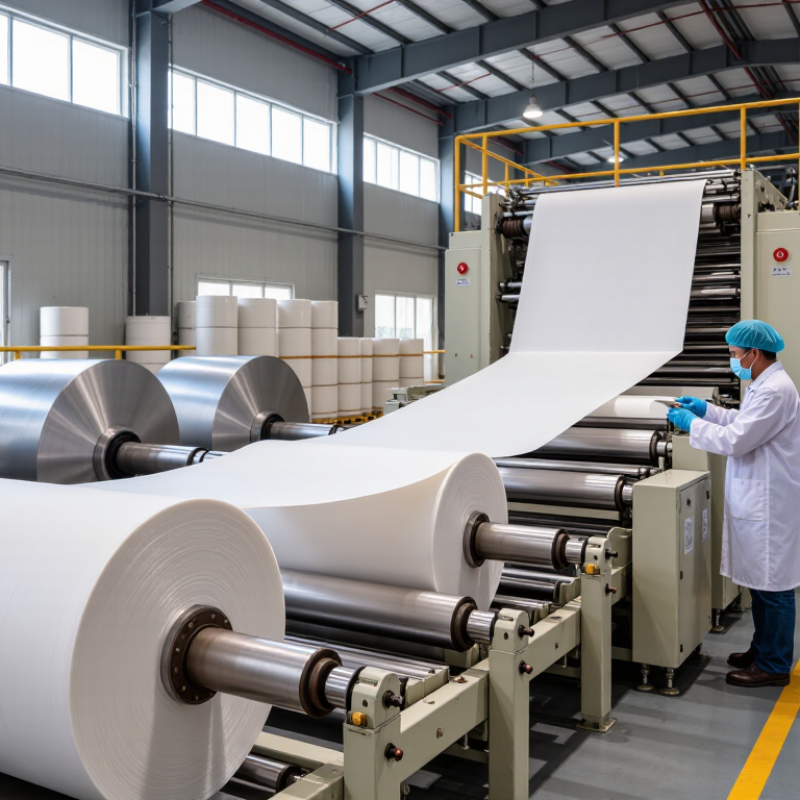
One common route starts with melted polyester pellets. The melt passes through tiny spinneret openings, forming continuous filaments. These are laid into a web and bonded with heat or pressure. Another route uses short polyester fibers, which are opened, combed, and spread into a loose layer. Needling, heat, or a bonding agent can then hold that layer together. The process is not one recipe.
Manufacturers adjust fiber thickness, web weight, and bonding to suit uses such as filtration, insulation, or furniture padding. A heavier sheet is not automatically better; airflow and flexibility may matter more. Small changes matter. For example, uneven web formation can create thin spots that affect performance. Buyers should compare test data for the intended use, not just appearance or material name. Even clear specifications leave room for judgment. Two fabrics with similar weights may behave differently after cutting, stitching, or repeated handling.
How China’s Polyester Nonwoven Industry Is Organized
China’s polyester nonwoven industry is organized as a value chain, not a single group of factories. Fiber suppliers provide polyester staple fiber or filament; nonwoven mills turn it into sheets through spunbond, needle-punch, or other processes. Converters then add cutting, laminating, coating, or packaging for specific uses. Some manufacturers control several stages. Many specialize in just one.
The China Nonwovens and Industrial Textiles Association reported approximately 8.14 million tonnes of nonwoven output in 2023. This figure covers multiple fibers and technologies, so it should not be read as polyester-only production. It does show the scale of China’s broader manufacturing base. Within that base, capacity is spread across large integrated producers, regional mills, and smaller specialist plants. The mix varies by process and end market.
Clusters help link mills with fiber suppliers, equipment services, and downstream buyers. In practice, this can shorten delivery times for bulky rolls and support customized weights or finishes. Yet a high stated capacity does not guarantee consistent quality or available production slots. Buyers still need to check fiber composition, basis-weight tolerances, and sample performance. That part is easy to overlook. Industry statistics describe the landscape, but they rarely reveal how reliably a particular line runs.
Who Are the Top Polyester Nonwoven Manufacturers in China? - How China’s Polyester Nonwoven Industry Is Organized
China’s polyester nonwoven supply chain includes fiber producers, fabric makers, converters, and distributors. The table below describes common manufacturer types and production routes without naming companies or implying a ranked list.
| Industry position | Typical materials and process | Common product formats | Typical downstream uses | Useful comparison criteria |
|---|---|---|---|---|
| Polyester fiber suppliers | Supply polyester staple fiber or filament feedstock used by nonwoven producers. Fiber specifications can include fineness, length, crimp, and color. | Staple fiber bales and continuous filament feedstock | Input for spunbond, carded, needle-punched, and other nonwoven lines | Fiber specification consistency, traceability, available grades, and supply reliability |
| Spunbond fabric producers | Form continuous polyester filaments directly into a web, then bond the web, commonly by thermal bonding. | Roll goods in specified widths, basis weights, and colors | Filtration, building materials, furniture, and selected technical or industrial products | Basis-weight range, width, tensile properties, uniformity, and bonding method |
| Carded and needle-punched fabric producers | Card polyester staple fibers into a web; use needle punching to mechanically entangle fibers. Some products combine this route with thermal or chemical finishing. | Nonwoven rolls, sheets, and cut pieces | Geotextiles, automotive interiors, filtration, carpet backing, and padding | Thickness, mass per unit area, strength, elongation, permeability, and surface finish |
| Thermally bonded staple-fiber producers | Arrange staple fibers into a web and bond it using heat, often with low-melting binder fibers or suitable fiber blends. | Lightweight or lofted rolls and sheets | Interlining, insulation, cushioning, and component layers in consumer or industrial goods | Loft, resilience, thermal stability, thickness, and bonding uniformity |
| Specialty and finishing manufacturers | Apply finishing or converting steps to polyester nonwovens, such as coating, lamination, calendaring, slitting, or treatment for a specified end use. | Finished rolls, laminated webs, slit rolls, or converted components | Protective, filtration, construction, automotive, and other technical applications | Finish specification, adhesion where relevant, dimensional stability, testing, and customization capability |
| Converters and distributors | Purchase fabric from producers and supply it in customer-specific widths, lengths, packaging, or converted formats. They may not manufacture the base web. | Cut-to-size material, slit rolls, and consolidated shipments | Buyers seeking smaller lots, multiple specifications, or local inventory | Source transparency, lot traceability, inventory, conversion tolerances, and delivery terms |
Note: These are industry roles and commonly used production routes, not a company ranking. Actual capabilities and product specifications vary by manufacturer and should be confirmed against technical datasheets and samples.
Leading Polyester Nonwoven Manufacturers in China
China’s polyester nonwoven sector includes manufacturers serving filtration, automotive, furniture, hygiene, and construction markets. The strongest suppliers are not defined by scale alone. Their value shows in consistent web formation, reliable bonding, and clear communication about material limits. Buyers should compare actual production capabilities with the needs of each application.
Polyester fibers may be bonded through thermal, chemical, or needle-punch processes. Each method creates a different surface, thickness, and level of strength. A capable manufacturer can explain these trade-offs and provide samples with measurable specifications. Look for documented checks on basis weight, tensile strength, thickness, and roll consistency. Ask how the factory handles changes between production batches. Details matter.
Still, no mill is perfect. A sample may feel uniform while a full roll reveals small variations. Request trial quantities when possible, and confirm tolerances, packaging, lead times, and inspection procedures in writing. Experienced suppliers should answer technical questions directly, rather than relying on broad claims. For overseas buyers, clear records and steady follow-up can be as useful as competitive pricing. A good partnership grows from evidence, not promises.
How Manufacturers Differ in Products and Production Capabilities
Chinese polyester nonwoven manufacturers differ less by catalogue size than by how consistently they control web formation and bonding. China Nonwovens and Industrial Textiles Association data put national nonwoven output at about 8.14 million tonnes in 2023. That figure covers all nonwoven materials, not polyester alone, but it shows the scale of a crowded supply base.
Spunbond lines suit continuous, lightweight webs used in bags, covers, and geotextiles. Needle-punched lines can make thicker, textured sheets for filtration or automotive interiors. Thermal bonding adds another route, with stiffness and surface feel shaped by fiber blend, temperature, and pressure. Buyers should compare usable basis-weight ranges, line width, roll consistency, and testing records—not just rated output. Small differences matter.
Raw-material claims need equal scrutiny. Textile Exchange’s Materials Market Report 2024 says polyester represented about 57% of global fiber production in 2023. That broad figure does not prove a mill’s recycled-content share or traceability. Ask for batch records and test results. A caveat matters: published capacity is not the same as stable, saleable production. I would also check edge quality and roll-to-roll variation; these details are easy to overlook, and supplier data can be incomplete.
Key Factors for Evaluating Chinese Suppliers
When evaluating Chinese polyester nonwoven suppliers, compare production controls, not just quoted price. Grand View Research estimated the global nonwoven fabric market at USD 53.2 billion in 2022 and forecast 7.9% annual growth through 2030. That market estimate signals demand, but it does not verify any factory’s quality.
Ask for recent test reports covering basis weight, tensile strength, thickness, and air permeability. ISO 9073 provides methods for testing nonwoven fabrics; request the specific method and sample conditions behind each result. Then compare trial rolls against agreed tolerances. Check whether the supplier can keep fiber type, bonding method, and roll width consistent between batches. Small changes matter. A fabric that handles well on one production line may wrinkle or shed on another.
Review equipment records, defect logs, and lot traceability during a factory assessment. Ask how operators handle off-spec rolls, and request evidence rather than a polished presentation. For example, compare retained samples from separate production dates and inspect edges, weight variation, and surface uniformity. This takes time. I would still treat a single successful sample cautiously; it may not represent routine output. Clear specifications, repeatable testing, and candid answers are stronger signals than broad claims of capacity.
Key Factors for Evaluating Polyester Nonwoven Suppliers in China
Suggested evaluation weights for comparing suppliers—not company ratings or market-share data.
Assess product consistency through specifications and test reports; verify quality systems, production capacity, and delivery performance; and compare pricing alongside technical support. Adjust the suggested weights to fit your product and sourcing needs.
