
What Are the Top Flow Meter Types in 2026?
Choosing among the leading Flow Meter Types in 2026 starts with the fluid, the pipe, and the job the measurement must do. A meter that performs well on clean water may struggle with air bubbles, changing viscosity, or suspended solids. Small installation details matter. A long straight pipe run, for example, can improve readings for some designs, while other meters need less space. The best choice is rarely the newest model alone.
This guide introduces common options, including electromagnetic, ultrasonic, Coriolis, turbine, vortex, differential-pressure, and thermal mass meters. Each works differently. Electromagnetic meters suit conductive liquids, while ultrasonic models can measure flow without cutting into a pipe. Coriolis meters can provide direct mass-flow readings, but their cost and installation requirements may not suit every process. Turbine meters can be effective with clean, steady fluids, though debris and wear deserve attention. No type wins every comparison.
Selection also depends on flow range, pressure, temperature, accuracy needs, maintenance access, and total ownership cost. Check the manufacturer’s operating limits and installation guidance before comparing specifications. A catalog number alone is not enough. Real conditions can be untidy. Even a carefully chosen meter may need calibration checks or revised installation after commissioning. The sections ahead compare where each technology fits, what can affect its readings, and which questions to ask before purchase. The aim is practical guidance, not a universal winner.
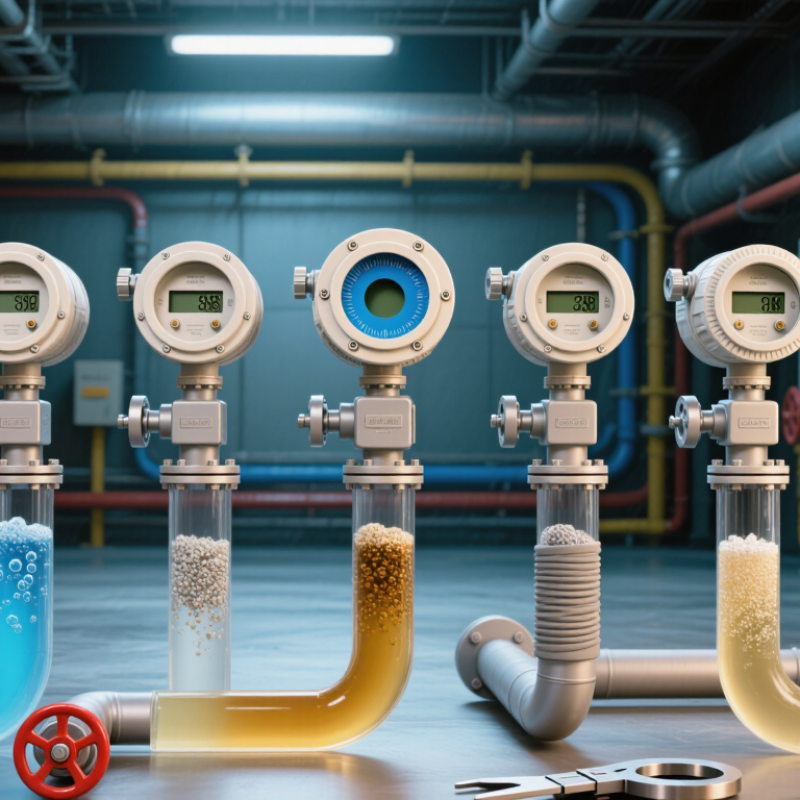
What a Flow Meter Measures and How Flow Meter Types Are Classified
A flow meter measures how much fluid passes a point over time. It may report volumetric flow, such as liters per minute, or mass flow, such as kilograms per hour. A totalizer adds those readings to show cumulative volume or mass. The distinction matters: a pipe carrying warm water and one carrying compressed gas do not present the same measurement problem. The USGS’s 2015 water-use report recorded withdrawals of about 322 billion gallons per day across the United States. That scale shows why dependable flow data matters in water systems and industry.
Flow meters are commonly classified in two ways: by the quantity measured and by the sensing principle. Differential-pressure meters infer flow from a pressure drop; turbine and electromagnetic meters use fluid velocity or electrical effects; ultrasonic meters track sound signals; Coriolis meters measure mass flow directly. Positive-displacement meters count fixed pockets of fluid, while thermal meters use heat transfer, often for gases. ISO 5167 specifies methods for differential-pressure devices using orifice plates, nozzles, and Venturi tubes. In practice, pipe diameter, fluid properties, pressure, and installation space narrow the choices. A meter that works well on a straight, full water line may struggle with bubbles or a disturbed flow profile. I still find “one best type” misleading. The right classification begins with what needs measuring.
What Are the Top Flow Meter Types in 2026? What a Flow Meter Measures and How Flow Meter Types Are Classified
| Flow Meter Type | What It Measures | Operating Principle / Classification | Common Applications | Key Considerations |
|---|---|---|---|---|
| Differential Pressure (DP) | Infers volumetric flow from the pressure drop across a restriction; mass flow may be calculated when fluid properties are known. | Inferential meter. Uses an element such as an orifice plate, venturi, or flow nozzle and a differential-pressure measurement. | Liquids, gases, and steam in process and utility systems. | Often requires straight pipe runs and pressure and temperature compensation for changing fluid conditions. The restriction creates a permanent pressure loss. |
| Variable Area (Rotameter) | Indicates volumetric flow at the meter’s specified calibration conditions. | Inferential, variable-area meter. A float moves in a tapered tube until upward fluid force balances its weight. | Local indication and monitoring of relatively steady liquid or gas flows. | Typically installed vertically with upward flow. Readings can be affected by fluid density, viscosity, pressure, and temperature. |
| Turbine | Volumetric flow, derived from rotor speed or pulse frequency. | Inferential, velocity-based meter. Flowing fluid turns a rotor; rotation is related to flow rate. | Clean, relatively low-viscosity liquids and gases where repeatable measurement is needed. | Moving parts can wear. Debris, viscosity changes, and flow disturbances can affect performance; suitable filtration and installation may be needed. |
| Positive Displacement (PD) | Volumetric flow by counting discrete, known volumes passing through the meter. | Direct volumetric meter. Internal chambers repeatedly fill and discharge as fluid passes. | Batching and measurement of oils, fuels, and other clean or viscous liquids. | Moving parts require attention to wear and fluid cleanliness. Pressure loss and performance can vary with viscosity and operating conditions. |
| Electromagnetic (Magmeter) | Volumetric flow of an electrically conductive liquid. | Velocity-based meter. A conductive liquid moving through a magnetic field generates a voltage proportional to its velocity. | Water, wastewater, slurries, and many conductive process liquids. | Does not measure nonconductive liquids or gases. The pipe must remain full, and minimum conductivity requirements apply. |
| Ultrasonic — Transit-Time | Volumetric flow, calculated from the difference in ultrasonic transit times with and against the flow. | Velocity-based meter. Sensors measure sound travel through the fluid; designs may be inline or clamp-on. | Relatively clean liquids and, with suitable designs, gases; useful where nonintrusive installation is preferred. | Accuracy depends on correct installation and acoustic conditions. Bubbles, solids, or unsuitable pipe conditions can affect some designs. |
| Ultrasonic — Doppler | Flow velocity, which is used with pipe dimensions to determine volumetric flow. | Velocity-based meter. Detects the frequency shift of sound reflected by particles or bubbles moving with the fluid. | Liquids containing suspended solids or entrained bubbles, such as some wastewater streams. | Requires enough sound-reflecting material in the fluid; it is generally unsuitable for very clean liquids without scatterers. |
| Coriolis | Mass flow directly; many instruments also report density and temperature, and may calculate volumetric flow. | Direct mass-flow meter. Flowing fluid alters the vibration of one or more measuring tubes. | Liquid and gas measurement, batching, custody-transfer applications, and processes where mass flow or density is important. | Can be costly and relatively heavy, particularly in larger sizes. Installation, vibration, and two-phase flow can affect performance. |
| Thermal Mass | Mass flow of gas, based on heat transfer between a heated sensor and the moving gas. | Thermal, direct mass-flow measurement. The heat removed from the sensor is related to gas flow and properties. | Compressed air, natural gas, and other gas-flow monitoring and consumption measurement. | Calibration depends on gas composition and properties. It is generally intended for gases rather than liquids. |
| Vortex | Volumetric flow, inferred from the frequency of vortices shed downstream of a bluff body. | Inferential, velocity-based meter. Vortex-shedding frequency is related to fluid velocity. | Liquids, gases, and steam in process and utility services. | Requires flow above a minimum velocity. Low flow, pulsation, or mechanical vibration can reduce measurement stability. |
How flow meters are classified: Common classifications include the quantity measured (volumetric flow or mass flow), the measurement principle (such as differential pressure, velocity, positive displacement, electromagnetic, ultrasonic, or thermal), and whether the meter measures directly or infers flow from another quantity. Actual suitability depends on fluid properties, pipe conditions, operating range, installation, and calibration.
Related Posts
-
Top 5 Best Flow Rate Meters for Accurate Measurement in 2026?
-
Understanding the Importance of Water Flow Meters in Efficient Resource Management
-

7 Essential Flow Meter Types Every Industry Should Know
-

The Future of Flow Meters Technology Trends and Their Impact on Industrial Efficiency
-
China Best Chemical Flow Meter for Global Buyers?
-
Best Mass Flow Meters for Accurate Measurement in Industry?