
Top CNC Swiss Lathe Machines for Sale in 2026
Choosing a Cnc Swiss Lathe Machine in 2026 is less about finding the most impressive specification sheet and more about matching the machine to real production needs. Swiss-type lathes are often considered for small, slender parts that require close tolerances and repeatable machining. A compact medical component, a precision connector, and a miniature fastener can demand very different setups. Details matter.
This guide looks at machines available for purchase in 2026 and the practical factors buyers should compare. These include maximum bar capacity, spindle configuration, tool stations, control system, bar-feeder compatibility, and access to local service. A fast spindle may help with certain materials and part geometries, but speed alone does not guarantee shorter cycle times or better surface finish. Tooling, programming, workholding, and operator experience also shape results.
Specifications need context. Confirm whether quoted capacities reflect the intended material, tooling, and production method. Ask suppliers for a representative sample run, clear installation requirements, and realistic lead-time information. Where possible, compare total ownership costs, including maintenance, training, and peripheral equipment—not just the machine’s purchase price. No single model suits every shop. A capable machine can still be the wrong choice if its footprint, support network, or setup demands do not fit the operation. The comparisons ahead are a starting point, not a substitute for application testing. Some details may look minor on paper; in daily production, they can become the ones that matter most.
How CNC Swiss Lathe Machines Work and What They Produce
Top CNC Swiss Lathe Machines for Sale in 2026
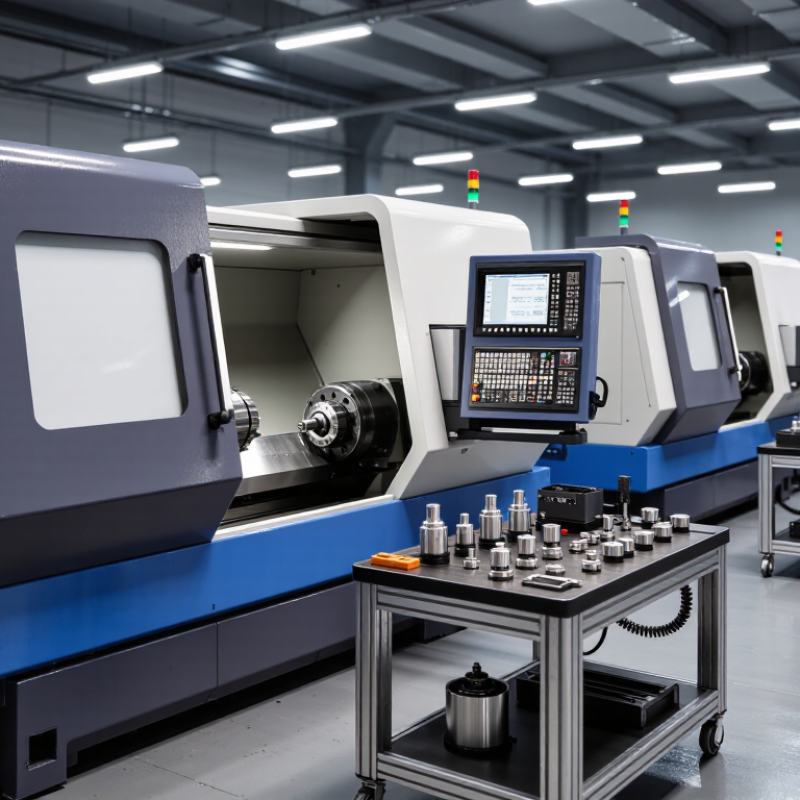
A CNC Swiss lathe feeds bar stock through a guide bushing, which supports the material close to the cutting tool. The headstock moves the bar forward as machining proceeds. This support helps control vibration, especially when producing long, slender parts. Very little flex.
The machine’s programmed tools can turn, drill, bore, and mill features in a sequence. Depending on its configuration, it may work on several features at once or machine the part’s opposite end. A bar feeder can supply material continuously, while coolant helps manage heat and clear chips. Setup still matters.
Swiss-type machines commonly produce small precision components, including pins, shafts, fasteners, and connector parts. A turned shaft may need a narrow groove, a cross-hole, and a precisely finished end. Each feature depends on tooling, material, and machine condition; no single setup guarantees the same result every time. That is worth checking. Their strengths are repeatability and efficient production, but complex jobs still require careful programming and inspection. Even a small tool offset can affect a tight dimension, so operators often verify the first parts before running a longer batch.
Top CNC Swiss Lathe Machines for Sale in 2026 — How CNC Swiss Lathe Machines Work and What They Produce
A brand-neutral guide to common CNC Swiss-type lathe configurations. Capacity, axis count, tooling, and available options vary by machine and manufacturer; the ranges below are typical market categories, not specifications for a particular model.
| Machine Category | Typical Bar Capacity | How It Works | Typical Operations | Common Parts Produced | Best-Fit Applications |
|---|---|---|---|---|---|
| Compact small-bar Swiss lathe | Approximately 3–12 mm (0.12–0.47 in), depending on configuration | A guide bushing supports the bar close to the cutting tool. The bar advances through the bushing as the machine performs programmed operations. | Turning, facing, drilling, threading, and light cross-working when equipped with suitable live tooling | Small pins, miniature shafts, electrical contacts, and precision fasteners | High-volume production of small-diameter parts where repeatability and reduced part deflection are important |
| General-purpose mid-size Swiss lathe | Approximately 12–25 mm (0.47–0.98 in) | One or more spindles rotate the workpiece while independently controlled tools machine its front and, where equipped, back end. | Turning, boring, drilling, threading, grooving, and milling with driven tools | Medical instrument components, connector bodies, small valve parts, and precision shafts | Mixed production runs requiring a balance of part capacity, machining flexibility, and cycle time |
| Large-bar Swiss lathe | Approximately 25–38 mm (0.98–1.50 in); larger capacities are available in some designs | The sliding headstock feeds bar stock through a guide bushing, supporting the work near the cutting zone during machining. | Heavy turning, deep drilling, threading, grooving, and cross-milling when fitted with appropriate tooling | Longer shafts, fluid-control components, automotive parts, and larger precision fittings | Parts that benefit from Swiss-style support but require more bar diameter or greater machining capacity |
| Twin-spindle, multi-tool Swiss lathe | Commonly available across small- and mid-size bar capacities | A main spindle machines the front of the part; a sub-spindle can pick it up and complete back-side features, often within the same cycle. | Front- and back-end turning, drilling, threading, milling, and part transfer between spindles | Finished pins, threaded fittings, stepped shafts, and components with features on both ends | Reducing secondary handling and combining multiple machining steps in one production cycle |
| High-axis Swiss lathe with extensive live tooling | Varies by machine size; commonly selected for small- to mid-diameter work | CNC-controlled axes coordinate the main and auxiliary tools. Driven tool stations rotate cutters to create features off the part’s centerline. | Turning, milling, cross-drilling, tapping, polygon machining, and multi-face work, depending on configuration | Complex connectors, surgical instrument components, sensor housings, and precision miniature parts | Reducing extra setups for parts with multiple turned and milled features |
| How a Swiss-type lathe produces a part | Selected to match the raw bar diameter and finished-part envelope | Bar stock is loaded through the spindle; the guide bushing supports it near the cutting zone. The CNC program coordinates bar feeding, spindle rotation, tool movement, and any sub-spindle transfer. | Material is removed in programmed stages. Parts may be cut off after machining or transferred to a sub-spindle for additional operations. | Turned and, when equipped, milled components made from bar stock | Long, slender, small-diameter, or intricate parts that benefit from close work support and repeatable production |
| Buying checks for 2026 | Confirm the required bar range, including feeder and collet compatibility | Evaluate the complete production cell, not just the lathe: machine, bar feeder, tooling, workholding, chip handling, and inspection requirements. | Review spindle configuration, guide-bushing setup, available axes, live-tool stations, programming support, and maintenance access. | Assess sample parts, required tolerances, material, surface finish, and expected production volume. | Compare quotes using the same options and verify that the proposed configuration can perform the required operations. |
Note: A guide bushing is especially useful for supporting slender stock close to the cutting tool. Some Swiss-type machines can also be configured for guide-bushing-free operation; suitability depends on the machine, material, part geometry, and process requirements. Always confirm current specifications and pricing with the seller.