Essential Tips for Choosing the Right Locomotive Inverter?
Choosing the right Locomotive Inverter is crucial for efficient railway operations. Inverters play a key role in converting DC power to AC power, which ensures smooth train performance. Selecting the appropriate inverter impacts not only the locomotive's efficiency but also its long-term reliability.
When evaluating options, consider the specifications that best meet your operational demands. Not every inverter fits all locomotives. Some may not withstand the harsh environments typical in railway applications. It’s essential to consult with experts or manufacturers who understand the unique challenges faced by modern trains.
Understanding your locomotive's requirements is vital. Some inverters may appear ideal based on specifications but fail in real-world conditions. Research and experience can greatly influence your choice. Adopting a thorough and informed approach to selecting a Locomotive Inverter can lead to significant improvements in performance and maintenance.
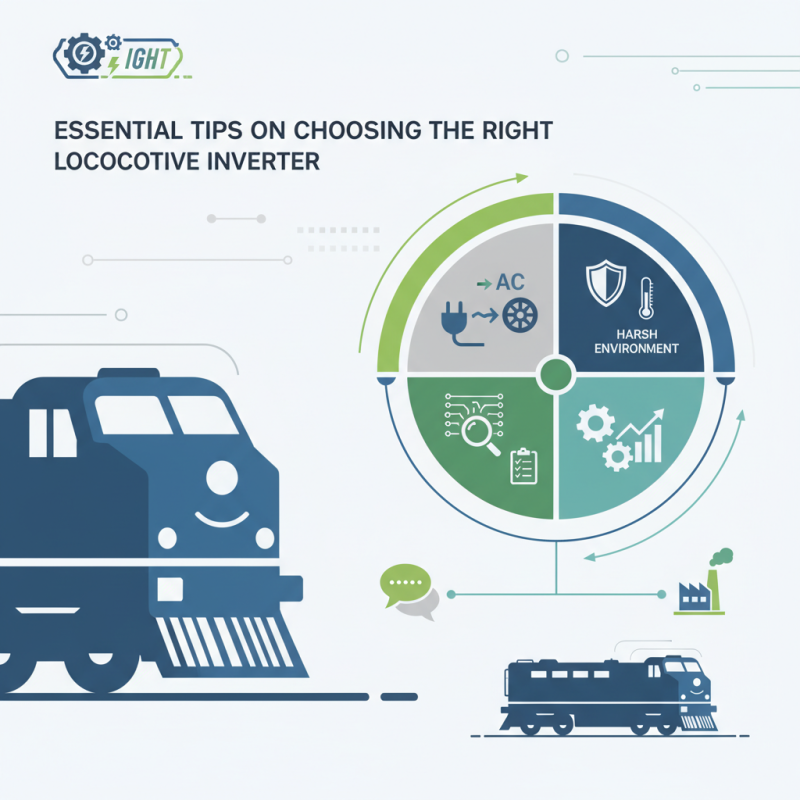
Factors to Consider for Locomotive Inverter Selection
Selecting the right locomotive inverter requires careful consideration of several crucial factors. Power requirements are essential. Understand the locomotive's operational load to determine the inverter capacity. This assessment ensures compatibility and efficiency. A mismatch can lead to performance issues and increased wear on components.
Environmental conditions also play a vital role. The inverter must withstand extreme temperatures, humidity, and vibrations. Evaluating the operating environment prevents future failures. Consideration of lifespan and maintenance is key too. Some inverters may offer advanced features but require extensive upkeep. Balancing these traits is critical for long-term reliability.
Efficiency ratings are paramount when evaluating inverters. A more efficient inverter reduces operating costs over time. Energy consumption impacts not just finances but environmental footprint. Take time to assess available technologies thoroughly. It’s tempting to choose the latest models, but older versions often provide proven reliability. Investing in familiarity can sometimes yield better operational outcomes.
Understanding Different Types of Locomotive Inverters
When selecting a locomotive inverter, understanding the different types is crucial. Locomotive inverters can be categorized mainly into two types: voltage-source inverters and current-source inverters. Each type has unique characteristics and applications. Voltage-source inverters, for instance, convert DC power into AC. They are typically used in systems where rapid response and high efficiency are necessary.
Current-source inverters, on the other hand, maintain a constant output current. They are less common but are effective in specific applications. These inverters can be beneficial in systems requiring a consistent power supply during high loads. Additionally, variations like multi-level inverters also exist, which can improve voltage quality while reducing harmonic distortion.
However, choosing the right inverter involves challenges. Factors like power requirements, efficiency, and ease of integration need careful consideration. Overlooking the power rating can lead to inefficient performance. Additionally, the chosen inverter must align with the locomotive's operational environment. Understanding these distinctions can significantly affect performance and reliability. It's essential to foster a clear understanding of each type before making a final decision.
Evaluating Power Requirements for Your Locomotive Inverter
When selecting a locomotive inverter, evaluating power requirements is crucial. Start by determining the total power demand of your locomotive system. This includes assessing the electrical load from traction systems, auxiliary systems, and any additional components. Understanding these demands ensures that the inverter you choose can handle the necessary workloads without strain.
Tips for determining power requirements include calculating the peak and continuous power loads. Measure how much energy each component consumes during operation. This helps outline the inverter's minimum capacity. Consider potential future upgrades as well; it's wise to factor in additional power needs. Always account for a safety margin. An inverter that is slightly oversized can handle unexpected surges efficiently.
Balancing power and efficiency is not straightforward. It's easy to overlook specific details, leading to inefficient setups. An undersized inverter can cause performance issues and lead to failure. Conversely, an oversized inverter might reduce efficiency, wasting energy. Reflect on these aspects carefully to make an informed choice on your locomotive inverter.
Assessing Reliability and Durability in Inverter Options
When selecting a locomotive inverter, reliability and durability are paramount. These components work under extreme conditions, where vibrations and temperature fluctuations are common. A reliable inverter guarantees consistent performance, reducing downtime and maintenance costs. Look for inverters with robust casing and upgraded thermal management systems. The design should prioritize both strength and functionality.
Additionally, consider the inverter's lifespan. Opting for a model with proven durability can be a bit challenging. There might be inconsistencies in the performance of various units. User reviews can provide insights, but personal experiences may vary wildly. Testing the inverter under real operational conditions can be beneficial. Ensure it performs reliably over time and under stress.
Maintenance also plays a role in an inverter's durability. Some inverters may appear durable but require frequent servicing. Regular professional inspections ensure that potential issues are addressed early. Make sure to create a maintenance schedule. This approach allows for early detection of wear and tear, preserving the inverter's functionality. Balancing the cost and reliability of locomotive inverters requires thorough evaluation and cautious planning.
Cost-Effectiveness and Maintenance Considerations for Inverters
When considering the cost-effectiveness of locomotives inverters, one must examine both the initial investment and long-term operational costs. According to a recent industry report, the average cost of a locomotive inverter can range from $30,000 to $60,000. However, the return on investment often hinges on energy savings and maintenance efficiency. For instance, newer inverter technologies can improve energy efficiency by up to 15% compared to older units.
Maintenance plays a crucial role in the overall expense of inverter systems. Regular inspections and preventive measures can lead to significant savings. A study found that preventive maintenance could reduce unexpected failures by 30%. This underscores the importance of choosing inverters that allow for easy access to components. Investing in user-friendly designs can enhance reliability and minimize downtime.
Another consideration is the lifespan of the inverter. Quality inverters can last over 15 years with proper care. However, choosing the cheapest option might result in more frequent replacements. It's essential to balance upfront costs with long-term benefits. Analyzing total cost of ownership (TCO) can provide more clarity. Understanding these dynamics will lead to informed decisions about which inverter best suits operational needs.