
Top 10 Explosion Proof LED Lights for Industrial Use
Industrial lighting must do more than illuminate a work surface. In refineries, grain-processing facilities, and chemical plants, a small fixture may operate where flammable gas, vapor, or combustible dust is present. The U.S. Energy Information Administration reports that manufacturing consumed about 76% of U.S. industrial energy in 2022, underscoring the scale of energy use across industrial operations. Efficient lighting matters, but safety comes first.
An explosion proof led fixture is designed and certified for specified hazardous conditions; the label alone is not enough. Buyers should check the applicable certification, hazardous-area classification, gas or dust group, temperature rating, ambient limits, and ingress protection. The National Electrical Manufacturers Association’s guidance on hazardous locations reinforces a practical point: equipment selection must match the site’s classified environment. A brighter fixture is not automatically a safer one.
This Top 10 guide compares fixtures by protection ratings, light output, durability, installation needs, and service considerations. The U.S. Department of Energy reports that LEDs use at least 75% less energy than incandescent lighting, but that broad comparison does not predict savings for every industrial retrofit. Real results depend on operating hours, controls, and the existing system. Some details are easy to overlook. A ranked list can simplify a complex choice, so verify each product’s certification and suitability with qualified site personnel before purchase.
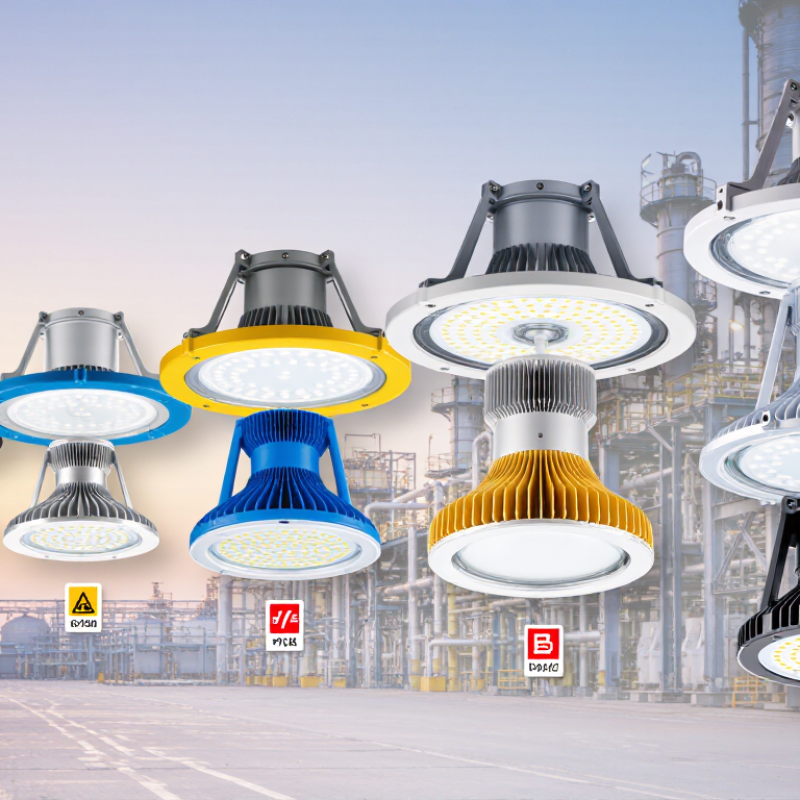
Understanding Explosion-Proof LED Lighting for Industrial Use
Explosion-proof LED lighting is designed for locations where flammable gas, vapor, or combustible dust may be present. Its enclosure helps contain an internal ignition and limits the chance of flames reaching the surrounding atmosphere. It does not make every hazardous area safe. That distinction matters.
A fixture must suit the specific hazard, including the substance present, its temperature characteristics, and the area’s conditions. Dust, moisture, salt, and vibration can all affect long-term performance. A sealed housing may look solid, yet a damaged gasket or loose entry can compromise it. The label alone is not enough. Check the fixture’s certification, temperature rating, permitted ambient range, and installation requirements against the site conditions. LED components use less energy than many older lighting systems, but drivers still generate heat and can fail. Proper mounting and inspection matter.
For example, a washdown area near a process line may need resistance to both water and corrosive cleaning agents. A dusty storage bay presents different risks. I would not choose a fixture by wattage alone; beam spread and mounting height determine whether workers can see labels, walkways, and equipment clearly. Selection should be reviewed by qualified personnel familiar with the site’s hazardous-area classification. Even good equipment can be installed poorly.
Understanding Explosion-Proof LED Lighting for Industrial Use
Maximum Surface Temperature by Gas Temperature Class
Temperature classes set the maximum permitted surface temperature of equipment in hazardous gas atmospheres. Select a luminaire class that stays below the ignition temperature of the gas present. These limits are not the light’s normal operating temperatures.
Hazardous Area Classifications and Lighting Safety Standards
Explosion-proof LED selection begins with the area classification, not brightness alone. Classifications identify the hazardous material and how often it may be present. North American systems commonly use Class, Division, and Group designations. Zone systems classify gas or dust hazards by likelihood and duration. These systems are not interchangeable. Small details matter.
Check that the luminaire’s marking matches the site’s specific gas or dust group, temperature class, and ambient temperature range. In the United States, relevant installation requirements may include the National Electrical Code and applicable NFPA standards. International projects may follow IEC 60079 requirements and local certification rules. A high ingress-protection rating helps resist dust or water, but it does not prove explosion protection. Verify the complete certification label and installation instructions. Even experienced teams can overlook a mismatch when equipment is replaced quickly; a qualified hazardous-area professional should confirm suitability.
Tips: Photograph the existing area classification and equipment label before ordering. Compare both with the new fixture’s certified marking. If the documentation is unclear, pause and ask for a review. That extra check can feel inconvenient, but guessing is worse.
Key Features for Comparing Industrial LED Fixtures
When comparing explosion-proof LED fixtures, start with the area classification and the fixture’s certification. Check the approved gas or dust group, temperature class, and ambient-temperature range against the site conditions. A rating that looks close may still be wrong for a hot process room. The label alone is not enough.
Compare delivered lumens and lumens per watt, not wattage alone. Then check beam angle: a narrow optic can leave dark patches between tanks, while a wide beam may create glare on a polished floor. Review lumen-maintenance data, driver temperature limits, corrosion resistance, and ingress protection. DOE’s 2022 U.S. Lighting Market Characterization estimated that LED adoption avoided about 1.6 quadrillion Btu of U.S. lighting energy use in 2020 against a no-LED scenario. That figure supports energy comparisons, but it cannot predict savings at one plant. Ask for photometric files and test reports. Also check mounting height, vibration exposure, and maintenance access. Small details matter. A fixture that is efficient on paper may be awkward above a crowded production line. Thermal and optical trade-offs are easy to miss.
Top 10 Explosion-Proof LED Lights for Industrial Use
Industrial sites need lighting that fits both the task and the classified area. A practical top-ten shortlist includes high-bay, low-bay, linear, bulkhead, floodlight, portable hand lamp, emergency fixture, wall pack, pendant, and wide-area lights. Each serves a different space, from tall production halls to narrow service corridors. Details matter.
Compare certified area ratings, temperature limits, ingress protection, mounting options, and light distribution before comparing brightness. A high-bay fixture may suit a tall workshop, while a sealed linear model can better illuminate a long processing line. Portable lamps help with inspection work, but their approved operating conditions still need checking. Emergency fixtures should be evaluated for backup duration and visibility, not just normal output.
I would not rank these lights by lumens alone; that shortcut can leave shadows around valves, stairs, or equipment. Check the fixture’s documentation against the site’s actual hazard classification, ambient temperature, and maintenance plan. Requirements vary by location and application, so confirm them with a qualified safety professional.
Not interchangeable.
I would also measure the finished installation at working height; drawings rarely show every obstruction, and that is easy to overlook.
Choosing a Fixture for Specific Industrial Environments
Choosing an explosion-proof LED fixture starts with the hazard, not the lumen rating. NFPA’s report, Fires in Industrial and Manufacturing Properties, estimated 37,910 such fires annually in 2011–2015, causing about $1.2 billion in direct property damage. These figures do not mean lighting caused those fires. They underline why equipment selection and maintenance deserve care. Identify whether the area contains flammable gas, vapor, or combustible dust, then verify the fixture’s approved hazardous-location marking, temperature rating, and operating range.
A chemical plant may need resistance to corrosive vapors, while a grain-processing site needs a dust-rated design that limits dust entry. In washdown areas, check the enclosure’s ingress protection separately; an IP rating does not replace hazardous-location approval. Match beam distribution to mounting height and task. A narrow aisle needs different optics from a wide loading bay. Small details matter. Heat, vibration, and lens fouling can also affect performance over time. I would still confirm conditions on site; plans can miss a hot pipe or a persistent dust layer.
Tips: Check the exact gas or dust classification before ordering. Compare the fixture’s maximum surface temperature with the site hazard requirements. Ask a qualified safety professional to review the installation and maintenance plan. Don’t choose by brightness alone.
| Rank | Fixture Type | Suitable Industrial Environment | Typical Mounting | Typical Output Range* | Key Selection Considerations |
|---|---|---|---|---|---|
| 1 | Explosion-Proof High Bay | High-ceiling process buildings, chemical production halls, and hazardous-area workshops | Pendant, ceiling, or bracket mount | Approximately 10,000–30,000 lm | Match beam distribution and mounting height to the lighting layout; verify the exact hazardous-location approval and temperature rating. |
| 2 | Explosion-Proof Low Bay | Lower-ceiling production areas, pump rooms, and compact process spaces | Ceiling or pendant mount | Approximately 4,000–12,000 lm | Choose optics that control glare and overlap; check ambient-temperature limits and clearance from equipment. |
| 3 | Linear Hazardous-Area Luminaire | Walkways, production lines, utility corridors, and long equipment rows | Surface, pendant, or continuous-row mount where approved | Approximately 3,000–12,000 lm | Check lens material, ingress protection, chemical compatibility, and whether the complete assembly is approved for the area. |
| 4 | Explosion-Proof Floodlight | Tank farms, loading areas, outdoor process equipment, and broad work zones | Adjustable yoke or wall bracket | Approximately 5,000–25,000 lm | Use suitable beam angles and aiming to limit glare and spill light; confirm wind, corrosion, and weather requirements. |
| 5 | Hazardous-Area Wall Pack | Exterior doors, building perimeters, service bays, and access routes | Wall mount | Approximately 2,000–8,000 lm | Consider mounting height, cutoff, weather exposure, and whether a photocell or other control is permitted for the installation. |
| 6 | Explosion-Proof Bulkhead Light | Stairwells, narrow passages, machinery access points, and low-clearance locations | Wall or ceiling mount | Approximately 1,000–5,000 lm | A compact body can suit confined spaces, but confirm impact resistance, mounting orientation, and required illumination levels. |
| 7 | Hazardous-Area Canopy Light | Covered loading bays, fuel or chemical transfer canopies, and sheltered outdoor work areas | Recessed, surface, or pendant mount, depending on the approved design | Approximately 4,000–15,000 lm | Check canopy depth, heat buildup, moisture exposure, and the fixture’s suitability for the classified location. |
| 8 | Explosion-Proof Emergency Luminaire | Hazardous-area exits, egress routes, and critical access points requiring backup lighting | Wall or ceiling mount | Output and duration depend on the listed emergency design | Verify emergency-lighting code requirements, rated backup duration, battery operating temperature, and hazardous-area approval. |
| 9 | Portable Hazardous-Area Work Light | Maintenance, inspection, shutdown work, and temporary tasks in classified locations | Handheld, tripod, or temporary mounting as specifically approved | Approximately 500–5,000 lm | Use only equipment approved for the area and power source; inspect cables, connectors, battery limits, and portable-use restrictions. |
| 10 | Tank or Vessel Inspection Light | Tank interiors, vessel access points, and inspection tasks where portable lighting is allowed | Portable or temporary mount, subject to site procedures | Approximately 500–3,000 lm | Assess confined-space and gas-testing requirements separately; confirm the complete light and supply arrangement is suitable for the location. |
*Output ranges are indicative examples for fixture selection, not specifications for a particular product. Final suitability depends on the exact hazardous-area classification, applicable code, installation method, ambient temperature, and equipment approval. In North America, verify the required Class/Division or Zone marking; in IEC-based systems, verify the applicable Zone and protection concept. Do not assume that a fixture described as “explosion proof” is approved for every hazardous location.
