How to Choose the Right Mag Meter for Your Applications?

Selecting the right Mag Meter is crucial in various industries. Mag Meters measure flow based on electromagnetic principles. They are often chosen for their accuracy and reliability. According to recent industry reports, the global Mag Meter market is projected to grow significantly. This growth reflects a rising demand for precise flow measurement solutions.

In applications like water treatment and chemical processing, choosing the wrong Mag Meter can lead to significant errors. These mistakes can be costly and time-consuming. An analysis shows that improper selection can result in up to 20% inefficiency in operations. Yet, many users still struggle with making the best choice.

Understanding the specific requirements of your application is essential. Factors such as fluid characteristics and installation conditions play a key role. Not all Mag Meters are created equal, and what works in one setting may fail in another. Evaluating your needs and potential operational challenges can prevent costly oversight. This is the first step towards ensuring optimal performance and reliability in flow measurement.

How to Choose the Right Mag Meter for Your Applications?

Understanding Magnetic Flow Meter Principles and Functions
How to Choose the Right Mag Meter for Your Applications?

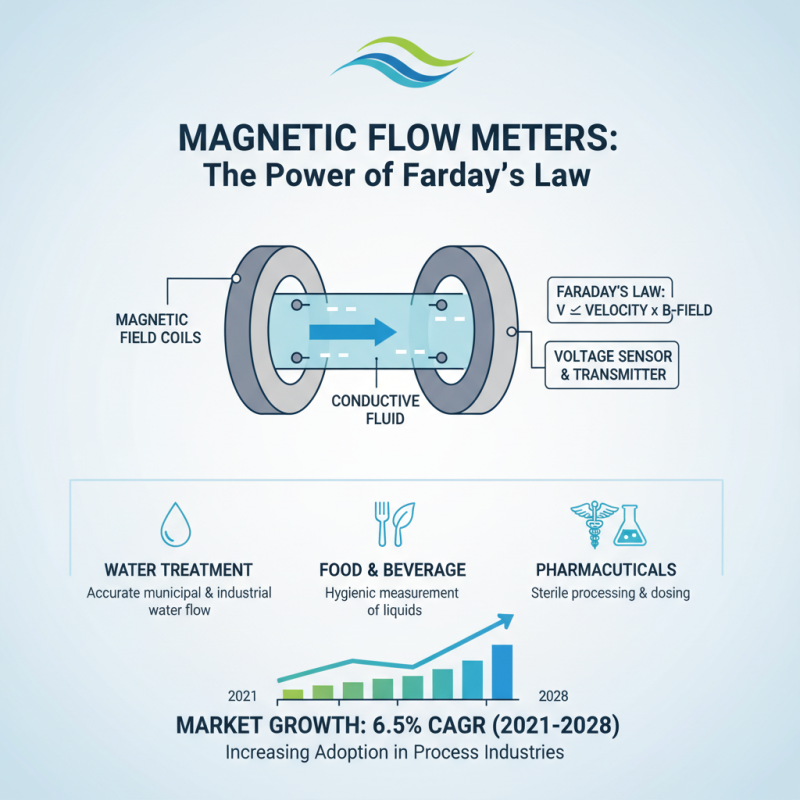
Magnetic flow meters, or mag meters, operate on a fundamental principle: Faraday's law of electromagnetic induction. When a conductive fluid passes through a magnetic field, it generates a voltage proportional to flow velocity. This technology is valuable across various industries, including water treatment, food and beverage, and pharmaceuticals. According to a recent market analysis, the global magnetic flow meter market is expected to grow at a CAGR of 6.5% from 2021 to 2028. This growth illustrates the meter's increasing application in process industries.

The accuracy of mag meters is impressive, often within ±0.5% of reading. However, this precision relies heavily on proper installation and calibration. Many users overlook the importance of these factors, which can lead to significant errors. Notably, mag meters are not suitable for non-conductive fluids. A careful selection process must account for the fluid's properties, the pipeline size, and installation technique. One report indicated that over 20% of system failures are due to poor implementation rather than equipment flaws.

Incorporating factors like temperature, pressure, and fluid composition is essential. Some mag meters may underperform in extreme conditions. This failure can stem from an inadequate understanding of the operational environment. Crucially, operational training on the characteristics of fluids ensures optimal performance. Users must reflect on these aspects to maximize the meter's effectiveness. By understanding the underlying principles, one can better choose a mag meter that aligns with specific operational needs, improving application reliability.

Key Factors to Consider When Selecting a Mag Meter for Applications

When selecting a magnetic flow meter, several key factors influence the decision. First, consider the fluid properties. Fluids can vary in conductivity, viscosity, and temperature. A report by the International Society of Automation indicates that over 15% of flow meters fail due to improper calibration in harsh environments. Knowing your fluid ensures better meter performance.

Next, installation conditions are crucial. Is there space for a straight run of pipe? Many users overlook this aspect. Flow disturbances can impact accuracy. According to a study from the Flow Measurement Group, non-ideal installations lead to a 25% reduction in performance. Also, check for compatibility with existing systems. Lack of proper integration can cause operational delays.

Finally, maintenance requirements must be factored in. High-maintenance meters can lead to increased costs. Some users prefer low-maintenance options. However, these often require sacrifices in precision. Balancing maintenance and accuracy is a tricky endeavor. It’s essential to assess your operational priorities and find a meter that meets both your technical and financial needs.

Analyzing Industry-Specific Requirements for Flow Measurement Accuracy

Choosing the right mag meter requires a clear understanding of industry-specific requirements. Different industries have unique flow measurement needs. For example, water treatment facilities focus on wastewater accuracy. The chemical industry prioritizes corrosion resistance. These specifics greatly influence the decision-making process.

Flow measurement accuracy is critical. It impacts efficiency and safety. Highly viscous fluids may need specialized meters. In contrast, standard water flow may not. Installation conditions also matter. For instance, straight pipe runs are ideal for many mag meters. But real-world scenarios often present challenges, such as space limitations or environmental factors.

Transitioning to a new mag meter can be daunting. Training staff is essential, and sometimes overlooked. Users might struggle with advanced features, leading to underutilization. Regular maintenance is another area that often needs attention. Failure to follow guidelines can lead to inaccuracies over time. These reflections highlight the complexity of choosing the right device.

Flow Measurement Accuracy for Different Industries

Comparing Various Magnetic Flow Meters: Features and Specifications

When selecting a magnetic flow meter, understanding features and specifications is crucial. Different applications require different metrics. For instance, accuracy is vital for measuring low flow rates. Some meters offer high precision, while others may not be reliable in certain conditions. It's essential to assess the specific needs of your application.

Installation options play a significant role. Some magnetic meters require straight pipe runs for accurate readings. Others are more flexible, allowing for various installation angles. This can impact where you can place the meter in your facility. If the installation isn't optimal, it may lead to incorrect measurements. Additionally, check the meter's compatibility with various fluids. Not all meters can handle slurries or aggressive chemicals effectively.

Consider the communication options available. Many modern meters provide digital outputs, making data collection easier. However, not all facilities are equipped for this technology. Sometimes, simplicity is best. In certain cases, mechanical outputs might serve you better. It’s about finding a balance between advanced features and practical needs.

How to Choose the Right Mag Meter for Your Applications? - Comparing Various Magnetic Flow Meters: Features and Specifications

Feature Meter Type A Meter Type B Meter Type C
Flow Range 0.2 to 10 m/s 0.1 to 12 m/s 0.5 to 8 m/s
Accuracy ±0.5% ±0.3% ±1.0%
Temperature Range -10°C to 80°C 0°C to 90°C -20°C to 70°C
Pressure Rating 0 to 100 bar 0 to 120 bar 0 to 50 bar
Material 316 Stainless Steel PVC Hastelloy
Applications Water and Wastewater Chemical Processing Pharmaceuticals

Evaluating Cost-Effectiveness and Maintenance Needs in Mag Meter Selection

Choosing the right mag meter involves careful consideration of its cost-effectiveness and maintenance requirements. Many users overlook long-term costs. Initial purchase price is just one factor. Consider installation, operation, and repairs. Frequent malfunctions can escalate expenses unexpectedly. Look at the expected lifespan and reliability of the meter. A cheaper option might cost more in the long run.

Maintenance needs are crucial in the selection process. Some mag meters require regular calibration and cleaning. This adds to overall operational time and costs. Users must think about their specific application. If using in harsh conditions, equipment may wear out faster. Selecting a model that offers easy maintenance could save time and money. Evaluate if in-house staff can handle maintenance or if outsourcing is necessary.

In practice, users often ignore these details. It can be tempting to prioritize short-term savings. Ultimately, understanding the total cost of ownership is essential. Each option should be weighed carefully. Sometimes the most well-known choices aren't the best fit for every application. Reflecting on these aspects leads to informed decisions.