How to Choose the Best Mass Flow Meters for Your Needs?
When selecting mass flow meters, it's crucial to understand your specific needs. Mass flow meters play a vital role in many industries. They measure the flow of gases and liquids with precision. However, not all mass flow meters are the same. Factors such as application type and environmental conditions truly matter.
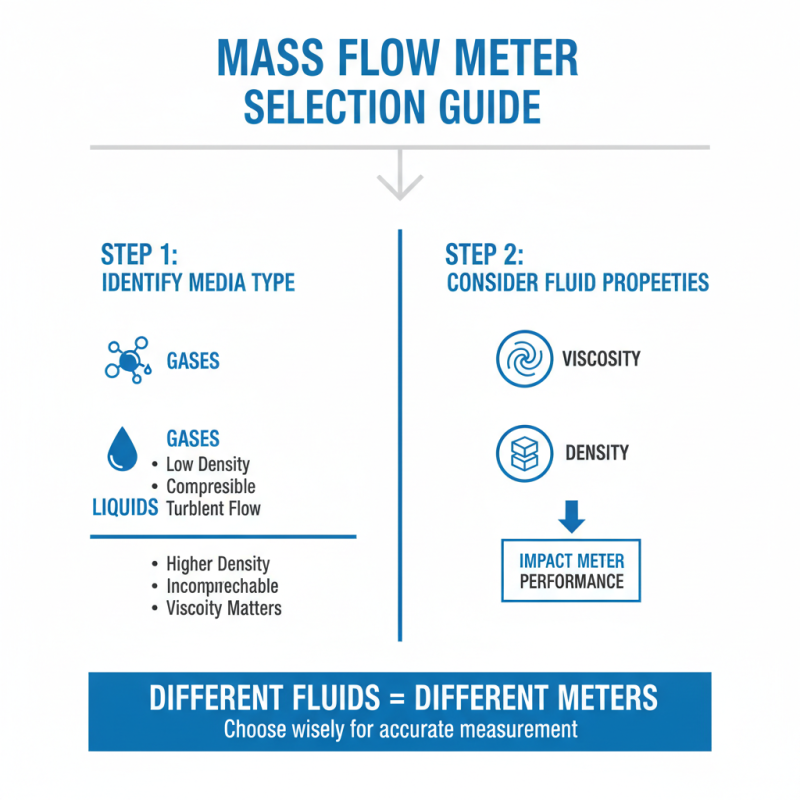
Consider what you will measure. Different fluids require different meters. The accuracy, range, and material compatibility also influence your choice. For instance, a highly corrosive liquid needs a more durable meter. Additionally, the installation space available can be a concern. Larger meters may not fit in smaller systems.
Reflect on your budget as well. Higher quality mass flow meters may have a higher initial cost but can save money over time. Investing in the right meter ensures long-term efficiency. Choosing the best mass flow meter might feel overwhelming. Yet, with careful thought, you can find the perfect fit for your needs.
Understanding the Basics of Mass Flow Meters
Mass flow meters are essential instruments for various industries. They measure the flow rate of liquids and gases accurately. Understanding their fundamentals can help you choose the right one for your needs.
Mass flow meters operate based on principles like Coriolis effect or thermal dispersion. The Coriolis-type measures mass flow directly. It's known for high accuracy. However, it can be sensitive to vibrations or temperature changes. Thermal mass flow meters measure heat transfer in a fluid. They are often more cost-effective but may not handle varying conditions well.
When selecting a meter, consider the fluid properties. Factors like viscosity, density, and temperature are crucial. Not all meters can handle high-viscosity fluids. Some might struggle with corrosive materials. Also, installation requirements can vary. Certain meters need straight pipe runs, while others can work in tight spaces. Think about your unique situation before making a choice. Mistakes here could lead to inaccurate readings and costly issues down the line.
Identifying Your Measurement Requirements
When selecting the best mass flow meter, it’s crucial to identify your measurement requirements. Start by determining the type of media your application involves. Fluid properties like viscosity and density can significantly impact meter performance. Different fluids require different flow meter types. For example, gases behave differently from liquids.
Consider the required flow rate range. Reports indicate that accuracy can vary based on flow conditions. Meters often perform best within a specific range. Operating outside this range can lead to errors. If you frequently operate under varying conditions, you might need a more versatile meter.
**Tips:** Assess the environmental conditions as well. High temperatures and pressures can affect sensor durability. Additionally, think about installation space and accessibility for maintenance. Regular checks are often overlooked. A poorly maintained meter can become less accurate over time, leading to increased costs. An annual calibration can ensure precise measurements.
Comparing Different Types of Mass Flow Meters
Mass flow meters play a crucial role in various industries. Their accuracy and reliability are vital for process control and efficiency. Different types of mass flow meters exist, each with unique characteristics. Common types include Coriolis, thermal, and differential pressure flow meters.
Coriolis flow meters provide high accuracy. They work by measuring the mass flow directly. According to a 2022 industry report, Coriolis meters achieve a precision of ±0.1% of the reading. However, they are often more expensive and can experience issues in certain conditions.
Thermal mass flow meters are more affordable. They measure gas flow based on heat transfer. Their accuracy is about ±2% of the reading. They work best with clean, low-velocity gases. This type can struggle with high-pressure gases or liquids.
**Tips:** Understand your process requirements. Think about temperature and pressure conditions. Choose the best type based on your specific application.
Differential pressure flow meters are versatile and cost-effective. They measure flow by assessing the pressure drop across an obstruction. Their accuracy is generally around ±0.5%. However, they can be influenced by fluid properties and require regular maintenance.
Consider the application’s fluid type. From viscous liquids to gases, the choice of meter matters profoundly. Each meter has its strengths and weaknesses, demanding careful assessment for optimal selection.
Evaluating Performance Specifications and Accuracy
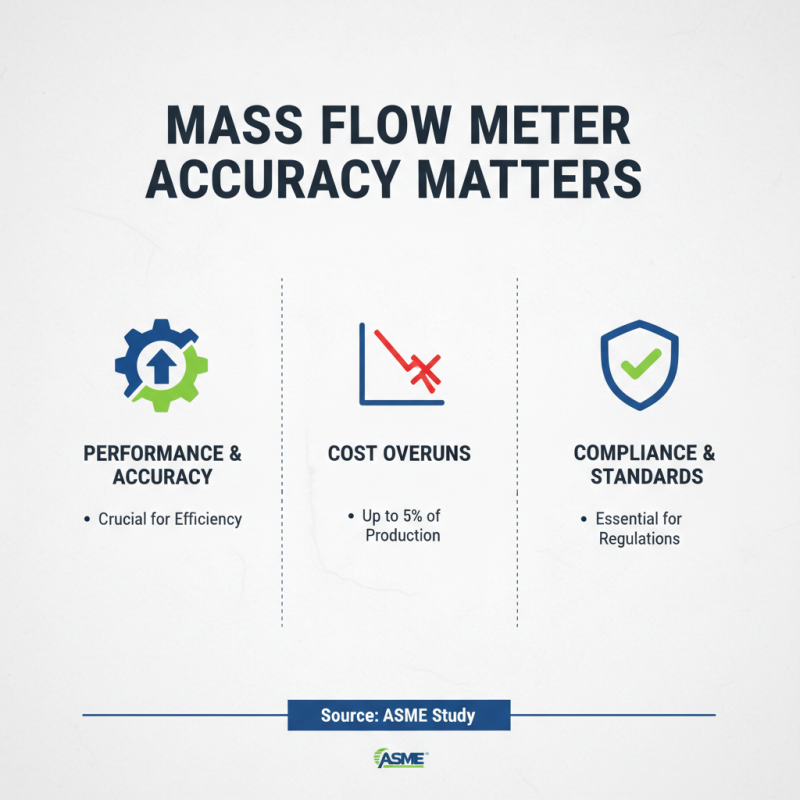
When selecting a mass flow meter, performance specifications and accuracy are crucial. A study by the American Society of Mechanical Engineers revealed that errors in flow measurement can lead to significant cost overruns, sometimes exceeding 5% of production costs. Accurate readings are essential for maintaining efficiency and ensuring compliance with industry standards.
The right mass flow meter should feature a high accuracy level, often defined as ±0.5% of full scale or better. Accuracy directly impacts the reliability of the data. Inaccurate measurements can cause wastage of resources. Additionally, environmental factors can contribute to measurement inconsistencies. Temperature changes, for example, may affect sensitivity and lead to errors.
Choosing the appropriate flow meter for your needs requires careful consideration. Evaluate not only the specifications but also the application. For example, certain models may excel in specific conditions but falter in others. Integration with existing systems is also vital. Poor compatibility can compromise overall accuracy. Always reflect on the long-term implications of your choice to avoid future challenges.
Considerations for Installation and Maintenance
When considering the installation of mass flow meters, several factors need attention. Proper placement is crucial. According to a recent industry report, incorrect flow meter positioning can lead to measurement errors of 5-10%. Ensure there is sufficient straight piping before and after the meter to enable smooth flow. This straight-run minimizes turbulence. Turbulent flow can significantly affect accuracy.
Maintenance is equally important. A well-maintained flow meter can last longer and perform better. Regular calibration is essential. Some sources suggest a calibration check every six months to prevent drift in readings. Dust and contamination can also affect performance. Cleaning the flow meter regularly ensures accurate measurements.
In terms of specifics, consider the environment. High humidity and temperature variations can impact readings. It's not uncommon for a meter to provide skewed data if not suited for its environment. Additionally, installing a flow meter in a location prone to vibration can introduce errors. Always assess the surroundings. Take time to ensure these factors align with your operational needs.
How to Choose the Best Mass Flow Meters for Your Needs?
| Consideration |
Details |
Importance Level |
| Flow Range |
Select a meter that matches the specific flow rates of your application. |
High |
| Fluid Composition |
Determine if the meter can handle the chemicals and physical properties of the fluid. |
High |
| Temperature & Pressure |
Ensure the meter can operate within the temperature and pressure limits of the system. |
Medium |
| Installation Space |
Check the available space for installation and ensure the meter fits. |
Medium |
| Calibration |
Consider how often the meter will need to be calibrated and ease of access. |
High |
| Maintenance |
Evaluate the maintenance requirements and how often servicing is needed. |
High |
| Cost |
Compare the costs of various models while considering features and warranty. |
Medium |