How to Choose the Best Digital Water Flow Meter for Your Needs?
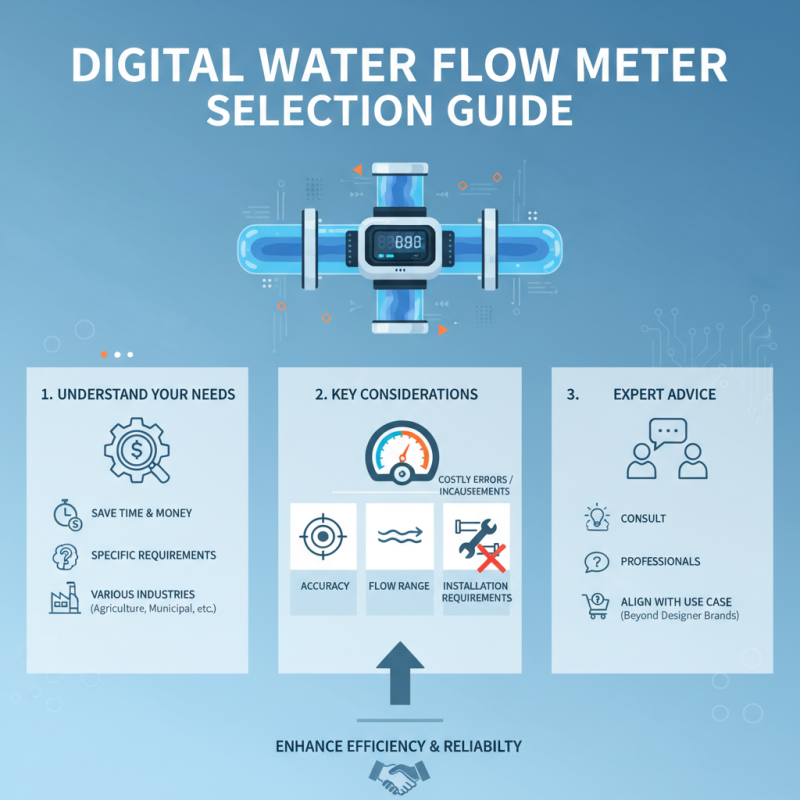
Choosing the right Digital Water Flow Meter can be a daunting task. The technology has evolved significantly, making the selection process more complex. Experts agree on the importance of understanding your specific needs. John D. Waterman, a leading authority in fluid measurement technology, states, "The right meter can save time and money, but the wrong choice can lead to costly errors."
Understanding the different types of Digital Water Flow Meters is essential. You need to consider factors like accuracy, flow range, and installation requirements. Mistakes in these areas can result in inaccurate measurements and increased costs. Furthermore, not everyone may recognize how critical these devices are in various industries, from agriculture to municipal water systems.
When selecting a Digital Water Flow Meter, seek advice from professionals. Online reviews can be helpful, but designer brands may not always be the best for your application. Always question if the meter aligns with your use case, and reflect on your specific requirements before making a purchase. Ultimately, a well-informed choice can enhance efficiency and reliability in your operations.
Understanding the Basics of Digital Water Flow Meters
Digital water flow meters are essential tools for measuring and monitoring water usage. Understanding how they work is crucial for effective management. These devices come in various types, such as electromagnetic, turbine, and ultrasonic. Each type functions differently and has unique advantages.
Electromagnetic meters measure flow based on the electromagnetic field generated when water passes through. They are highly accurate, especially for conductive liquids. Turbine meters use blades to measure flow, but they can be affected by water viscosity. On the other hand, ultrasonic meters use sound waves. They tend to be more durable and have fewer moving parts.
When selecting a meter, consider factors like installation location and pipe size. It's important to also think about the flow rate. Measuring in varying conditions can reveal limitations. While digital meters offer advanced features, they require a learning curve. A basic understanding can help in choosing the right one for specific needs.
Key Features to Consider When Choosing a Flow Meter
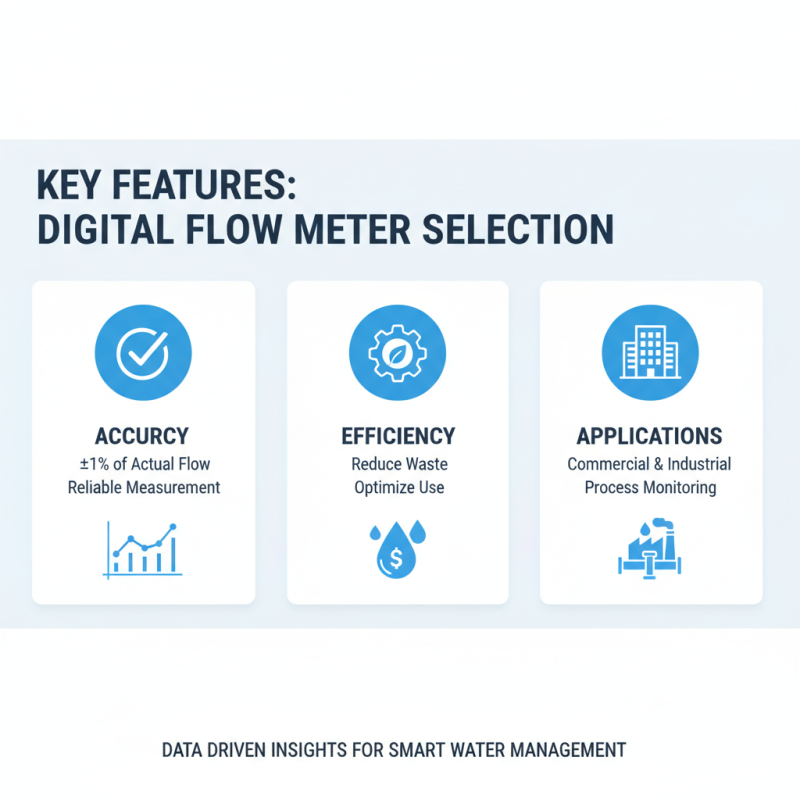
When selecting a digital water flow meter, several key features must be evaluated. Accuracy is crucial; a flow meter should provide reliable measurements within 1% of actual flow rates. According to industry data, systems with high accuracy reduce waste and improve efficiency, particularly in commercial applications.
Understanding the flow range is also essential. Identify whether the meter can handle your specific flow requirements. Some meters struggle with low-flow conditions, leading to inaccurate readings. A comprehensive analysis shows that approximately 30% of water meters fail to perform optimally in low-flow scenarios. This inefficiency can impact water conservation efforts and inflate costs unexpectedly.
Another factor is the communication technology employed. Modern flow meters should support various protocols like Modbus or Bluetooth, enhancing data accessibility. Reports indicate that meters with advanced communication features can significantly streamline monitoring and maintenance tasks. Yet, integration challenges exist, as not all systems are universally compatible. Assessing these areas will ensure the chosen flow meter meets current and future operational needs.
Types of Digital Water Flow Meters and Their Applications
Digital water flow meters come in various types, each tailored for specific applications. For residential use, vortex flow meters help measure water flow in pipes efficiently. They operate quietly and are straightforward to install, making them user-friendly for homeowners. On the commercial side, magnetic flow meters excel in measuring conductive liquids, which is vital for many industrial processes.
Ultrasonic flow meters are another type. They utilize sound waves to capture flow rates without physical contact with the fluid. This makes them ideal for wastewater management and other scenarios where maintenance can be challenging. However, these meters may require periodic recalibration and can be influenced by temperature changes.
Choosing the right flow meter requires understanding these differences. Users sometimes struggle with selecting a meter that balances accuracy and price. Moreover, mismatching a flow meter with the application can lead to inefficiencies. Reflecting on these details allows users to make informed decisions tailored to their needs, ensuring reliability and optimal performance in their specific contexts.
How to Evaluate Accuracy and Reliability in Flow Meters
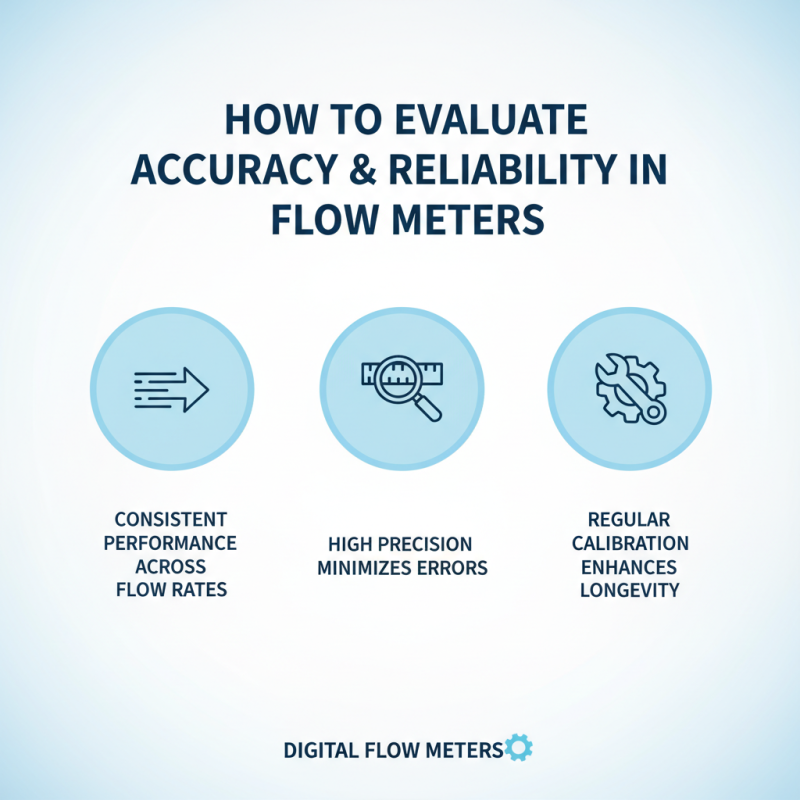
When evaluating accuracy and reliability in digital flow meters, several key factors come into play. Ensure that the meter displays a consistent performance across different flow rates. Meters with high precision often provide better results, minimizing measurement errors. Also, check for calibration options. Regular calibration enhances longevity and maintains measurement integrity.
Tips: Look for devices that offer real-time data. This feature helps in immediate decision-making. A user-friendly interface is equally vital for efficient operation. Don't forget to consider environmental conditions, as temperature and pressure can affect readings.
Another critical aspect is the flow meter's material. It should be compatible with the liquid or gas being measured. Sometimes, materials like plastic or metal can influence the meter's accuracy. Consistently achieving accurate readings requires understanding these material dynamics. Also, consider your specific application needs. Why? A meter's reliability can vary significantly based on use case.
Tips: Seek out user reviews that discuss long-term performance. Understanding the experiences of others can protect you from poor choices. Lastly, consider why some meters fail in specific situations. Reflecting on these factors can guide you to make an informed decision.
Installation and Maintenance Tips for Optimal Performance
Installing a digital water flow meter requires careful planning.
Choose a location that is easily accessible. This makes future maintenance easier. Ensure that the area is
dry and clean. Proper placement helps in
accurate readings. You may need tools for installation, like wrenches or screwdrivers.
Before you begin, read the installation guide thoroughly. Each model may have specific requirements.
Regular maintenance is crucial for optimal performance.
Check the meter for leaks or damage periodically. Clean the sensor and housing to prevent build-up.
This ensures accurate measurements over time. Monitor the battery or power source to avoid failures.
Inconsistent readings may indicate a need for recalibration or replacement. Don’t ignore unusual sounds or
visual discrepancies. These could signal underlying issues. Performing maintenance tasks on time can save
significant costs in the future.