How to Choose the Best Water Flow Sensor for Your Project?
Selecting the right Water Flow Sensor is crucial for the success of any project involving fluid dynamics. According to industry reports, the global market for water flow measurement devices is projected to reach $5.4 billion by 2026, driven by advancements in technology and increasing demand for efficient water management systems. Water Flow Sensors play a pivotal role in various applications, from agriculture to smart city infrastructures.
Different types of sensors exist, including electromagnetic, ultrasonic, and mechanical. Each type has its own advantages and challenges. For example, electromagnetic sensors deliver high accuracy but require conductive fluids. On the other hand, mechanical sensors are simpler but may wear out over time. Choosing the right sensor often depends on specific project needs, which can be overwhelming.
Reflection on past experiences can guide decision-making. Some users find themselves facing issues with sensor response time and accuracy. These challenges highlight the importance of thorough research and testing. Ultimately, selecting the best Water Flow Sensor requires careful consideration of project requirements, fluid characteristics, and environmental factors to ensure optimal performance.
Understanding the Basics of Water Flow Sensors
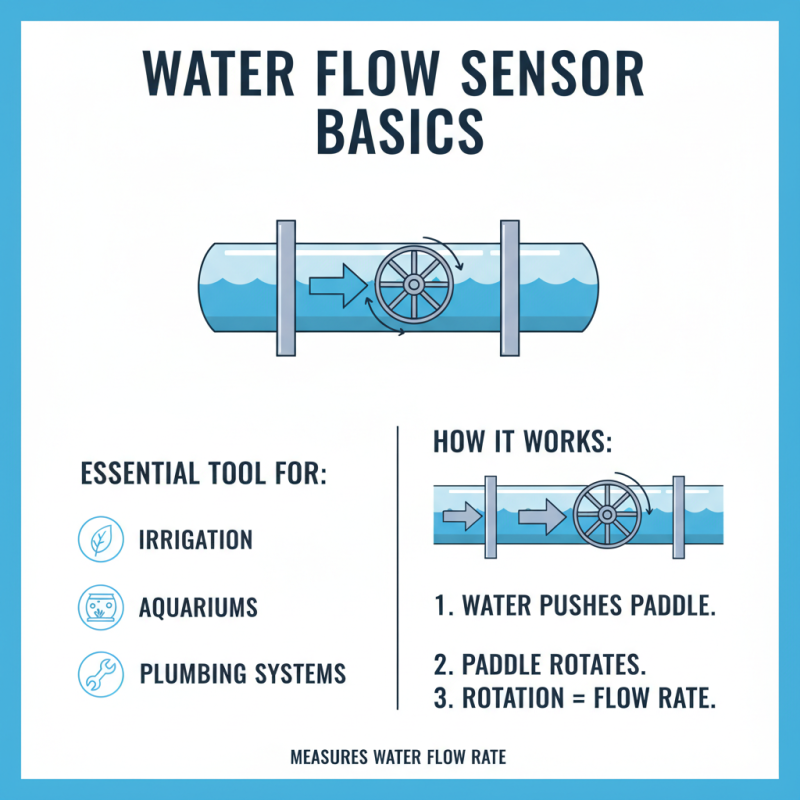
Water flow sensors are essential tools for various projects. They measure the rate of water flow, offering valuable data for irrigation, aquariums, and plumbing systems. Understanding their basic operation is crucial. Most sensors utilize a rotating mechanism or a paddle. Water pushes against the paddle, causing it to rotate. This rotation is translated into a flow rate measurement.
Choosing the right sensor involves several factors. You need to consider the flow range and accuracy. Some sensors work well in low-flow situations, while others excel in high-flow environments. Installation is another point of reflection. Make sure to check compatibility with your project. Improper installation can lead to false readings or damage.
Maintenance is vital too. Regular checks can prevent malfunctions. Look for debris or blockages that may affect performance. Additionally, some sensors may require methodical recalibration. This helps in maintaining accuracy over time. So, it's important to think about how often you’ll maintain the sensor in your daily use.
Types of Water Flow Sensors and Their Applications
When choosing a water flow sensor for your project, understanding the types and their applications is crucial. Common types include mechanical, electronic, and ultrasonic sensors. Mechanical sensors often use a turbine to measure flow volume. They are straightforward and cost-effective. However, they can be less accurate at low flow rates.
Electronic sensors use technologies like Hall effect or magnetic induction. These types provide higher accuracy and quicker response times. They work well in both large and small systems. Ultrasonic sensors, while more expensive, offer non-invasive measurement. They can function effectively across various applications, including HVAC systems and irrigation.
Tips: Consider your flow range. Some sensors perform poorly outside specific limits. Evaluate your project's needs carefully. It’s crucial to ensure that the sensor can handle the conditions of your system. Testing the sensor in real scenarios can reveal unexpected issues. A poorly suited sensor may lead to inaccurate readings. Always think ahead and gauge your project's long-term requirements.
Water Flow Sensor Types Comparison
This bar chart shows the comparison of different types of water flow sensors based on their flow rates measured in liters per minute. Each sensor type has distinct characteristics and is suited for various applications.
Key Specifications to Consider When Choosing a Sensor
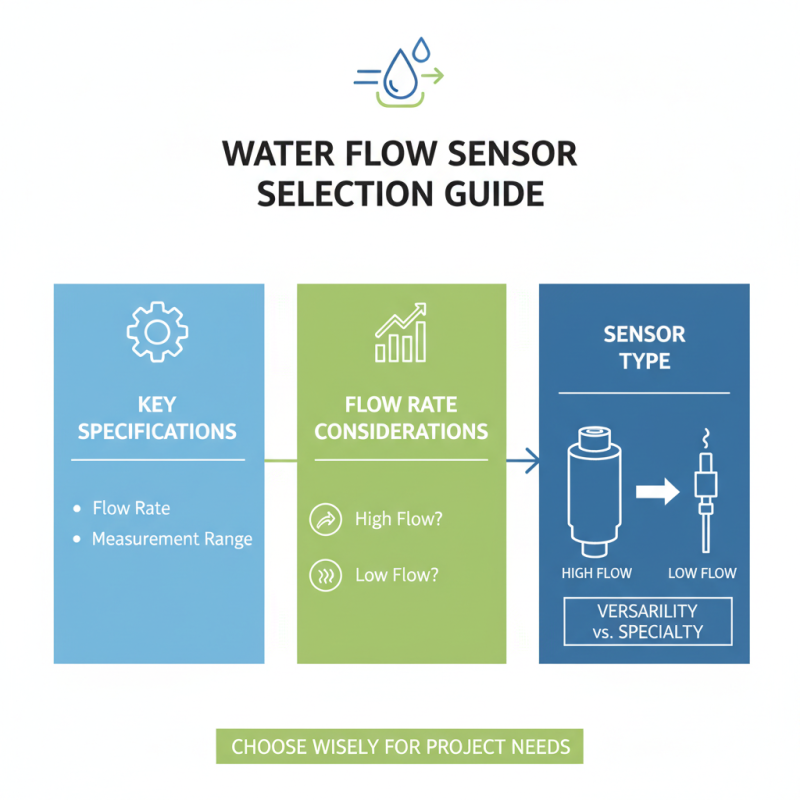
When selecting a water flow sensor for your project, consider key specifications carefully. The flow rate is critical. Sensors with a broad measurement range offer more flexibility. Think about whether you'll measure high flow rates or low. Some sensors excel at one, but not both.
Accuracy is another important factor. Look for sensors that provide a precise reading for your needs. A small error can lead to issues in projects requiring strict measurements. Don’t overlook the temperature limit, especially if your application involves varying conditions. Ensuring the sensor can handle your project's environment is vital.
**Tips:** Display sensor data clearly. User-friendly interfaces exist for this purpose. Also, keep installation in mind. A complex setup can lead to errors. Make your project easy to troubleshoot. Simplicity is often overlooked but can save time later. Check for any inconsistencies in sensor specs. They might not perform as advertised, leading to frustration.
Factors Affecting Sensor Selection for Specific Projects
When selecting a water flow sensor, various project-specific factors must be considered. Accuracy is critical. Research indicates that sensors with an accuracy of ±5% are often sufficient for industrial applications. However, projects requiring precise measurement, such as medical or aquatic systems, often demand sensors with better accuracy. Calibration needs can also impact your choice. Some sensors require frequent recalibration, adding complexity to the project.
Another essential factor is the flow range. Different projects have varying flow rates. For example, a sensor with a flow range of 0.1 to 10 L/min may work well for small-scale applications. However, it's inadequate for larger systems dealing with 100 L/min. Material compatibility is often overlooked but is crucial for longevity. For instance, corrosive fluids need sensors made of durable materials to avoid failure.
Power consumption matters. Energy-efficient sensors can reduce operating costs, especially in remote areas. Reports show that up to 30% of operational expenses may stem from power usage in some systems. It's important to weigh these factors carefully. The right sensor can enhance system efficiency and reliability. The wrong choice can lead to costly downtimes or failures. Always assess the specific needs of your project before making a decision.
Installation and Maintenance Tips for Water Flow Sensors
When working with water flow sensors, proper installation is crucial.
Start by identifying the correct location for the sensor. Ensure it is positioned straight, without bends in the pipe.
A misaligned sensor might not provide accurate readings. Use pipe fittings carefully. They can easily become loose over time,
leading to leaks.
Maintenance is essential for longevity. Regularly check for blockages. Dirt or debris can affect performance.
Clean the sensor gently to avoid damage.
It’s a good idea to establish a routine. Every few months, inspect the sensor’s sensitivity. This ensures it operates effectively
throughout its lifespan.
Tips: Always use a small wrench when tightening connections. Too much force can crack the sensor casing.
Also, keep a record of maintenance dates. This helps track the sensor's performance over time.
Remember, even sensors need care. Neglect can lead to unreliable data and costly replacements.